Drop Ceiling Installation cost at a glance
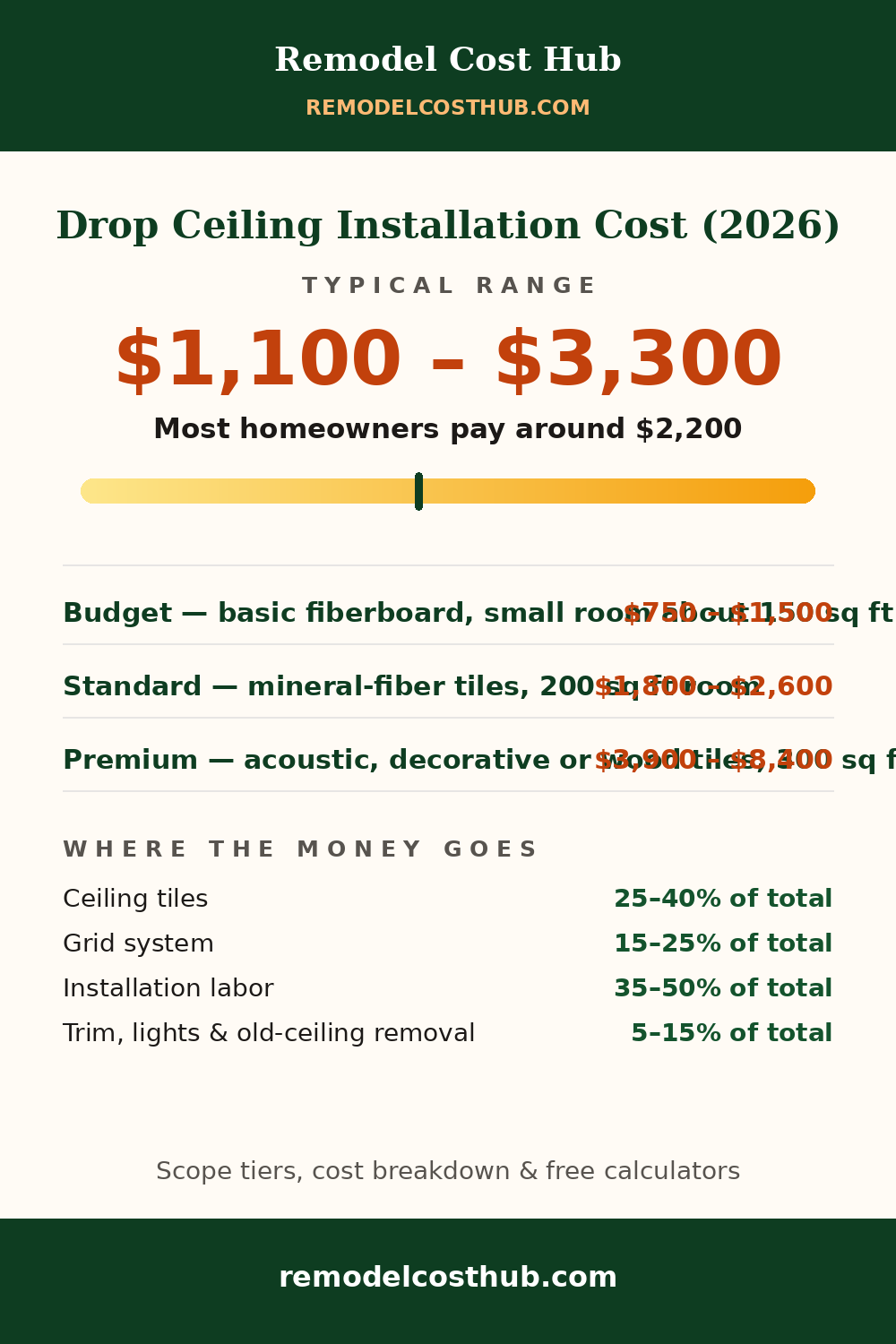
- Typical range: $1,100 – $3,300
- Most homeowners pay: around $2,200
- Per square foot: $9–$13 per sq ft
- Prices vary most by: Installation labor (35–50% of the budget)
Cross-checked against two published sources for this project. Sources used for this page: Angi's drop ceiling cost guide, updated September 18, 2026 (national average $2,203 from 969 verified projects, most $1,073–$3,336; standard $9–$13 per sq ft, up to $28 for high-end materials; fiberboard $1–$7, wood $10–$70 per sq ft; labor $2–$5 per sq ft or $40–$100 per hour; DIY materials $2–$8 per sq ft), HomeGuide's ceiling installation or replacement cost guide (drop ceiling $4–$20 per sq ft installed; new grid and tiles $3–$7 per sq ft; tiles $1–$13 per sq ft materials — plastic $2–$9, fiberboard $1–$3.50, wood $2–$10, tin or metal $3–$13; old drop ceiling removal $1–$7 per sq ft) and BasementCalculator's 2026 drop ceiling cost guide (about $5–$13 per sq ft installed, roughly $1,600 for a typical 300 sq ft basement room; mineral fiber $5.45, vinyl-faced $7.10, high-NRC acoustic $7.90, decorative wood-look or metal $13.10 per sq ft installed; labor $2.75–$5 per sq ft, $400 minimum; DIY $3–$5 per sq ft). Synthesized typical = Angi's most-pay band at $1,100–$3,300, with $2,200 most-pay at Angi's published average. Checked November 2026.. Sources last checked: October 2026 — HomeGuide, Angi. How we calculate these costs
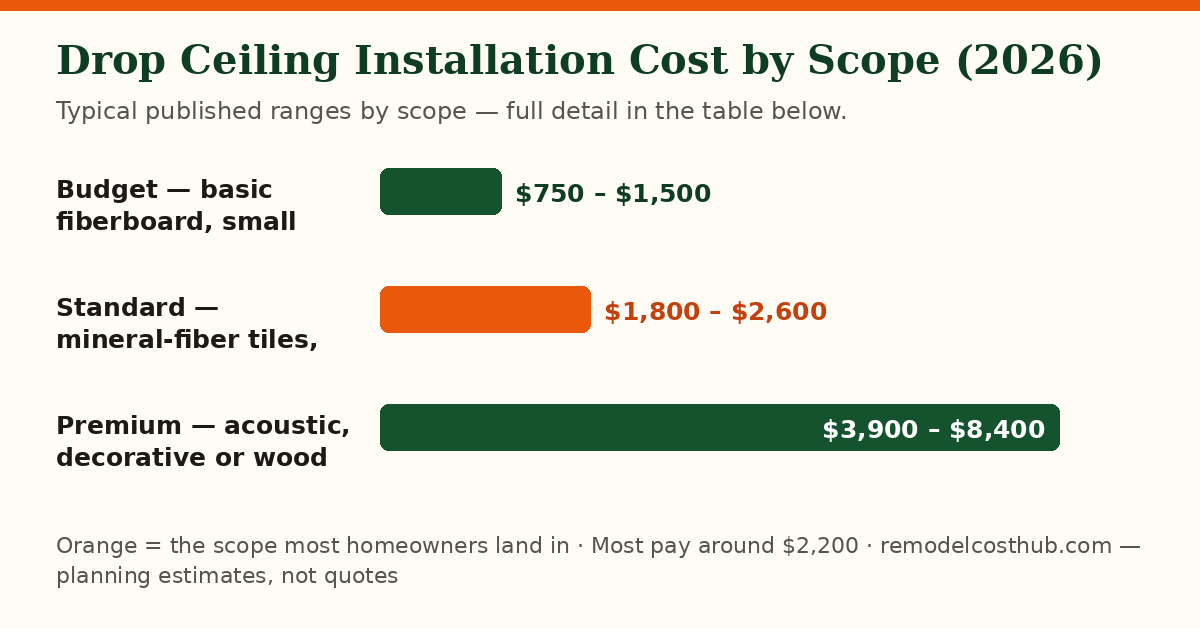
Cost by scope
| Scope | Typical cost | What it includes |
|---|---|---|
| Budget — basic fiberboard, small room about 150 sq ft | $750 – $1,500 | HomeGuide prices a new grid and tiles at $3–$7 per sq ft, and BasementCalculator prices a standard mineral-fiber ceiling at about $5–$8 per sq ft installed. |
| Standard — mineral-fiber tiles, 200 sq ft room | $1,800 – $2,600 | The typical project on this page: Angi's $9–$13 per sq ft over 200 sq ft, inside Angi's most-pay band of $1,073–$3,336. |
| Premium — acoustic, decorative or wood tiles, 300 sq ft | $3,900 – $8,400 | Angi prices high-end materials up to $28 per sq ft, and BasementCalculator prices decorative wood-look or metal tiles at $13.10 per sq ft installed. |
Where the money goes
| Part of the job | Share | Note |
|---|---|---|
| Ceiling tiles | 25–40% of total | HomeGuide prices tiles at $1–$13 per sq ft by material — fiberboard $1–$3.50, plastic $2–$9, wood $2–$10, tin or metal $3–$13; Angi's fiberboard is $1–$7 and wood $10–$70 |
| Grid system | 15–25% of total | HomeGuide prices the grid at $1.50–$2 per sq ft; the main tees, cross tees, wall angle and hanger wire are the fixed cost whatever tile you pick |
| Installation labor | 35–50% of total | Angi prices labor at $2–$5 per sq ft or $40–$100 per hour; BasementCalculator prices it at $2.75–$5 per sq ft with a $400 minimum |
| Trim, lights & old-ceiling removal | 5–15% of total | HomeGuide prices removing an old drop ceiling at $1–$7 per sq ft; cutting tiles around lights, vents and ducts is the fiddly part of the job |
What moves the price most
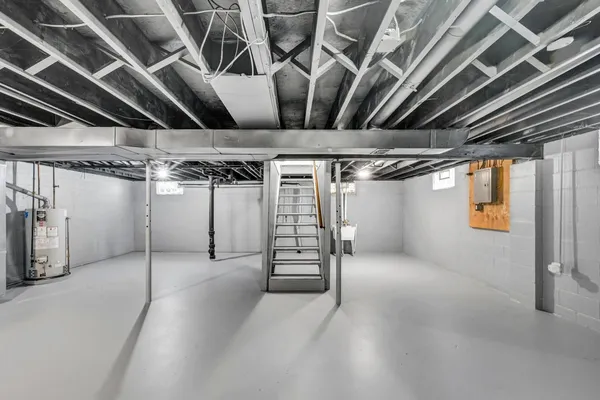
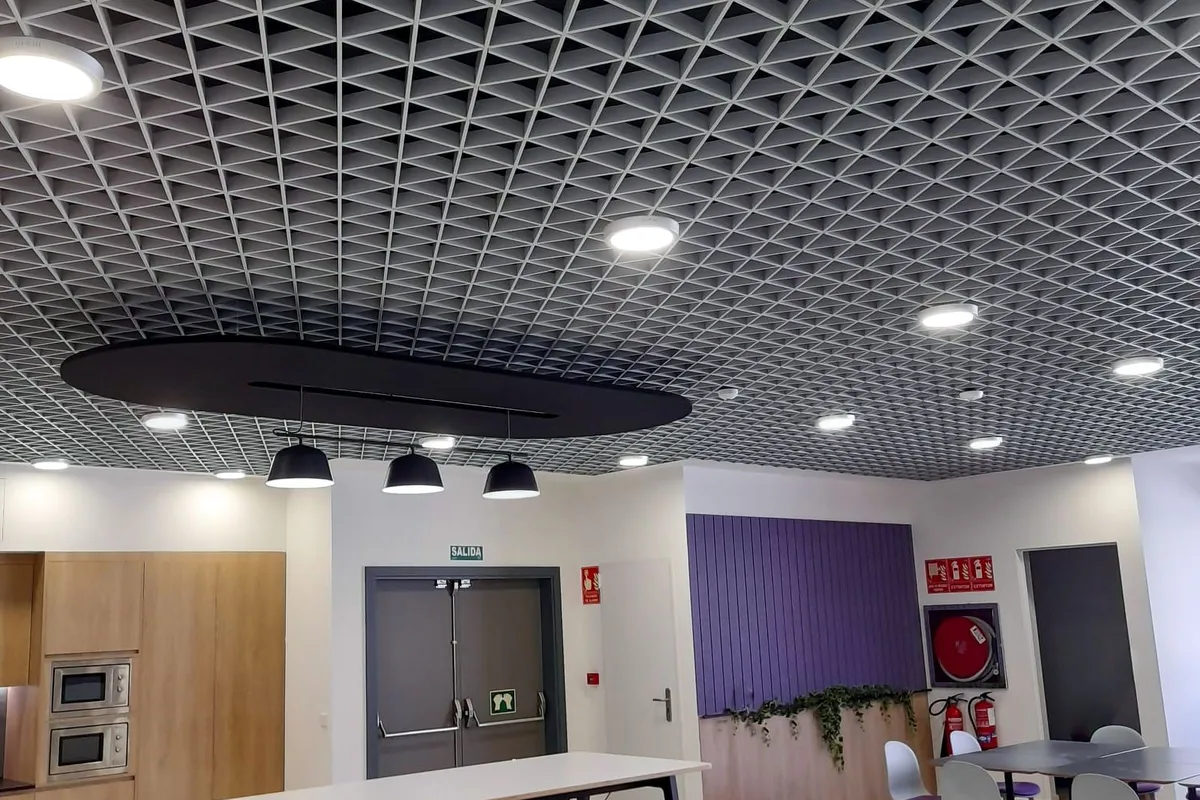
Tile material is the first lever: HomeGuide prices fiberboard tiles at $1–$3.50 per sq ft and tin or metal at $3–$13, while Angi prices wood panels at $10–$70 — the tile you pick moves the total more than the room does. Room size and obstacles are second: Angi prices a standard install at $9–$13 per sq ft, and a ceiling crowded with ducts, pipes and lights takes longer per square foot than an empty basement room. Grid condition is third: replacing tiles in a sound grid costs $2–$4 per sq ft in HomeGuide's guide, while a new grid and tiles together run $3–$7. DIY against pro is fourth: Angi prices DIY materials at $2–$8 per sq ft, so a handy homeowner saves the $2–$5 per sq ft of labor — but the grid has to be level, or every tile shows it. Worked example at the most-pay figure: tiles $600 + grid $400 + labor $1,000 + trim and fasteners $200 = $2,200. For the drywall alternative, see our drywall installation guide, and for the room below it see our basement finishing guide and our flooring installation guide.
Costs in your city
Labor is the biggest variable in any remodel, and labor is local — the same bathroom can price very differently in Houston than in Boston. We are adding city editions metro by metro, each with its own labor index, permit notes and climate factors, written for that city rather than copied from this page. Wave 1: Houston, Dallas–Fort Worth, Phoenix, Atlanta, Miami–South Florida, Orlando, Tampa, Charlotte, Austin and San Antonio. Until your city's page is live, use the national range here and weight it the way contractors do: Sun Belt labor often prices near or below the national middle, while coastal California and the Northeast metros often price well above it.
Frequently asked questions
How much does a drop ceiling cost?
Typically $1,100–$3,300 professionally installed, with $2,200 the middle of Angi's band — about $9–$13 per sq ft for standard mineral-fiber tiles.
How much does a drop ceiling cost per square foot?
About $9–$13 per sq ft installed for standard tiles in Angi's guide; HomeGuide's full installed band is $4–$20 per sq ft depending on the tile material.
Is a drop ceiling cheaper than drywall?
No — a drywall ceiling usually costs less per square foot: Angi prices drywall at $1.50–$3 per sq ft against $9–$13 for drop tiles. A drop ceiling wins on access, because the tiles lift out whenever the pipes or wiring above need work.
How long does it take to install a drop ceiling?
A pro crew typically finishes a standard room in a day; Angi's DIY guide allows two days for a homeowner doing the grid and tiles alone.
How much ceiling height does a drop ceiling take?
HomeGuide notes at least a 3-inch loss below the joists, so the room needs enough height to spare before a grid goes in.