Flooring Installation cost at a glance
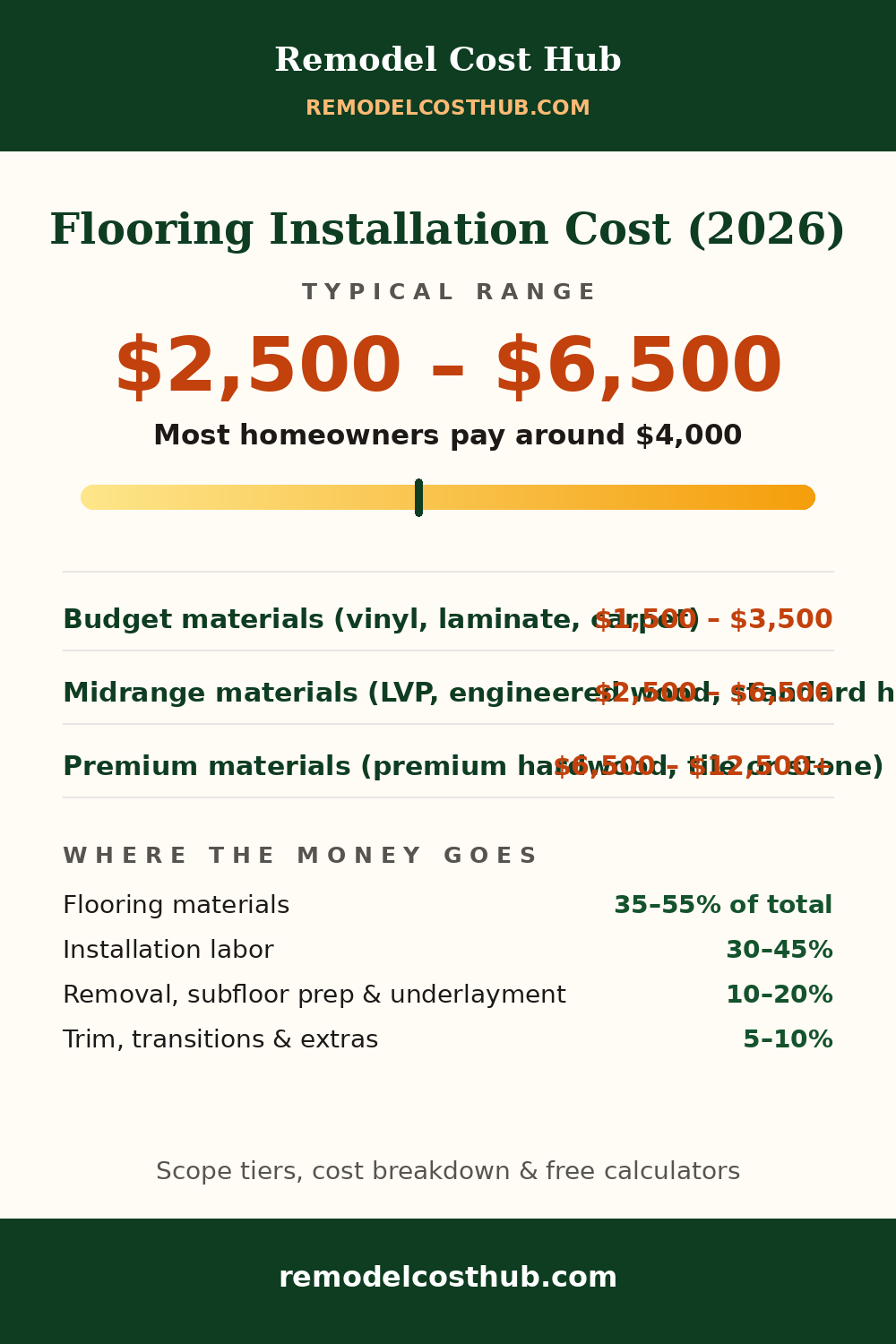
- Typical range: $2,500 – $6,500
- Most homeowners pay: around $4,000
- Prices vary most by: Flooring materials (35–55% of the budget)
Cross-checked against three published sources for this project. Sources used for this page: the Angi flooring installation cost guide, HomeGuide's flooring cost data and Forbes Home's flooring cost guides. Last updated October 2026 · How we calculate these costs
Cost by scope
| Scope | Typical cost | What it includes |
|---|---|---|
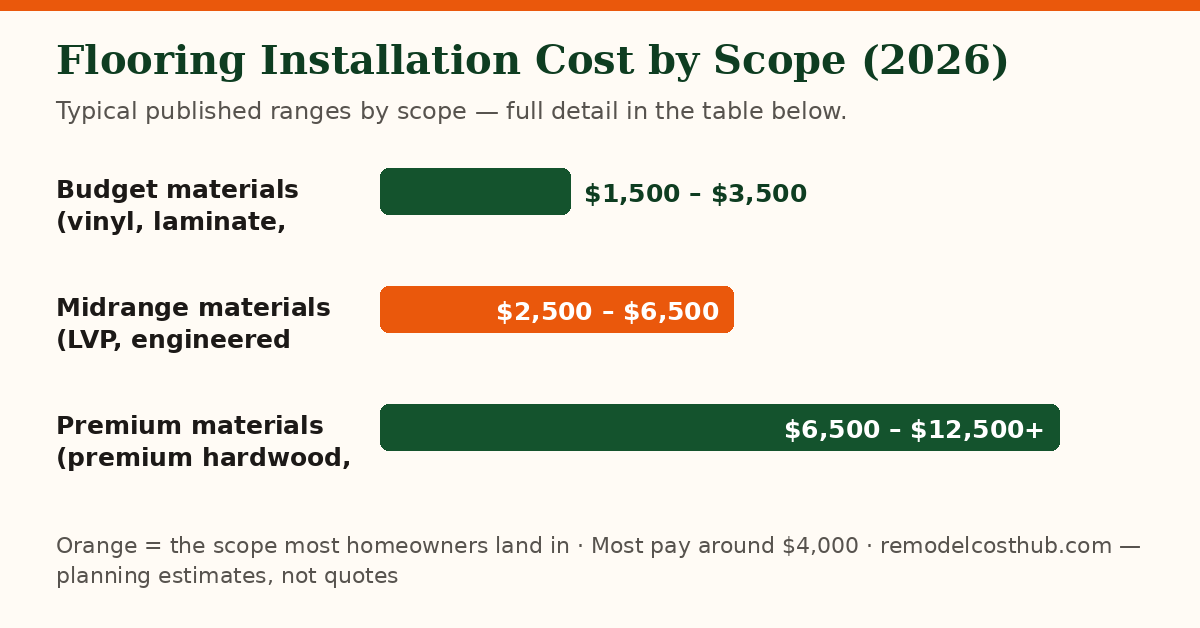
| Budget materials (vinyl, laminate, carpet) | $1,500 – $3,500 | About 500 sq ft in sheet or plank vinyl, laminate or basic carpet, over a sound subfloor with standard underlayment |
| Midrange materials (LVP, engineered wood, standard hardwood) | $2,500 – $6,500 | About 500 sq ft in luxury vinyl plank, engineered wood or standard solid hardwood — where most whole-room and multi-room projects land |
| Premium materials (premium hardwood, tile or stone) | $6,500 – $12,500+ | About 500 sq ft in wide-plank or premium-species hardwood, or tile and stone with backer board and detailed patterns |
Where the money goes
| Part of the job | Share | Note |
|---|---|---|
| Flooring materials | 35–55% of total | The material class is the widest spread in the budget — basic vinyl and premium hardwood differ several times over per square foot |
| Installation labor | 30–45% | Click-lock plank installs fast; nailed hardwood is slower; tile is the slowest and most labor-heavy of the common materials |
| Removal, subfloor prep & underlayment | 10–20% | Pulling and disposing of the old floor, leveling, moisture barriers and underlayment — skipped prep is the main cause of failed floors |
| Trim, transitions & extras | 5–10% | Baseboards, thresholds, stair nosing and moving furniture or appliances in and out |
What moves the price most
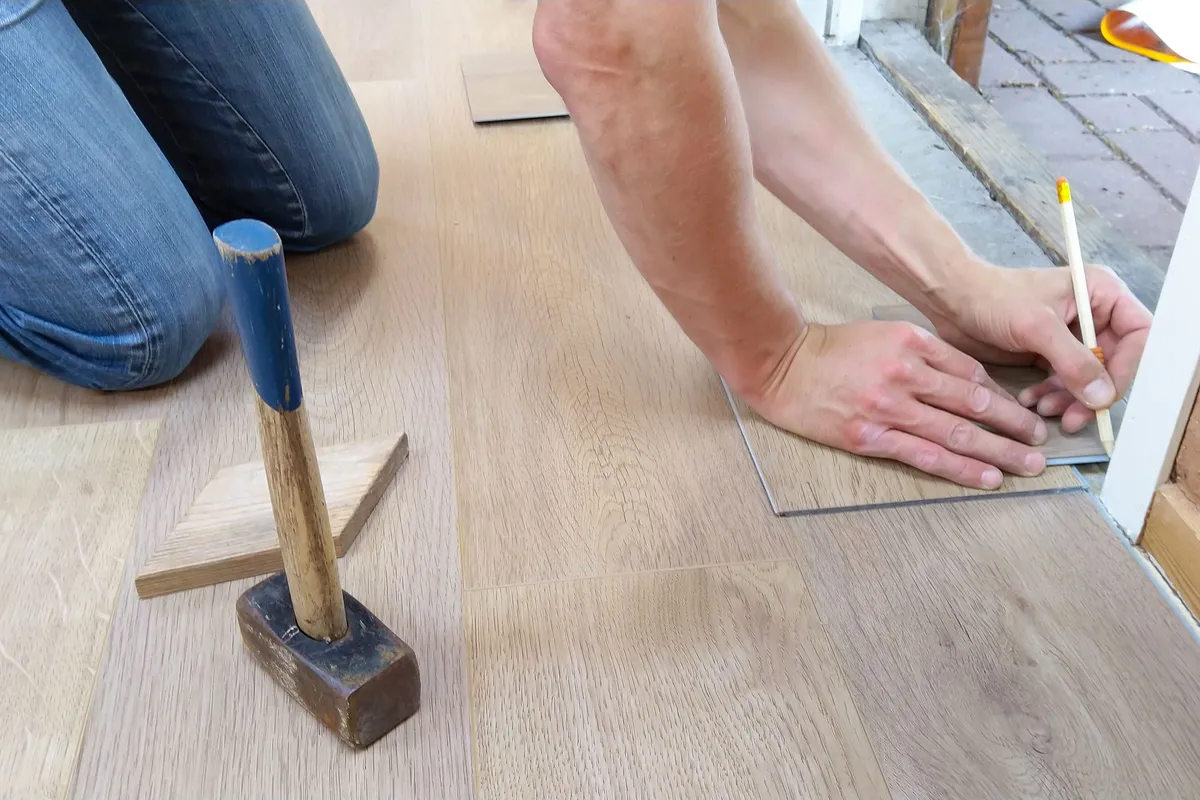
Material class decides most of the budget. Published per-square-foot guides consistently put vinyl, laminate and carpet at the low end, luxury vinyl plank and engineered wood in the middle, and solid hardwood, tile and stone at the top — and the labor follows the same order, because tile setting and hardwood nailing take far longer than click-lock plank. Square footage is the multiplier on everything, which is why this page prices a standard 500 sq ft project: measure your actual area, then add the waste allowance (about 10% for straight layouts, more for diagonal or herringbone patterns). Subfloor condition is the surprise line — water damage, squeaks and out-of-level slabs are usually only priced once the old floor is up, and published guides price subfloor replacement as a project of its own. Finally, removal and disposal of the old floor is real work that some quotes include and some list separately; compare quotes on what is written, not on the total.
Costs in your city
Local labor moves a remodel price more than almost anything else, so we are publishing city-adjusted ranges metro by metro — each with its own local cost index, permit notes and climate factors, not a find-and-replace of this page. Wave 1 cities: Houston, Dallas–Fort Worth, Phoenix, Atlanta, Miami–South Florida, Orlando, Tampa, Charlotte, Austin and San Antonio. Until your city's page is live, use the national range here and weight it: Sun Belt labor often prices near or below the national middle; coastal California and the Northeast metros often price well above it.
Frequently asked questions
How much does flooring installation cost per square foot?
Across common materials, published guides put installed flooring at roughly $4–$15 per square foot, with budget vinyl and laminate below that band and premium hardwood or tile above it. On this page that works out to a typical $2,500–$6,500 for about 500 sq ft in a midrange material.
How long does it take to install new flooring?
A single room in click-lock vinyl or laminate is often a one-day job. Several rooms of hardwood typically run 2–4 days, and tile runs longer because setting, curing and grouting happen on separate days. Acclimating wood products in the room for several days before installation is part of the real schedule.
Should I remove the old flooring myself?
Pulling carpet or floating floors is realistic DIY and can save the removal line of the quote. Tile and glued-down floors are heavy, dusty demolition that most owners leave to the crew — and the disposal fee is usually worth paying. Confirm in writing what the installer expects to find when they arrive.
Is luxury vinyl plank or hardwood better value?
LVP costs less to buy and install, shrugs off water, and can go over many existing floors, which keeps prep costs down. Solid hardwood costs more up front but can be refinished several times over decades. For kitchens, baths and basements, vinyl is usually the practical spend; for dry living areas in a long-term home, hardwood holds its value better.
How much extra flooring should I buy?
About 10% over the measured area for straight layouts, 15% for diagonal or herringbone patterns, and keep a spare box from the same production lot afterward — matching a discontinued plank or tile years later is close to impossible.