Basement Finishing cost at a glance
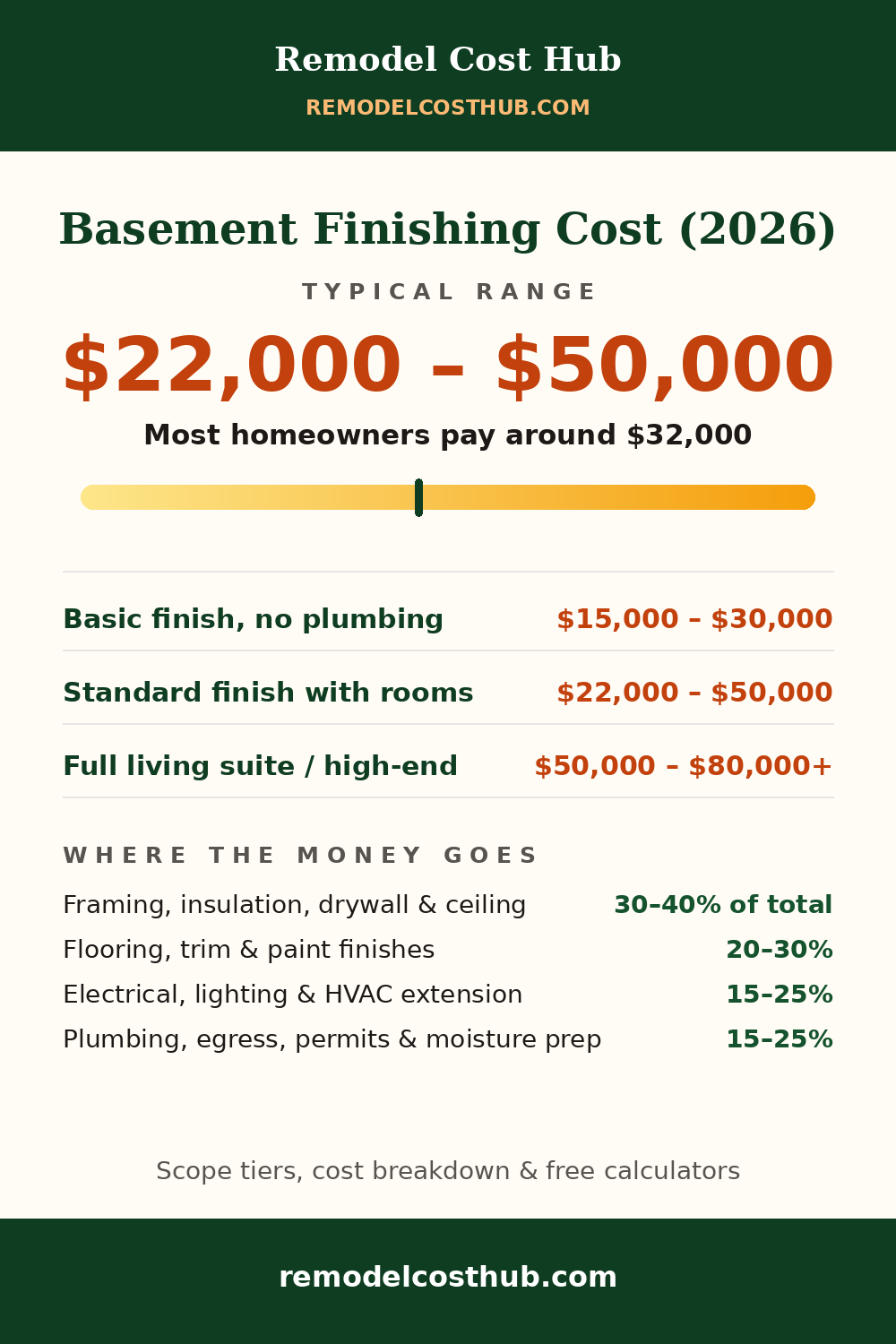
- Typical range: $22,000 – $50,000
- Most homeowners pay: around $32,000
- Per square foot: $30 – $50 per sq ft
- Prices vary most by: Framing, insulation, drywall & ceiling (30–40% of the budget)
Cross-checked against three published sources for this project. Sources used for this page: the Angi basement finishing guides, HomeGuide's Basement Remodel Cost (2026) guide and Fixr's basement remodeling cost guide. Last updated October 2026 · How we calculate these costs
Cost by scope
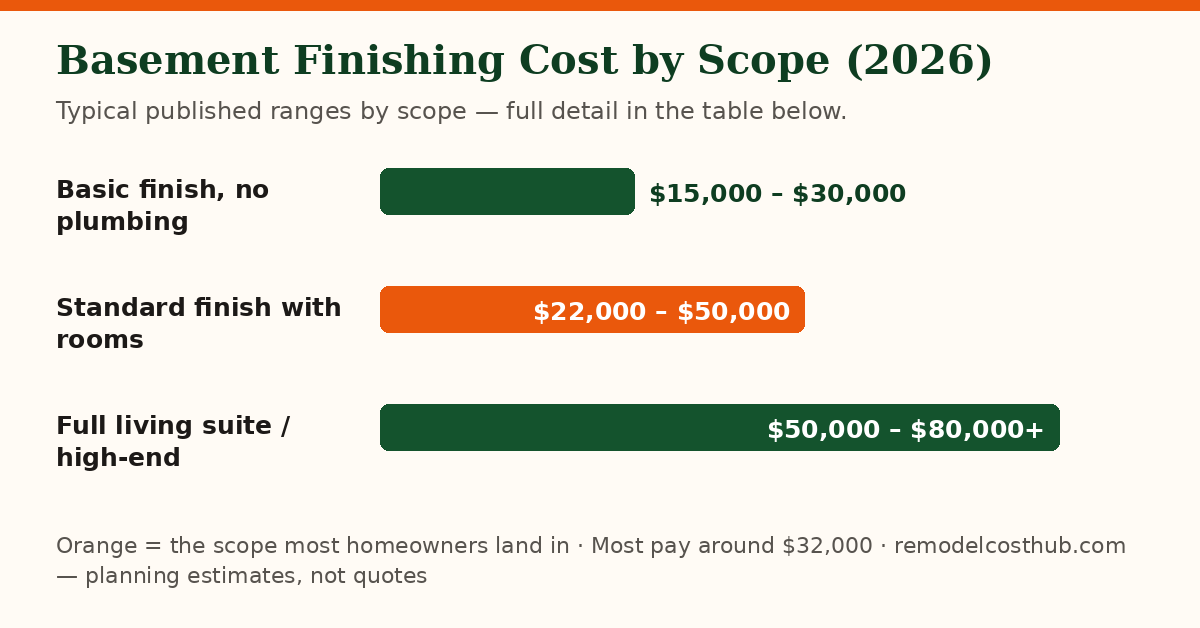
| Scope | Typical cost | What it includes |
|---|---|---|
| Basic finish, no plumbing | $15,000 – $30,000 | Open-plan family or rec room: framing, insulation, drywall, ceiling, flooring, lighting and paint — no bathroom, no bedroom, no new plumbing |
| Standard finish with rooms | $22,000 – $50,000 | Divided rooms (family room plus office, gym or guest space), full electrical and HVAC extension, standard flooring and finishes — where most finishing projects land |
| Full living suite / high-end | $50,000 – $80,000+ | Adds a full bathroom, a legal bedroom with an egress window, a wet bar or kitchenette, and premium finishes — priced like the remodel tier in published guides |
Where the money goes
| Part of the job | Share | Note |
|---|---|---|
| Framing, insulation, drywall & ceiling | 30–40% of total | The shell of the project — wall framing, insulation, drywall and the ceiling system that covers ducts and joists |
| Flooring, trim & paint finishes | 20–30% | Moisture-tolerant flooring (LVP and tile are the usual choices), baseboards, doors and paint |
| Electrical, lighting & HVAC extension | 15–25% | New circuits, recessed lighting and extending heating and cooling ducts into the finished space |
| Plumbing, egress, permits & moisture prep | 15–25% | Zero on a no-plumbing basic finish; a bathroom rough-in, an egress window, permit fees and waterproofing are what push a project into the suite tier |
What moves the price most
Moisture comes before everything. Published guides are unanimous that active water problems must be fixed before framing starts — interior waterproofing and drainage work is priced as its own project in those guides, and finishing over a damp wall turns a remodel into a mold repair. Plumbing is the second cliff: a basement with no bathroom stays in the basic-to-standard tiers, while adding one usually means cutting the concrete slab for drains, which is the single largest jump between tiers. Ceiling height and egress come third — most codes want about 7 feet of finished ceiling height for living space, and a legal bedroom needs an egress window, which is priced per window in published guides and can require excavation outside. Finally, how the space is divided matters: an open rec room needs far less framing, electrical and door work than the same square footage split into three rooms and a hallway.
Costs in your city
Local labor moves a remodel price more than almost anything else, so we are publishing city-adjusted ranges metro by metro — each with its own local cost index, permit notes and climate factors, not a find-and-replace of this page. Wave 1 cities: Houston, Dallas–Fort Worth, Phoenix, Atlanta, Miami–South Florida, Orlando, Tampa, Charlotte, Austin and San Antonio. Until your city's page is live, use the national range here and weight it: Sun Belt labor often prices near or below the national middle; coastal California and the Northeast metros often price well above it.
Frequently asked questions
How much does it cost to finish a basement per square foot?
Published national guides put a standard contractor finish at about $30–$50 per square foot. At that rate an 800 sq ft basement lands around $24,000–$40,000 and a 1,000 sq ft basement around $30,000–$50,000 before a bathroom or other suite features push it higher — use the rate as a planning check on quotes, not as a quote itself.
How long does basement finishing take?
A basic open-plan finish commonly runs about 4–6 weeks of work once permits are in hand. A standard finish with divided rooms typically runs 6–10 weeks, and a full suite with a bathroom and egress work can run 10–14 weeks — inspections between trades create natural pauses in every version.
Do I need a permit to finish a basement?
In most jurisdictions, yes — finishing a basement is permitted work, and published guides put typical permit fees in the few-hundred to about $1,000 range depending on scope. Unpermitted finished space can cause problems at resale and with insurance, and a contractor who suggests skipping permits is one to avoid.
Does finishing a basement add resale value?
Basement projects have historically recouped a majority of their cost at resale in the Remodeling Magazine Cost vs. Value data — recent reporting of that data puts a typical basement remodel around 70% recouped. A legal bedroom and a full bathroom strengthen the return because they add countable rooms; treat any percentage as national context, not a promise for your home.
Can I finish a basement myself?
Framing, insulation, flooring and paint are realistic DIY for an experienced homeowner, and doing them can remove a meaningful share of labor cost. Electrical, plumbing, egress and anything structural or code-critical is where most owners hire licensed trades — and in many places the permit requires it.