Home › Cost Guides › Wine Cellar Installation
Cost Guide

How Much Does a Wine Cellar Installation Cost? (2026)

By Ahsan ul Haq · Last updated: 11 November 2026 · Planning estimate — not a quote · How we estimate

Typical range
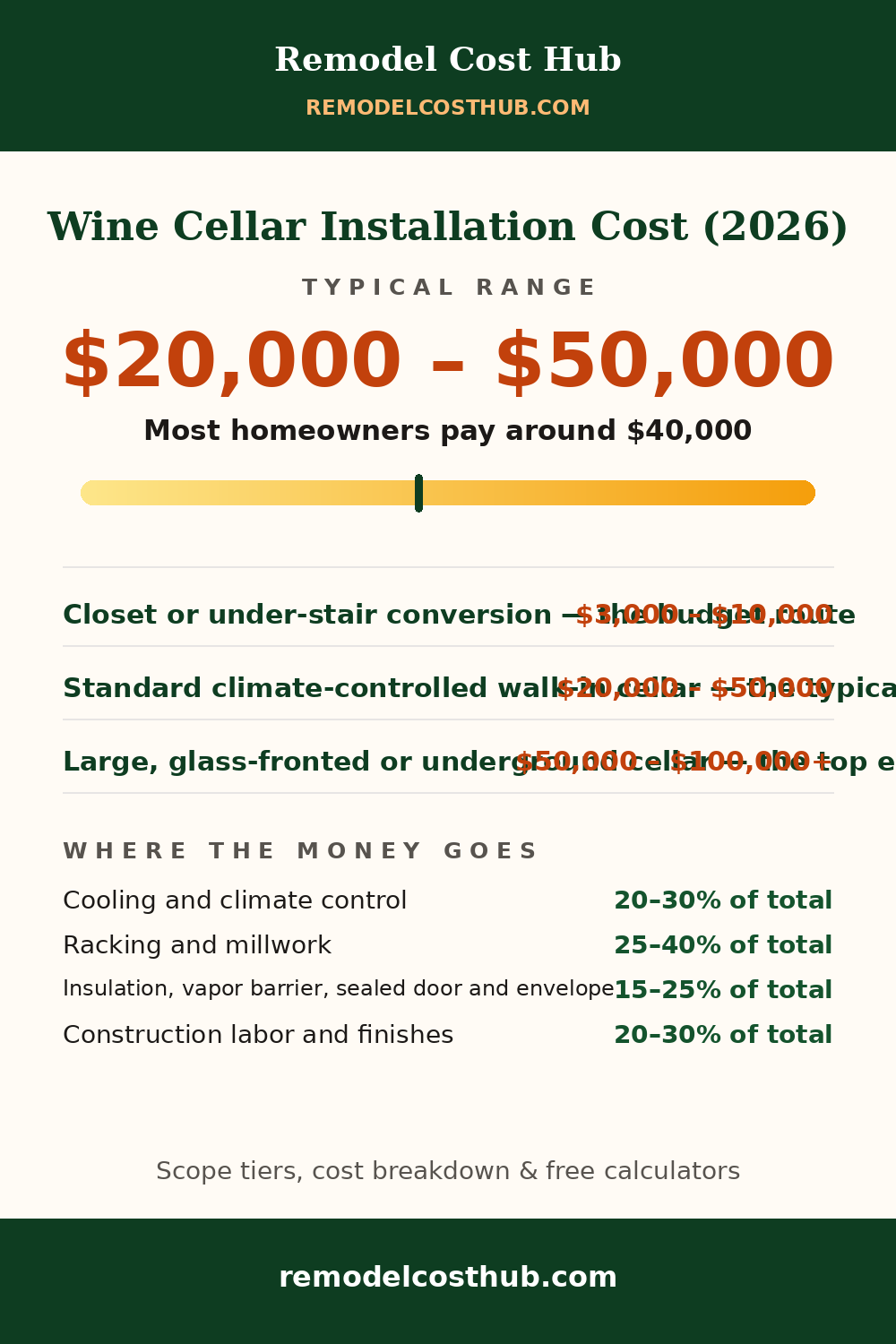
$20,000 – $50,000
Most homeowners pay around $40,000 · Wine cellar installation typically costs $20,000 – $50,000, with about $40,000 the figure most standard jobs land near — Angi prices building a wine cellar at a national average of $40,000 with most homeowners spending $5,000–$100,000 and $300–$600 per square foot, calling $20,000–$50,000 the sweet spot for a fairly luxurious cellar, Fixr prices a 75-square-foot basement cellar at an average of $33,750 within a $15,000–$60,000 range, and Wine Guardian prices a mid-size custom wine room at $10,000–$30,000 and a large walk-in cellar at $30,000–$100,000 and up. The $20,000–$50,000 typical band is Angi's sweet spot, corroborated by Fixr's average, and $40,000 is Angi's published average — a closet conversion costs far less, and a large glass-fronted or underground cellar costs far more.
typical
$20,000$50,000
Low end = minor scope  ·  marker = typical middle  ·  high end = major scope. Add 10–20% contingency to any budget.
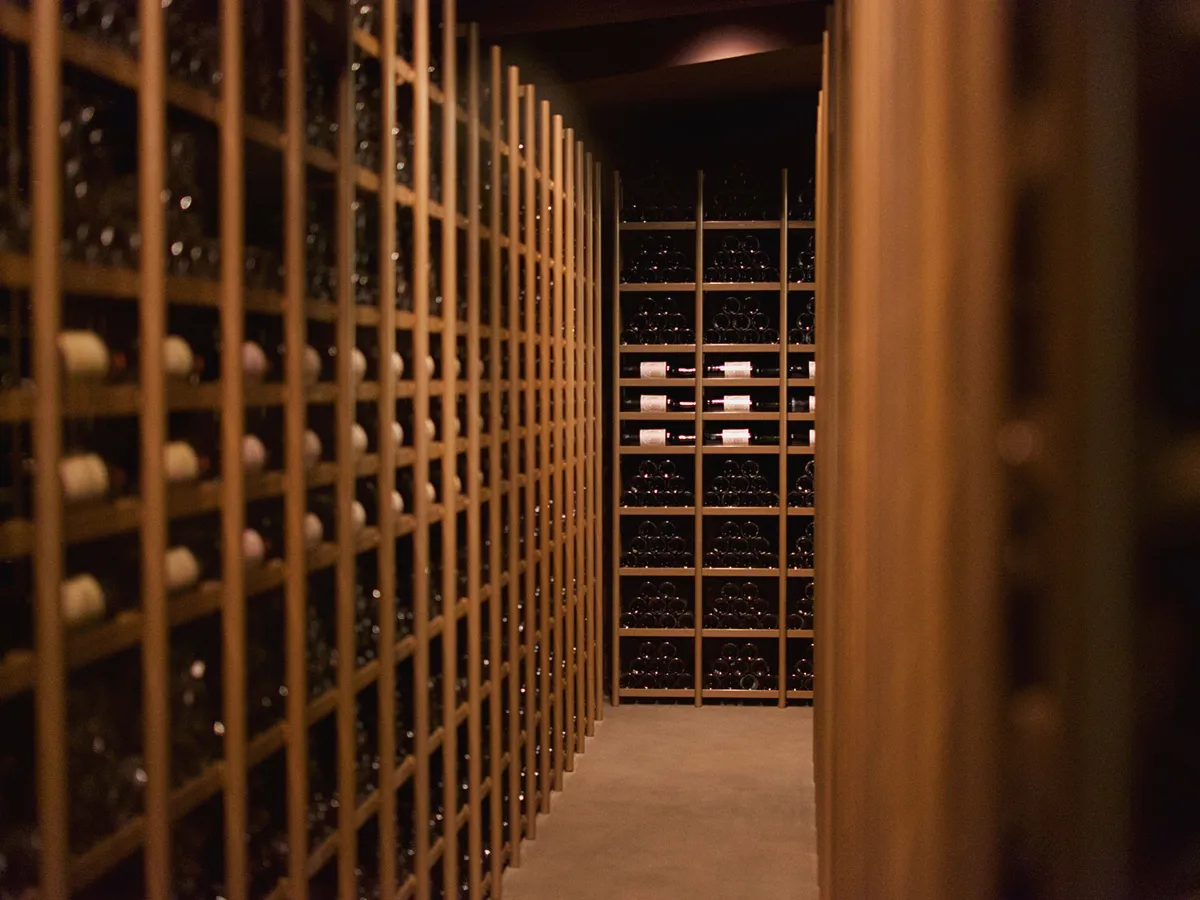
Long wood-racked wine cellar corridor with bottles stored on both sides

Wine Cellar Installation cost at a glance

  • Typical range: $20,000 – $50,000
  • Most homeowners pay: around $40,000
  • Prices vary most by: Racking and millwork (25–40% of the budget)

Cross-checked against two published sources for this project. Sources used for this page: Angi's wine cellar cost guide (updated October 28, 2026: national average $40,000, most projects $5,000–$100,000, $300–$600 per square foot; glass cellar $18,000–$55,000; $20,000–$50,000 the sweet spot for a fairly luxurious cellar; about 500 bottles in a 25-square-foot cellar; closet conversion insulation and racks $500–$2,500), Fixr's wine cellar cost data as cited by Deslaurier (average $33,750 for a 75-square-foot basement cellar, general range $15,000–$60,000) and Wine Guardian's wine cellar cost guide (closet or under-stairs conversion $3,000–$10,000, mid-size custom wine room $10,000–$30,000, large walk-in cellar $30,000–$100,000 and up; implied $300–$700 per square foot; through-the-wall cooling units from $3,039 and ducted units from $6,043, equipment only). Sources last checked: October 2026 — Fixr, Angi. How we calculate these costs

Cost by scope
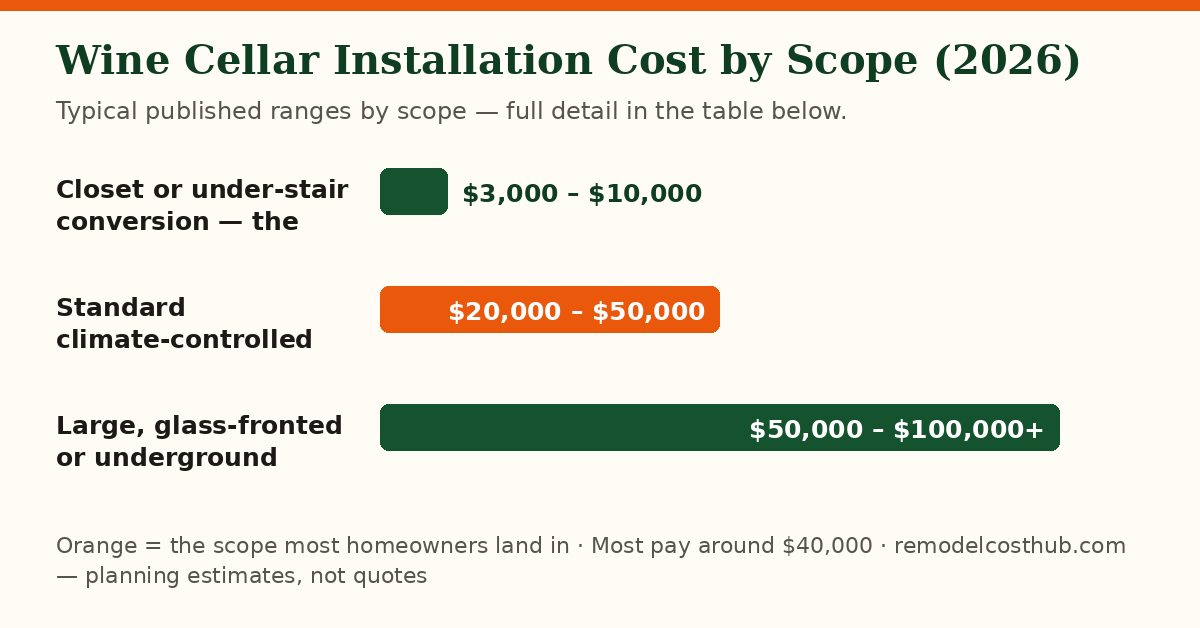
Wine Cellar Installation cost ranges by scope — chart of the table below
ScopeTypical costWhat it includes
Closet or under-stair conversion — the budget route$3,000 – $10,000The cheap end: Wine Guardian prices a closet or under-stairs conversion at $3,000–$10,000, while Angi prices the insulation and custom racks for such a conversion at $500–$2,500 before cooling — a small existing space fitted with racks, insulation and a cooling unit, with no new room built, which is why it prices well below a walk-in cellar
Standard climate-controlled walk-in cellar — the typical job$20,000 – $50,000The shared band itself: Angi calls $20,000–$50,000 the sweet spot for a fairly luxurious cellar with seating or glass, Fixr averages $33,750 for a 75-square-foot basement cellar, and Wine Guardian prices a large walk-in from $30,000 — a purpose-built, insulated, sealed and cooled room of roughly 75 square feet, which is the common job and the band this page is built on
Large, glass-fronted or underground cellar — the top end$50,000 – $100,000+The expensive end: Angi prices a glass wine cellar at $18,000–$55,000 or more and a fully finished wine cave or underground cellar from $75,000, while Wine Guardian prices a large walk-in cellar at $30,000–$100,000 and up — size, glass walls, premium millwork and a ducted cooling system are what push a cellar past the standard band

Where the money goes

Part of the jobShareNote
Cooling and climate control20–30% of totalThe system that makes it a cellar, not a cupboard: Angi names climate control requirements as a main cost driver, and Wine Guardian prices through-the-wall cooling units from $3,039 and ducted units from $6,043 for equipment alone — a ducted system with humidity control costs more than a through-the-wall unit and is what a large or glass cellar needs
Racking and millwork25–40% of totalThe visible woodwork: Angi prices insulation and custom racks at $500–$2,500 for a small conversion alone, and a full walk-in cellar carries racks on every wall — custom hardwood, diamond bins and display rows cost more than kit racking, and bottle capacity is bought here, roughly 500 bottles per 25 square feet in Angi
Insulation, vapor barrier, sealed door and envelope15–25% of totalThe sealed box itself: a wine cellar needs a continuous vapor barrier, insulation and a sealed, insulated door to hold temperature and humidity, and Angi notes that a passive system only works where underground temperatures stay naturally cool and steady — a leaky envelope makes the cooling unit run constantly, which is why this line is not optional
Construction labor and finishes20–30% of totalThe build: framing, drywall, flooring, lighting and electrical for a finished room, on top of the racking and cooling lines — Angi notes that a fully custom build involves walls, concrete and HVAC hookup, which is why a walk-in cellar is contractor work rather than a weekend project
Cooling and climate control · 20–30%Racking and millwork · 25–40%Insulation, vapor barrier, sealed door and envelope · 15–25%Construction labor and finishes · 20–30%
Estimator’s note: on a wine cellar installation, racking and millwork is usually where quotes swing most (25–40% of total of a typical budget). Ask every contractor to itemize that line in writing — totals are only comparable when that part is.
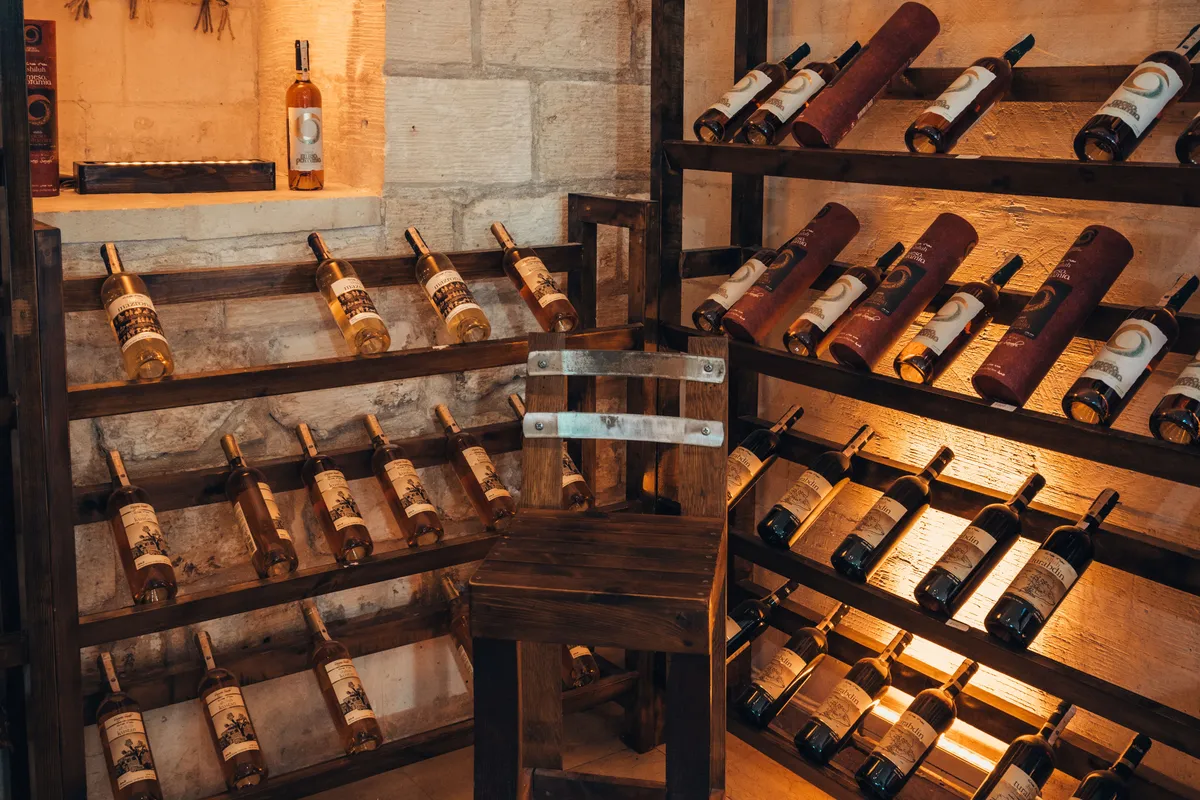
A smaller cellar room with racks and a tasting chair: Wine Guardian prices a mid-size custom wine room at $10,000–$30,000, and the step to the standard $20,000–$50,000 band is usually the cooling system and the sealed envelope, not extra bottles

What moves the price most

Size is the first driver: Angi prices a cellar at $300–$600 per square foot and Wine Guardian's planning bands imply roughly $300–$700, so a 75-square-foot cellar lands near Fixr's $33,750 average while a 25-square-foot cellar holds only about 500 bottles in Angi — floor area and bottle capacity move together, and seating or a tasting table needs area beyond the racks. Cooling type is second: Wine Guardian prices through-the-wall units from $3,039 and ducted units from $6,043 for equipment alone, and Angi notes that a passive system only suits cool, steady underground spaces — warm climates and above-ground rooms need active cooling and humidity control. Location in the home is third: a basement cellar starts cooler and needs less cooling than a main-floor glass room, and Angi prices a glass cellar at $18,000–$55,000 or more before the room around it. Finally, racking and finishes decide the look and the last third of the budget: kit racks against custom hardwood, diamond bins and display lighting are the difference between Wine Guardian's $10,000–$30,000 mid-size room and a $50,000-plus showpiece.

Work out your quantities: before you compare quotes, run your measurements through our free remodeling calculators (paint, tile, concrete and flooring) — each one shows its formula and runs entirely in your browser.

Costs in your city

Labor is the biggest variable in any remodel, and labor is local — the same bathroom can price very differently in Houston than in Boston. We are adding city editions metro by metro, each with its own labor index, permit notes and climate factors, written for that city rather than copied from this page. Wave 1: Houston, Dallas–Fort Worth, Phoenix, Atlanta, Miami–South Florida, Orlando, Tampa, Charlotte, Austin and San Antonio. Until your city's page is live, use the national range here and weight it the way contractors do: Sun Belt labor often prices near or below the national middle, while coastal California and the Northeast metros often price well above it.

How this estimate was built: the range on this page is a synthesis of at least three published industry sources (national cost guides and the Remodeling Magazine Cost vs. Value data among them), cross-checked in October 2026. We publish planning ranges, never a single pretend-precise price. Full method: How We Estimate Costs.
A diamond-lattice rack seen from above: Angi puts about 500 bottles in a 25-square-foot cellar, so racking is bought by bottle capacity as much as by wall area — and Fixr's $33,750 average for a 75-square-foot basement cellar is the check on the $40,000 most-pay figure

Frequently asked questions

How much does it cost to build a wine cellar?

Most standard climate-controlled walk-in cellars land in the $20,000–$50,000 band on this page, with a common middle around $40,000 — Angi's published average. A closet conversion can come in below that band, and a large glass-fronted or underground cellar usually lands above it.

How much does a wine cellar cost per square foot?

Angi prices a cellar at $300–$600 per square foot, and Wine Guardian's planning bands imply roughly $300–$700 once a realistic build cost is divided by a realistic floor area. Use the per-square-foot rate only as a sanity check: a cellar is priced on volume, envelope and equipment, not on floor area alone.

Does a wine cellar need active cooling, or will insulation be enough?

It depends on the room: Angi notes a passive system only works where underground temperatures stay naturally cool and steady, and Wine Guardian prices active cooling units from $3,039 through-the-wall and $6,043 ducted for equipment alone. A basement in a cool climate may manage passively; a main-floor or warm-climate cellar needs active cooling and humidity control.

How many bottles will a wine cellar hold?

Angi puts about 500 bottles in a 25-square-foot cellar, so a standard 75-square-foot walk-in cellar holds roughly three times that before seating or a tasting table takes space. Plan the racking by bottle count first and floor area second, since display rows and diamond bins hold different counts per wall foot.

Is a wine cellar different from a wine fridge or a wine cabinet?

Yes — this page prices a built, sealed, climate-controlled room, while a wine fridge or cabinet is a plug-in appliance that Angi's guides price far below a room build. A cabinet suits a small collection; a cellar suits a collection that needs stable temperature, humidity and racking at room scale.
Before you sign: get at least 3 written local quotes for the same written scope, confirm permits and who pulls them, and keep a 10–20% contingency separate from the contract price.

Ahsan ul Haq — Editor, Remodel Cost Hub

Ahsan compiles and edits the cost guides on Remodel Cost Hub, cross-checking every range against at least three published sources before it is published — the full method is on our Methodology page. Spot an error on this page? Send a correction.

Wine Cellar Installation cost range graphic
Save this range for later: Pin it on Pinterest

Related cost guides

Vacuum cleaner head working across a patterned carpet in a living room

Central Vacuum Installation Cost

$1,100 – $2,200

Central vacuum installation typically costs $1,100 – $2,200, with about $1,600 the figure most standard jobs land near — Angi prices professional central vacuum installation at $1,094–$2,194 with an average of $1,583 across 457 verified projects, and its hiring guide prices the same job at $1,100–$2,200 with a $1,600 average, while CentVac prices a complete installation at $1,200–$3,000 for a home under 3,000 square feet and EngineerFix prices the total at $800–$3,500 with an average around $2,000 for a standard 2,000-square-foot home. The $1,100–$2,200 typical band is Angi's band, corroborated by CentVac, and $1,600 is Angi's hiring-guide average — EngineerFix's higher average spans basic new-construction to premium systems and is published here as the scope difference, not blended, while a power-unit swap on existing piping costs far less and a large retrofit with retractable hoses costs far more.

Two outdoor bullet security cameras mounted on a pole against a clear blue sky

Security Camera Installation Cost

$600 – $2,000

Security camera installation typically costs $600 – $2,000 for a standard professionally installed system, with about $1,300 the figure most standard jobs land near — Angi prices professional installation at $590–$2,040 with a $1,288 average across 4,027 verified projects, and HomeGuide prices a 4-camera system at $500–$1,600 and an 8-camera system at $1,000–$2,500, while Wasserstein prices a single camera at $150–$500 and a 4–8 camera system at $600–$3,000. The $600–$2,000 typical band is the standard 4-camera overlap, and $1,300 is Angi's average rounded — a single wireless camera costs far less, and a large wired system with a recorder and long cable runs costs far more, while a monthly monitoring subscription is a recurring charge on top of the installation total, not inside it.

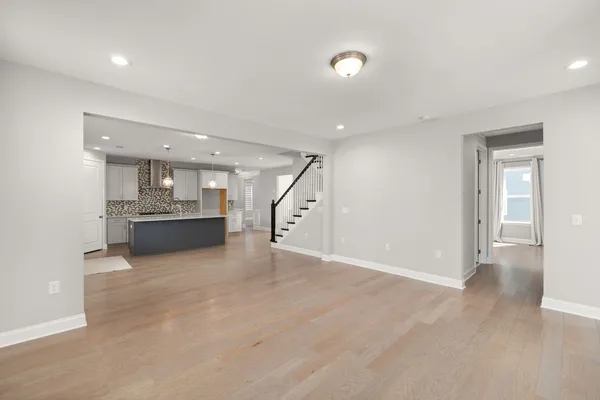
Open-plan living room and kitchen joined by a wide cased opening, with wood floors

Load-Bearing Wall Removal Cost

$3,000 – $8,000

Removing a load-bearing wall typically costs $3,000 – $8,000 for a standard opening, with about $5,700 the figure most standard jobs land near — Angi prices removal at $5,700 on average with most homeowners spending $1,400–$10,000, EngineerFix prices removing the wall and installing a replacement beam at $1,300–$5,000 at roughly $450 per linear foot, and HomeAdvisor prices the same job at $500–$15,000 with a $3,000 average. The $3,000–$8,000 typical band is the standard single-opening overlap, and $5,700 is Angi's average — HomeAdvisor's lower average reflects smaller-scope jobs and is published here as the disagreement, not blended, while a multi-storey wall or a long steel span costs far more, and the engineer and permit fees below are mandatory on every job, not optional extras.

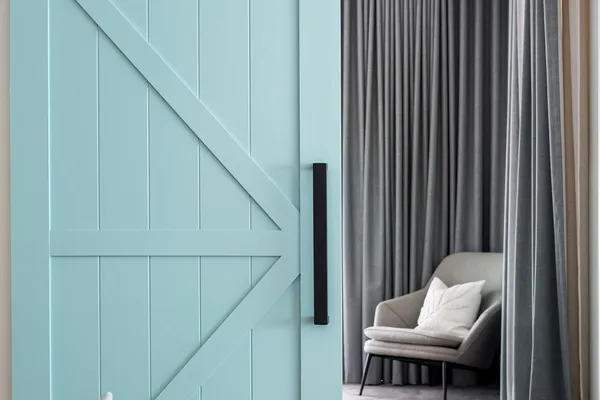
Pale blue sliding barn door with a black pull handle, partly open to a sitting room

Barn Door Installation Cost

$400 – $1,500

Barn door installation typically costs $400 – $1,500 for a standard single interior door, with about $1,000 the figure most standard jobs land near — HomeGuide prices a single installed barn door at $400–$1,400 and a double at $800–$2,800 with labor at $100–$1,000, Angi averages an interior barn door at $1,500 within $200–$2,500 and prices professional installation at $1,350–$5,000 per door including exterior work, and EngineerFix prices a mid-range installed door at $700–$1,700. The $400–$1,500 typical band is the standard single-door overlap, and $1,000 is its middle — Angi's higher professional band covers exterior and custom doors, published here as the scope difference, not blended, while a double door or a custom hardwood door costs far more.

Wall of white built-in bookshelves fitted around a doorway, filled with books

Built-In Bookshelves Installation Cost

$1,500 – $4,500

Built-in bookshelves typically cost $1,500 – $4,500 for a standard medium unit, with about $3,000 the figure most standard jobs land near — Angi's hiring guide prices professionally installed built-in bookshelves at $1,400–$4,800 with most homeowners spending around $3,000, Bob Vila prices the same work at $1,290–$4,420 with a national average of $2,853, and HomeGuide prices custom bookshelves at $150–$400 per linear foot in MDF, $150–$600 in plywood and $500–$1,200 in hardwood. The $1,500–$4,500 typical band is the medium-unit overlap, and $3,000 is Angi's most-spent figure, corroborated by Bob Vila's average — Angi's 2026 bookcase data averages a smaller $1,400 within $1,000–$2,000, published here as the smaller-scope band, not blended, while a large wall-to-wall hardwood library wall costs far more.

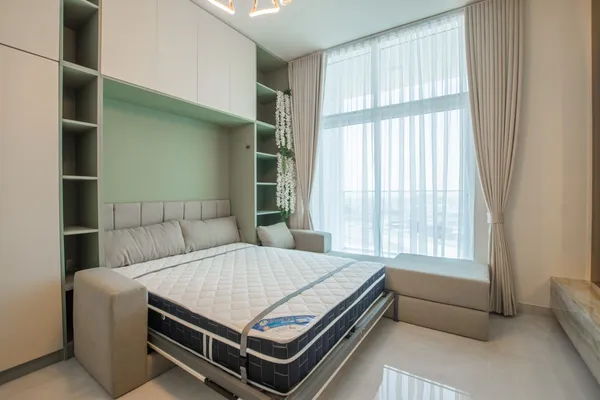
Pull-down wall bed lowered from fitted cabinetry with side shelving, mattress on a metal frame

Murphy Bed Installation Cost

$1,500 – $4,000

A Murphy bed typically costs $1,500 – $4,000 for a standard queen unit installed, with about $3,000 the figure most standard jobs land near — Angi prices professional Murphy bed installation at $1,000–$7,500 with a $3,000 average, Renuity, citing Angi's 2025 data, prices most installations at $2,000–$4,000 with a queen at $1,500–$4,000, and Lori Beds prices a basic prefab unit plus installation at $1,000–$3,000 with custom cabinetry builds at $3,500–$15,000 or more. The $1,500–$4,000 typical band is the popular queen overlap, and $3,000 is Angi's average — a basic twin can come in below it, and a custom desk-integrated or king unit costs far more, while the unit, mechanism and anchoring labor below are all inside the total.