Linoleum Flooring cost at a glance
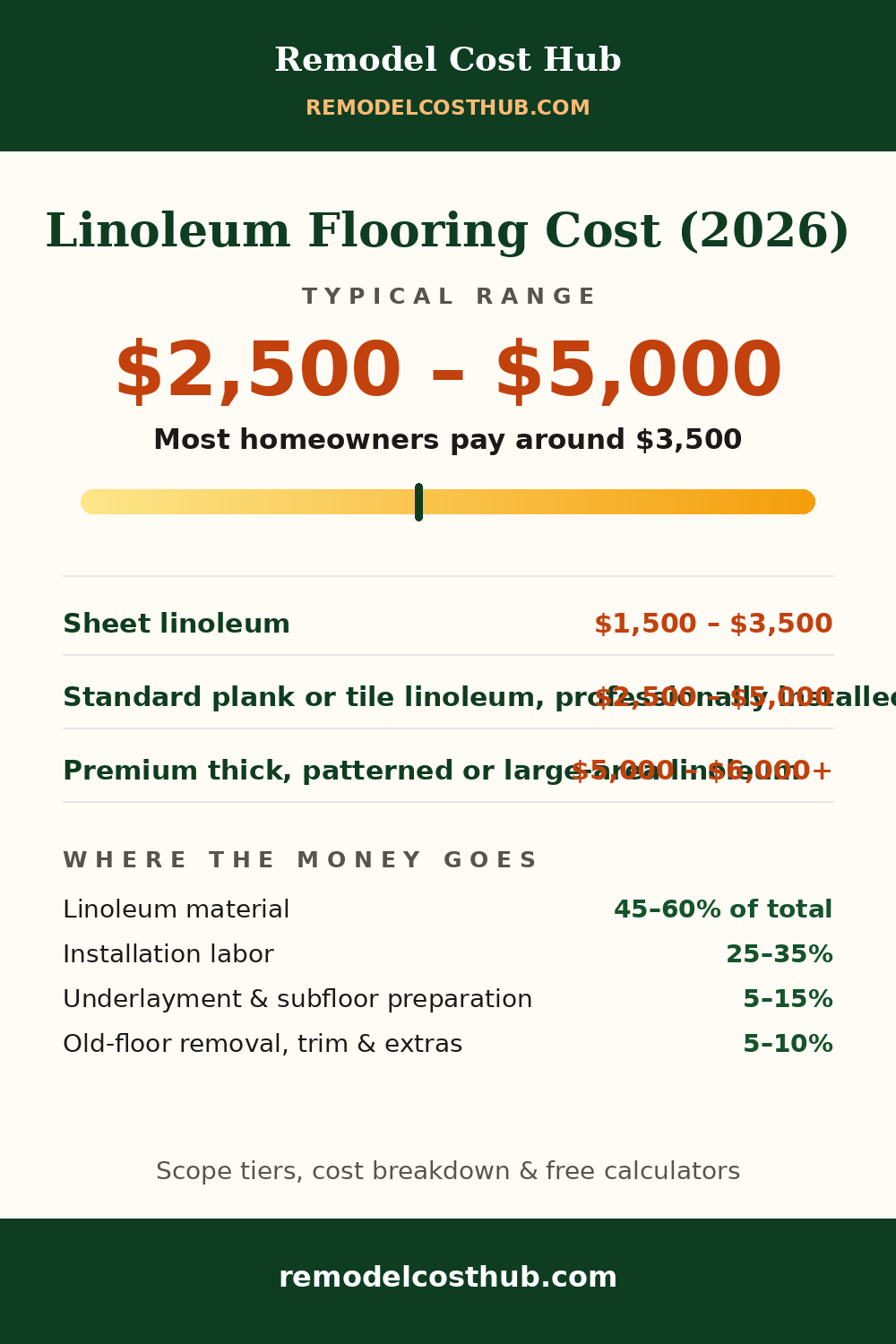
- Typical range: $2,500 – $5,000
- Most homeowners pay: around $3,500
- Per square foot: $5 – $10 per sq ft
- Prices vary most by: Linoleum material (45–60% of the budget)
Cross-checked against three published sources for this project. Sources used for this page: the Angi linoleum flooring cost guide, HomeGuide's linoleum flooring cost guide and Modernize's linoleum flooring cost guide. Sources last checked: October 2026 — HomeGuide, Modernize, Angi. Last updated October 2026 · How we calculate these costs
Cost by scope
| Scope | Typical cost | What it includes |
|---|---|---|
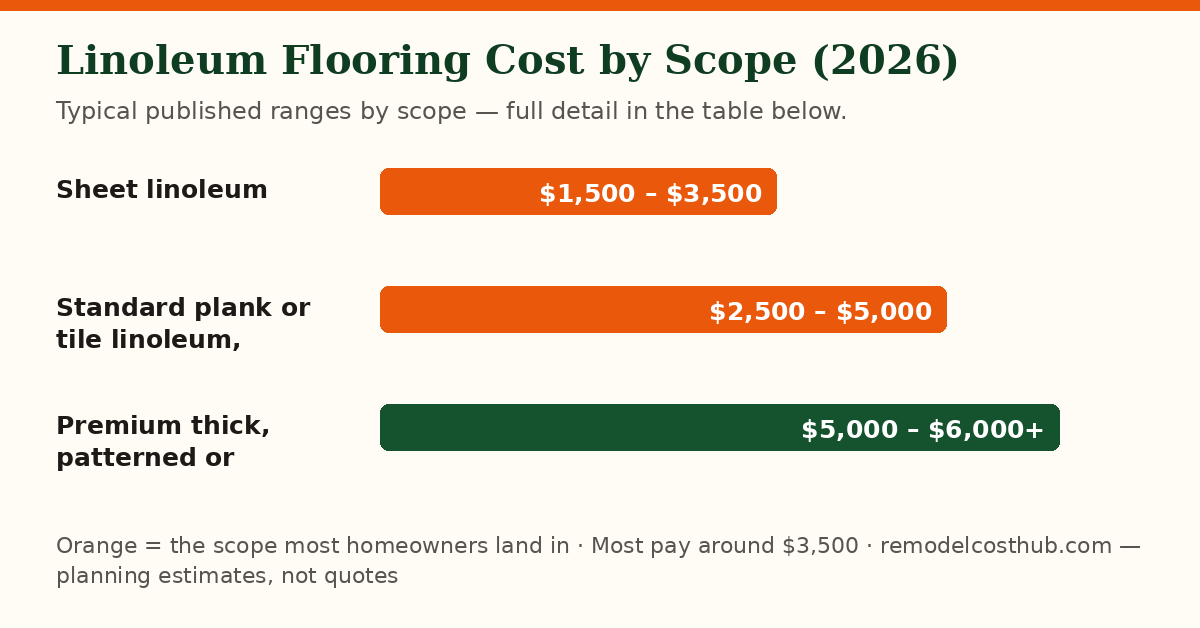
| Sheet linoleum | $1,500 – $3,500 | Sheet linoleum over about 500 sq ft — the cheapest material in every guide at $2–$5 per sq ft, installed at $3–$10 in HomeGuide; it is also the hardest format to fit, which is why the guides steer sheet work to professional installers |
| Standard plank or tile linoleum, professionally installed | $2,500 – $5,000 | Where most linoleum projects land: plank or tile formats over about 500 sq ft — HomeGuide prices planks at $5–$10 and tiles at $4–$11 per sq ft installed, Angi puts installed linoleum at $3–$12 overall, and Modernize puts the national average project at about $1,760 across the smaller rooms most jobs cover |
| Premium thick, patterned or large-area linoleum | $5,000 – $6,000+ | Thick commercial-grade material, patterned inlay work or a large multi-room area — HomeGuide's installed band runs to $11 per sq ft and Modernize prices large projects of 500 sq ft and up at $1,500–$6,000 or more |
Where the money goes
| Part of the job | Share | Note |
|---|---|---|
| Linoleum material | 45–60% of total | The flooring itself is most of the bill: all three guides put linoleum material at $2–$7 per sq ft — sheet $2–$5, plank $3–$6 and tile $4–$7 in Angi and Modernize — and thickness is the step inside that band |
| Installation labor | 25–35% | Fitting, adhering and seam work: HomeGuide prices labor at $1–$4 per sq ft and Modernize at $1–$5 (about $35 an hour); sheet linoleum is the slow, skilled end of that range and click-together tile the fast end |
| Underlayment & subfloor preparation | 5–15% | Thin sheet linoleum telegraphs every subfloor flaw, so levelling and underlayment are real lines: HomeGuide prices subfloor replacement at $2.20–$4.75 per sq ft where the old subfloor cannot be saved |
| Old-floor removal, trim & extras | 5–10% | Pulling the old floor — carpet removal alone runs $0.70–$1.60 per sq ft in HomeGuide — plus transitions, trim and the sealing a kitchen or bathroom install needs against moisture |
What moves the price most
Format is the linoleum budget. Linoleum is one material sold three ways, and every guide prices them in the same order: sheet is the cheapest material ($2–$5 per sq ft in Angi, HomeGuide and Modernize) but the hardest to install, planks sit in the middle ($3–$6 material), and tiles are the dearest material ($4–$7) but the easiest to fit. The installed bands agree once format is fixed — Angi and Modernize at $3–$12 per sq ft, HomeGuide at $3–$11 — and the standard plank-and-tile overlap of roughly $5–$10 is the rate this page publishes as typical. Thickness is the second lever: thicker linoleum costs more per foot and lasts longer, and HomeGuide's advice is to spend the thickness where the traffic is rather than uniformly. The subfloor is the condition that decides the prep line: linoleum — sheet especially — shows every bump and hollow beneath it, so levelling and underlayment join quotes that a thicker, stiffer floor would not need. Finally, moisture discipline is part of the real price in wet rooms: linoleum is water-resistant, not waterproof — Angi and HomeGuide both require it to be sealed in kitchens and bathrooms and re-sealed about yearly, a small recurring line that belongs in the cost of owning it there.
Worked example: how a typical linoleum flooring budget breaks down
A typical job: about 500 sq ft of standard plank linoleum across a kitchen, hall and bedrooms, old flooring removed, subfloor checked and levelled where needed. The budget below totals $3,500 — the "most homeowners pay around" figure from the top of this page — split using this page's own cost breakdown. It shows how a real quote at that level is usually composed; every line is built from the ranges on this page, and it is an illustration, not a quote for your project.
| Line item | Example budget |
|---|---|
| Linoleum material — standard plank format | $1,820 |
| Installation labor | $1,050 |
| Underlayment and subfloor preparation | $350 |
| Old-floor removal, trim and extras | $280 |
| Total | $3,500 |
What most people get wrong
- Confusing linoleum with vinyl at the quote stage — they price similarly but are different materials with different care; a quote that just says resilient flooring has not specified your floor.
- Ordering sheet linoleum for a DIY first project — sheet is the cheapest material and the hardest fit in the whole category; a templating error costs the whole sheet, not one tile.
- Laying thin sheet over an unprepared subfloor — every hollow and ridge prints through within weeks, and the fix is lifting the floor you just paid for.
- Skipping the sealing in a kitchen because the sample felt tough — unsealed seams are where kitchen moisture gets under linoleum, and the yearly reseal is priced in effort, not money.
Costs in your city
Linoleum's market is a revival market: it concentrates where eco-focused and design-led retailers stock it — larger metros and the Northeast and Pacific regions especially — so installer experience and material choice vary more by region than with vinyl, which every store carries. In markets where linoleum is a specialty order, lead times and freight join the quote, and fewer installers compete on sheet work in particular. Humid regions add the sealing discipline in kitchens and entries; cold, dry regions are linoleum's easiest service. Material pricing is otherwise national — the local spread is stock depth, installer experience with the format you chose, and how much levelling your subfloor honestly needs.
Frequently asked questions
How much does linoleum flooring cost for 500 sq ft?
About $2,500–$5,000 installed is the typical band on this page for standard plank or tile linoleum, with most projects landing around $3,500. HomeGuide and Modernize both price 500 sq ft at $1,500–$5,500 across all formats, and sheet linoleum runs $1,500–$3,500 for the same area.
How much does linoleum flooring cost per square foot?
Angi and Modernize put installed linoleum at $3–$12 per sq ft and HomeGuide at $3–$11, with material at $2–$7 and labor at $1–$4 in HomeGuide and $1–$5 in Modernize. Standard plank and tile work lands around $5–$10; sheet linoleum starts lower and premium thick material runs to the top of the bands.
What is the cheapest linoleum to install?
Sheet linoleum on material price — $2–$5 per sq ft in all three guides — but it is the most difficult format to measure, cut and fit, so its labor eats part of the saving and the guides consistently recommend professional installation for it. Click-together tiles are the cheapest route overall for a small room a homeowner fits themselves.
How long does linoleum flooring last?
HomeGuide puts linoleum at 20–50 years with proper maintenance and Angi at 20–40 years — among the longest lifespans of any resilient floor on this site, because the colour runs through the material rather than sitting in a printed layer. Thick planks and tiles tend to outlast thin sheet.
Is linoleum the same as vinyl?
No — they are different materials that are often confused. Linoleum is made from natural ingredients (linseed oil, cork and wood flour, limestone dust), while vinyl is synthetic and waterproof. HomeGuide prices them side by side — linoleum at $3–$11 per sq ft installed against vinyl at $2–$12 — and the practical difference is moisture: linoleum needs sealing in wet rooms, vinyl does not.
Can I install linoleum flooring myself?
Click-together tiles and planks are the realistic DIY formats — HomeGuide and Modernize both describe them as easy-install products. Sheet linoleum is the version to hire out: it arrives in wide rolls, has to be templated and cut to the room, and a fitting mistake is a whole-sheet mistake.