Cost by scope
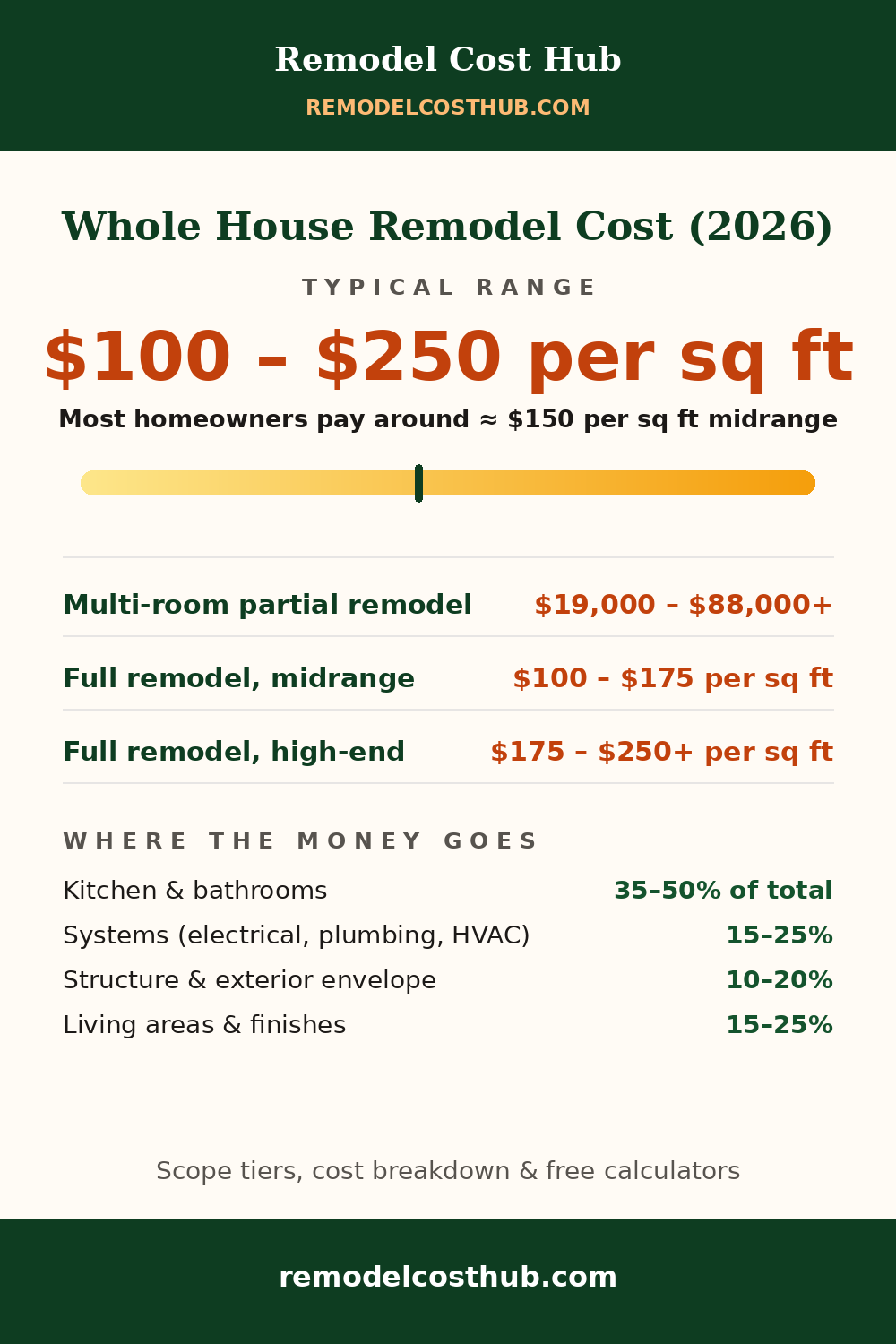
| Scope | Typical cost | What it includes |
|---|---|---|
| Multi-room partial remodel | $19,000 – $88,000+ | Several rooms refreshed/updated without a full gut — published syntheses put typical whole-house project spending anywhere in this wide band depending on scope |
| Full remodel, midrange | $100 – $175 per sq ft | Whole home taken to studs in wet areas, new systems as needed, standard finishes |
| Full remodel, high-end | $175 – $250+ per sq ft | Structural changes, premium finishes and systems throughout |
Where the money goes
| Part of the job | Share | Note |
|---|---|---|
| Kitchen & bathrooms | 35–50% of total | Wet rooms cost several times more per square foot than bedrooms — they dominate whole-house budgets |
| Systems (electrical, plumbing, HVAC) | 15–25% | Older homes often need panel, repipe or duct work discovered in the walls |
| Structure & exterior envelope | 10–20% | Roof, siding, windows — sometimes bundled into the project |
| Living areas & finishes | 15–25% | Flooring, paint, trim and lighting across the whole home |
What moves the price most
Per-square-foot pricing lies politely. A whole-house figure blends cheap square feet (bedrooms: paint and flooring) with expensive ones (kitchens and baths). Two 1,800 sq ft homes can differ by $100,000 on wet-room scope alone. Home age is the second driver — pre-1980 homes routinely need electrical, plumbing or abatement work that newer homes skip. Phasing is the practical lever: systems and wet rooms first, finishes later, so no finished room is reopened.
Costs in your city
Local labor moves a remodel price more than almost anything else, so we are publishing city-adjusted ranges metro by metro — each with its own local cost index, permit notes and climate factors, not a find-and-replace of this page. Wave 1 cities: Houston, Dallas–Fort Worth, Phoenix, Atlanta, Miami–South Florida, Orlando, Tampa, Charlotte, Austin and San Antonio. Until your city's page is live, use the national range here and weight it: Sun Belt labor often prices near or below the national middle; coastal California and the Northeast metros often price well above it.
Frequently asked questions
Is it cheaper to remodel or to buy a different house?
Compare the remodel total against the price gap to a house that already has what you want, plus moving costs and the rate difference on a new mortgage. Remodeling usually wins when the location is right and the structure is sound — it loses when the house needs foundation or full systems work on top of finishes.
How long does a whole-house remodel take?
Phased partial projects run weeks per phase; a full gut remodel of an average home typically runs 4–9 months. Most owners move out for full guts — budget temporary housing into the real total.
What should be done first in a whole-house remodel?
Roof and water intrusion, then systems (electrical, plumbing, HVAC), then wet rooms, then finishes. Doing finishes before systems is the classic expensive mistake.
How much contingency should I carry?
15–20% for whole-house work — higher than single-room projects because opening every wall multiplies the chance of hidden conditions (rot, old wiring, undersized structure).