Cost by scope
| Scope | Typical cost | What it includes |
|---|---|---|
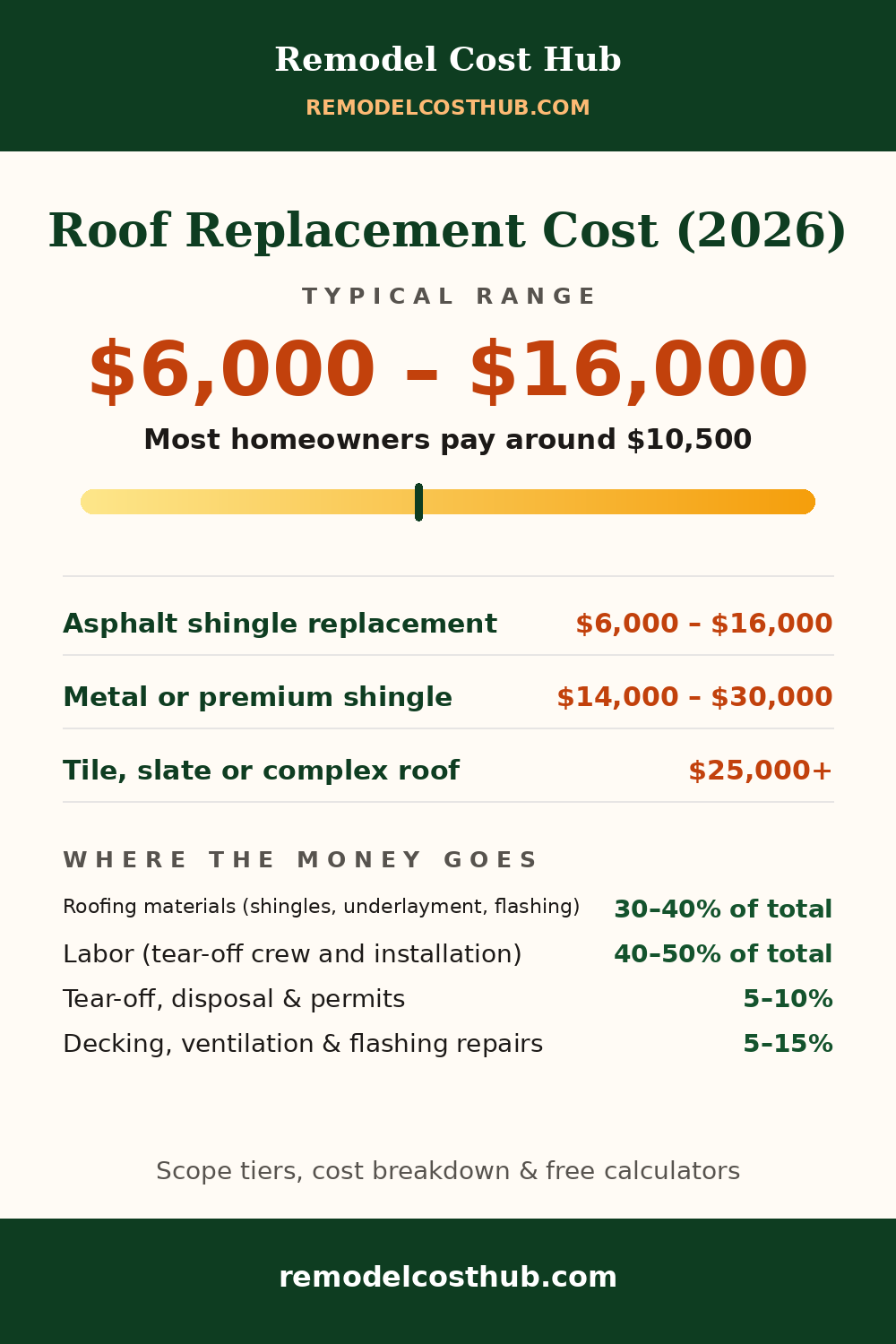
| Asphalt shingle replacement | $6,000 – $16,000 | Full tear-off of one old layer, new underlayment, flashing and standard or architectural asphalt shingles — where most replacements land |
| Metal or premium shingle | $14,000 – $30,000 | Standing-seam or other metal systems, or luxury shingles; longer service life, higher material and fitting cost |
| Tile, slate or complex roof | $25,000+ | Clay/concrete tile or slate, or a steep, cut-up roof with many valleys and penetrations — specialist crews and structural checks add cost |
Where the money goes
| Part of the job | Share | Note |
|---|---|---|
| Roofing materials (shingles, underlayment, flashing) | 30–40% of total | Material class is the widest spread in the budget — asphalt at the low end, slate and tile far above it |
| Labor (tear-off crew and installation) | 40–50% of total | Pitch, height, complexity and local labor rates move this share most |
| Tear-off, disposal & permits | 5–10% | Extra old layers cost more to remove and dispose of; permit fees vary by city |
| Decking, ventilation & flashing repairs | 5–15% | Rotten decking is usually only visible after tear-off — the classic contingency item on a roof job |
What moves the price most
Roof area is not house area. Roofers price by the actual roof surface — measured in squares of 100 sq ft — and slope plus overhangs make that surface larger than the floor plan below it. Material choice is the second cliff: published guides consistently put standard asphalt far below metal, and metal below tile or slate, while service life rises in roughly the same order. Pitch and complexity come third — a steep or cut-up roof needs more safety gear, more flashing work and more labor time. Finally, what tear-off reveals decides the surprises: rotten decking, inadequate ventilation and failed flashing are normally priced per sheet or per item once the old roof is off, which is why a written unit price for deck replacement belongs in the contract before work starts.
Costs in your city
Local labor moves a remodel price more than almost anything else, so we are publishing city-adjusted ranges metro by metro — each with its own local cost index, permit notes and climate factors, not a find-and-replace of this page. Wave 1 cities: Houston, Dallas–Fort Worth, Phoenix, Atlanta, Miami–South Florida, Orlando, Tampa, Charlotte, Austin and San Antonio. Until your city's page is live, use the national range here and weight it: Sun Belt labor often prices near or below the national middle; coastal California and the Northeast metros often price well above it.
Frequently asked questions
How much does a new roof cost per square foot?
Published national guides put a typical installed replacement at about $4–$11 per square foot for standard materials. At that rate a 2,000 sq ft roof surface lands roughly in the $8,000–$22,000 zone before premium materials or complexity push it higher — use it as a planning check against quotes, not as a quote itself.
How long does a roof replacement take?
Most asphalt-shingle replacements on an average home take about 1–3 days of work once materials are on site. Metal usually takes longer, and tile or slate — or bad weather and decking repairs — can stretch a job to a week or more.
Is it cheaper to put new shingles over the old roof?
An overlay can save the tear-off cost where code allows it and there is only one existing layer, but it hides the decking, can shorten the new roof's life and may void parts of a manufacturer's warranty. For a long-term home, a full tear-off is usually the safer spend.
Does homeowners insurance pay for a new roof?
Insurance generally responds to sudden, covered damage — storm, hail or a fallen tree, for example — and not to normal aging or wear. If you suspect storm damage, document it promptly and have a roofer inspect before you file.
How long should an asphalt shingle roof last?
Commonly around 15–30 years depending on shingle type, ventilation, climate and installation quality. Architectural shingles sit toward the top of that span; metal, tile and slate systems are published with considerably longer expected lives.