Lead Paint Removal cost at a glance
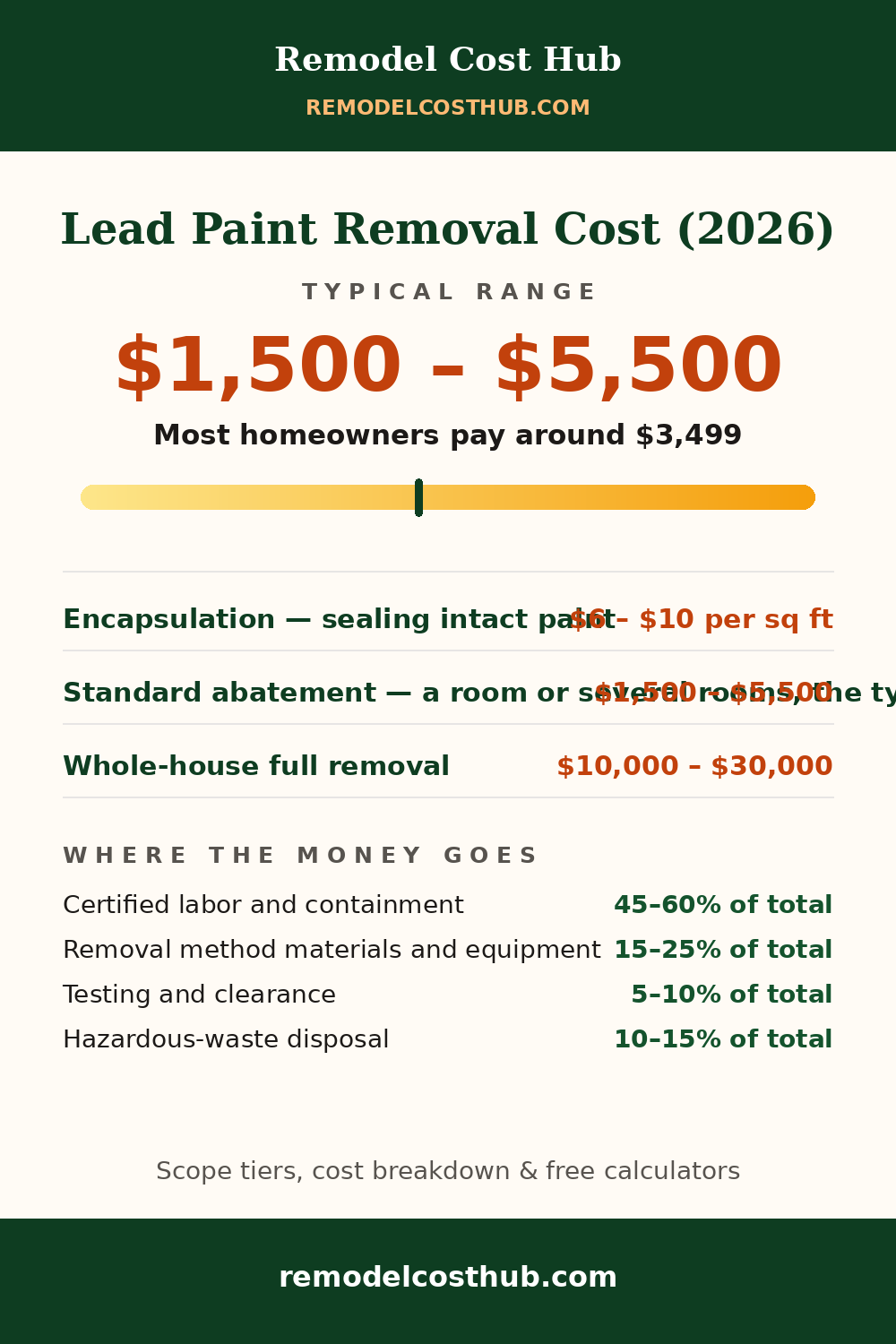
- Typical range: $1,500 – $5,500
- Most homeowners pay: around $3,499
- Prices vary most by: Certified labor and containment (45–60% of the budget)
Cross-checked against three published sources for this project. Sources used for this page: Angi's lead paint removal cost guide, updated September 4, 2026 (national average $3,499, most $1,478–$5,520, $6–$17 per square foot; encapsulation $6–$10, enclosure $8–$16, full removal $10–$17 per square foot; labor $50–$120 per hour for certified work), HomeGuide's lead paint removal cost guide ($6–$17 per square foot, $3,000–$17,000 total; encapsulation $6–$10, enclosure $8–$13, removal $10–$17 per square foot) and Fixr's lead paint removal cost guide (average about $15,000 for a 2,000-square-foot house inside a $10,000–$30,000 range; encapsulation $1–$4, enclosure $6–$12, removal $8–$17 per square foot; replacement $1,000–$15,000 per project). The page's typical band is Angi's most-pay band, its $3,499 most-pay figure is Angi's published average, and Fixr's lower encapsulation band is published as a disagreement, not averaged away. Sources last checked: October 2026 — HomeGuide, Fixr, Angi. How we calculate these costs
Cost by scope
| Scope | Typical cost | What it includes |
|---|---|---|
| Encapsulation — sealing intact paint | $6 – $10 per sq ft | The cheapest route: HomeGuide and Angi both price encapsulation at $6–$10 per square foot — a special coating seals sound paint in place, but it is not permanent and cannot be used on friction surfaces like window sashes |
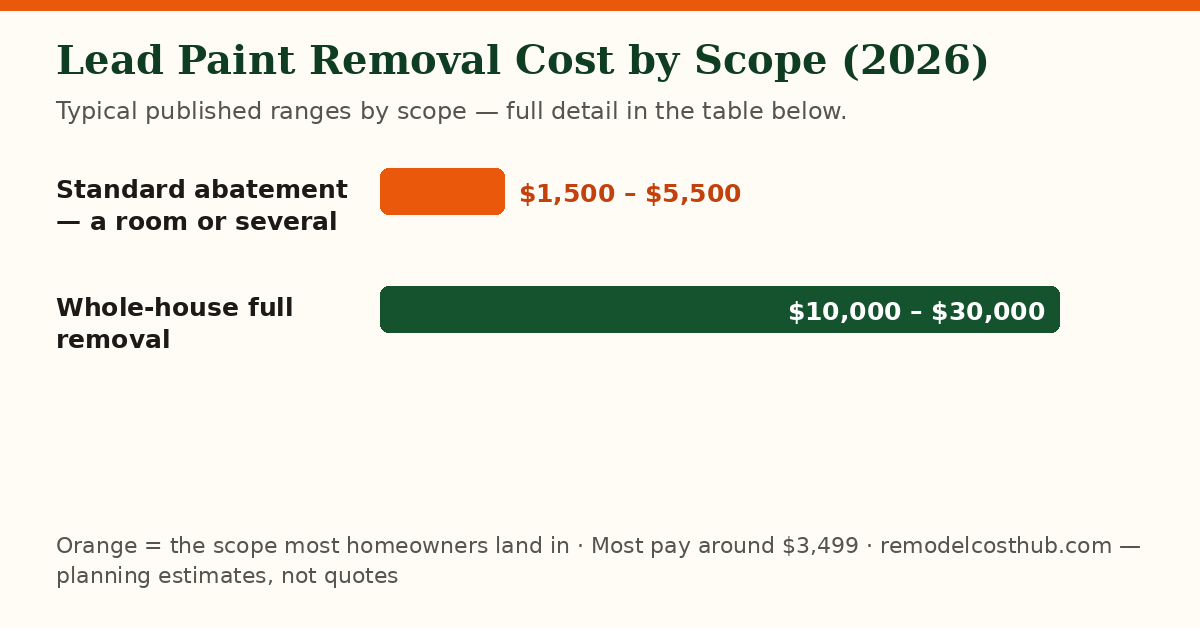
| Standard abatement — a room or several rooms, the typical job | $1,500 – $5,500 | The shared band: Angi's most-pay band is $1,478–$5,520 with a $3,499 average, and HomeGuide's total range starts at $3,000 — containment, certified removal, disposal and clearance testing included |
| Whole-house full removal | $10,000 – $30,000 | The big end: Fixr prices a 2,000-square-foot house at about $15,000 on average inside a $10,000–$30,000 range, with component replacement priced per project on top |
Where the money goes
| Part of the job | Share | Note |
|---|---|---|
| Certified labor and containment | 45–60% of total | The largest share: Angi prices certified labor at $50–$120 per hour, and containment, HEPA filtration and cleanup are mandatory, not optional |
| Removal method materials and equipment | 15–25% of total | Chemical strippers, wet-sanding and scraping gear, or encapsulant coatings — the method chosen decides this line |
| Testing and clearance | 5–10% of total | A lead inspection runs $250–$700 in EngineerFix's guide, and post-abatement clearance testing $150–$400 — the job is not finished without it |
| Hazardous-waste disposal | 10–15% of total | Lead debris is hazardous waste: EngineerFix prices disposal at about $3–$5 per square foot on top of removal |
What moves the price most
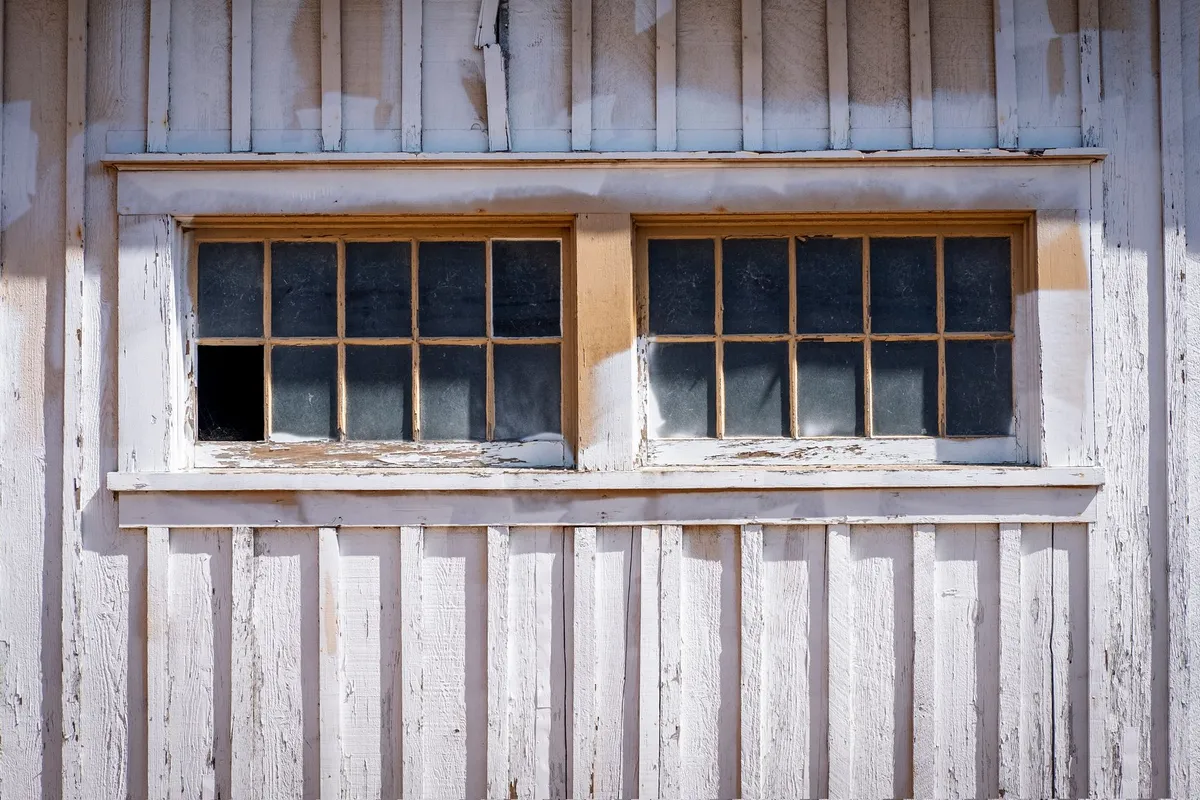
Method is first: Angi and HomeGuide both price encapsulation at $6–$10 per square foot, enclosure at $8–$13 (HomeGuide) to $8–$16 (Angi), and full removal at $10–$17 — Fixr's lower encapsulation band of $1–$4 is published as a disagreement, not averaged away. Area and surface are second: the bill scales with the square footage of painted surface actually treated, and trim, windows and doors cost more per foot than flat walls. Openings are third: windows and doors run $400–$1,500 per opening in the 2026 abatement guide, because trim and friction surfaces are where lead paint fails first. Certification is fourth: only EPA- or state-certified firms may do abatement in pre-1978 homes under the Renovation, Repair, and Painting Rule — and intact paint need not be removed at all: the EPA's position is that paint in good condition can be left and monitored, since the hazard is chipping, peeling and friction dust, not the paint itself. For the related hazard job, see our asbestos removal guide.
Costs in your city
Labor is the biggest variable in any remodel, and labor is local — the same bathroom can price very differently in Houston than in Boston. We are adding city editions metro by metro, each with its own labor index, permit notes and climate factors, written for that city rather than copied from this page. Wave 1: Houston, Dallas–Fort Worth, Phoenix, Atlanta, Miami–South Florida, Orlando, Tampa, Charlotte, Austin and San Antonio. Until your city's page is live, use the national range here and weight it the way contractors do: Sun Belt labor often prices near or below the national middle, while coastal California and the Northeast metros often price well above it.
Frequently asked questions
How much does lead paint removal cost?
Typically $1,500–$5,500 for a standard certified abatement project, with about $3,499 the figure most jobs land near — Angi's national average of $3,499 inside its $1,478–$5,520 band. Full removal runs $8–$17 per square foot in all three guides.
Encapsulation, enclosure or removal — which should I choose?
Encapsulation ($6–$10 per square foot in Angi and HomeGuide) seals intact paint and is cheapest but temporary and unsuitable for friction surfaces. Enclosure ($8–$13 HomeGuide, $8–$16 Angi) covers it with drywall or panels and lasts longer. Removal ($8–$17) eliminates the hazard permanently and costs most.
Can I remove lead paint myself?
Not as abatement: certified firms are required for lead abatement in pre-1978 homes, and dry scraping or sanding without containment creates the dust hazard the rules exist to prevent. A homeowner may monitor intact paint, but deteriorated paint belongs to a certified contractor.
How much does it cost to remove lead paint from windows?
Windows and doors run $400–$1,500 per opening in the 2026 abatement guide. Full component replacement — taking the window or trim out entirely — is priced per project at $1,000–$15,000 in Fixr's guide.
What do testing and clearance cost?
A lead inspection runs $250–$700 in EngineerFix's guide, and post-abatement clearance testing $150–$400. Clearance is the proof the home is safe to reoccupy — a quote without it is incomplete.
Does lead paint have to be removed if it is intact?
No: paint in good condition can be left alone and monitored, per EPA guidance. The hazard is chipping, peeling and friction dust. Removal becomes necessary when paint deteriorates, before renovation that disturbs it, or when children are exposed.