Electrical Inspection cost at a glance
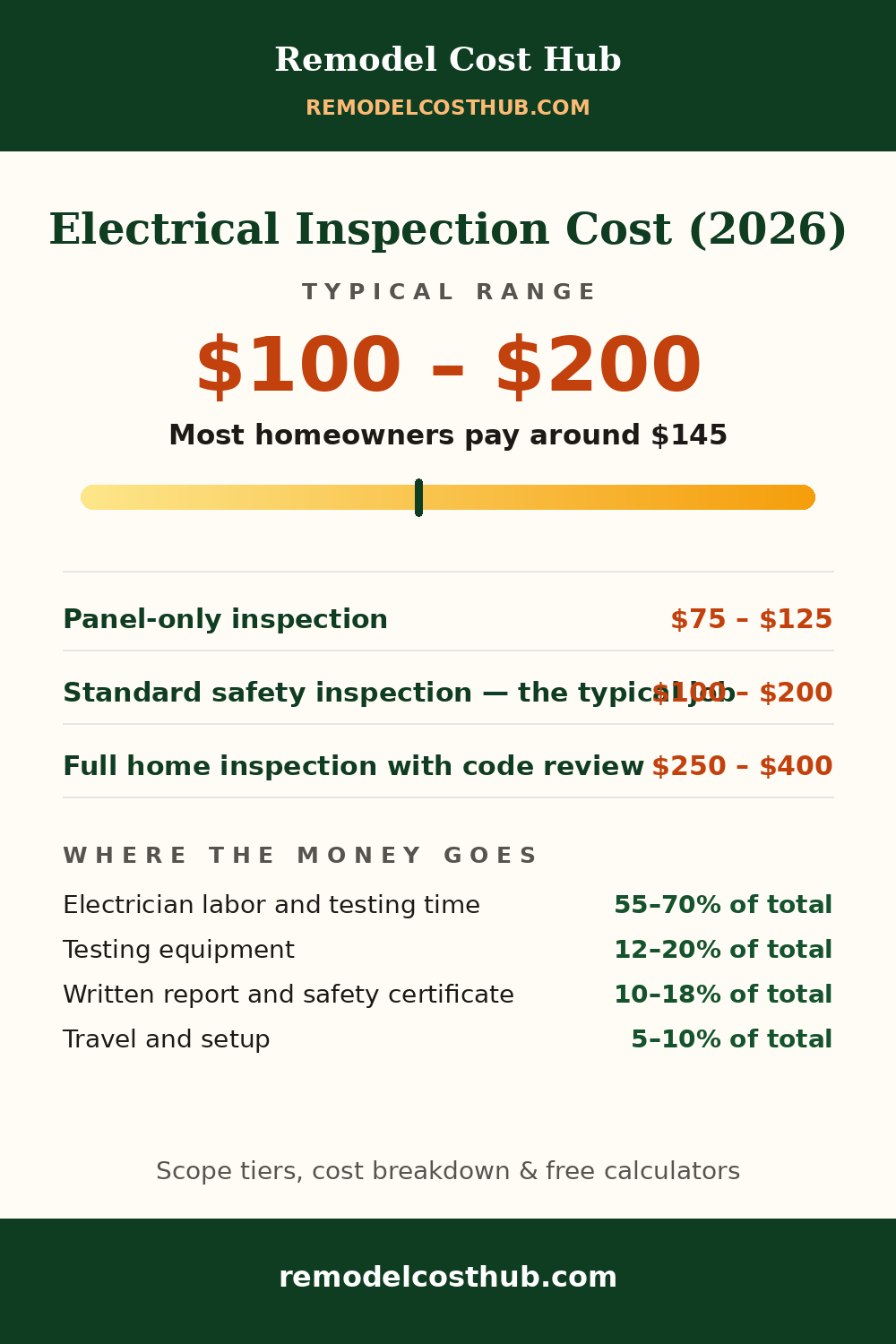
- Typical range: $100 – $200
- Most homeowners pay: around $145
- Prices vary most by: Electrician labor and testing time (55–70% of the budget)
Cross-checked against two published sources for this project. Sources used for this page: HomeGuide's electrical inspection cost guide (national average $145, average range $100–$200, minimum $50, maximum $250; standard safety inspection $100–$200; infrared inspection $150–$350 as an add-on; home inspection $250–$400 including an electrical check), Angi's electrical inspection guidance, updated August 1, 2026 (full home electrical inspection around $350; standard inspections $100–$200; infrared inspections averaging about $250 additional; inspector flat fee $110–$125 per session rising with house size; inspections every three to five years, every two to three years for older homes) and iBuyer's electrical inspection cost guide (standard safety check $100–$200; panel-only inspection $75–$125; full home inspection $250–$400; infrared/thermal add-on $150–$350; code compliance inspection $35–$90 for the permit or free with repairs). The page's typical band is the HomeGuide–Angi standard agreement at $100–$200, and its $145 most-pay figure is HomeGuide's published average; Angi's $350 full-home figure is tiered separately, not averaged away. Sources last checked: October 2026 — HomeGuide, Angi. How we calculate these costs
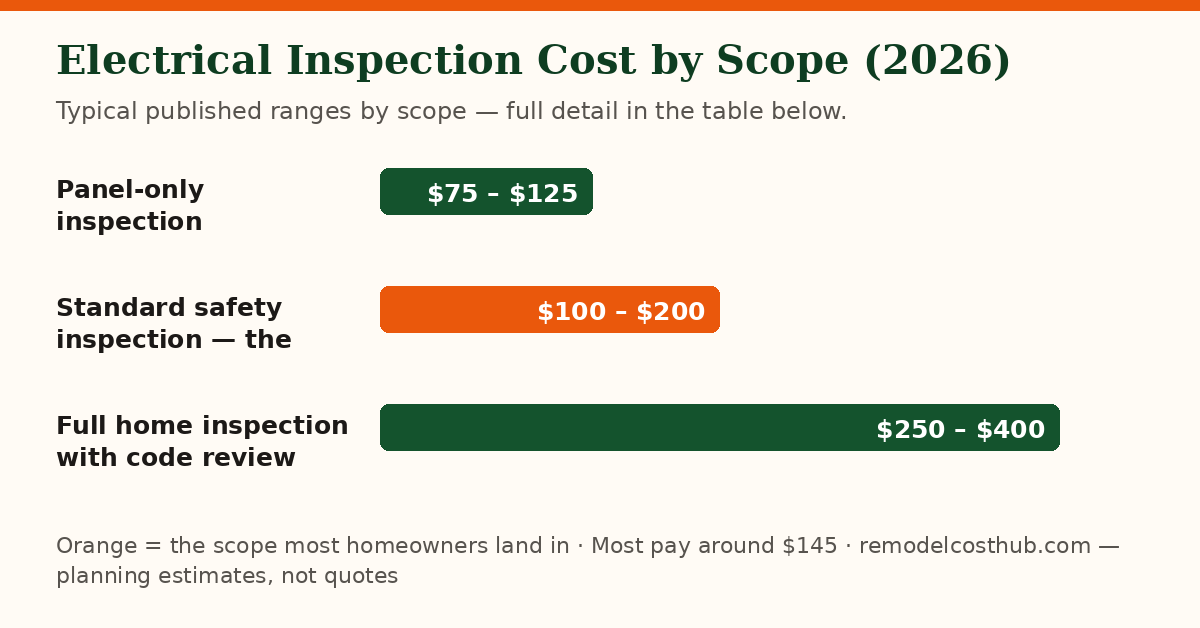
Cost by scope
| Scope | Typical cost | What it includes |
|---|---|---|
| Panel-only inspection | $75 – $125 | The narrow job: iBuyer prices a main-panel and subpanel check at $75–$125 — breakers, labelling and visible condition, without walking every circuit |
| Standard safety inspection — the typical job | $100 – $200 | The shared band: HomeGuide averages $145 inside $100–$200, Angi prices standard inspections at $100–$200, and iBuyer matches that band — panel, wiring, outlets, breakers and safety devices, with a written report |
| Full home inspection with code review | $250 – $400 | The deep job: iBuyer prices a full home inspection at $250–$400, HomeGuide's home-inspection band is $250–$400, and Angi puts a full home electrical inspection around $350 — every circuit, grounding, AFCI and GFCI protection, and code compliance, with infrared scanning as a $150–$350 add-on in HomeGuide |
Where the money goes
| Part of the job | Share | Note |
|---|---|---|
| Electrician labor and testing time | 55–70% of total | The work is the product: Angi prices inspector visits at a $110–$125 flat fee per session rising with house size, and a full-home inspection takes longer than a panel-only check because every circuit is opened and tested |
| Testing equipment | 12–20% of total | Meters, circuit testers and, on the full tier, a thermal camera — HomeGuide prices infrared scanning at $150–$350 as an add-on, which is why the thermal tier is a separate price, not a standard line |
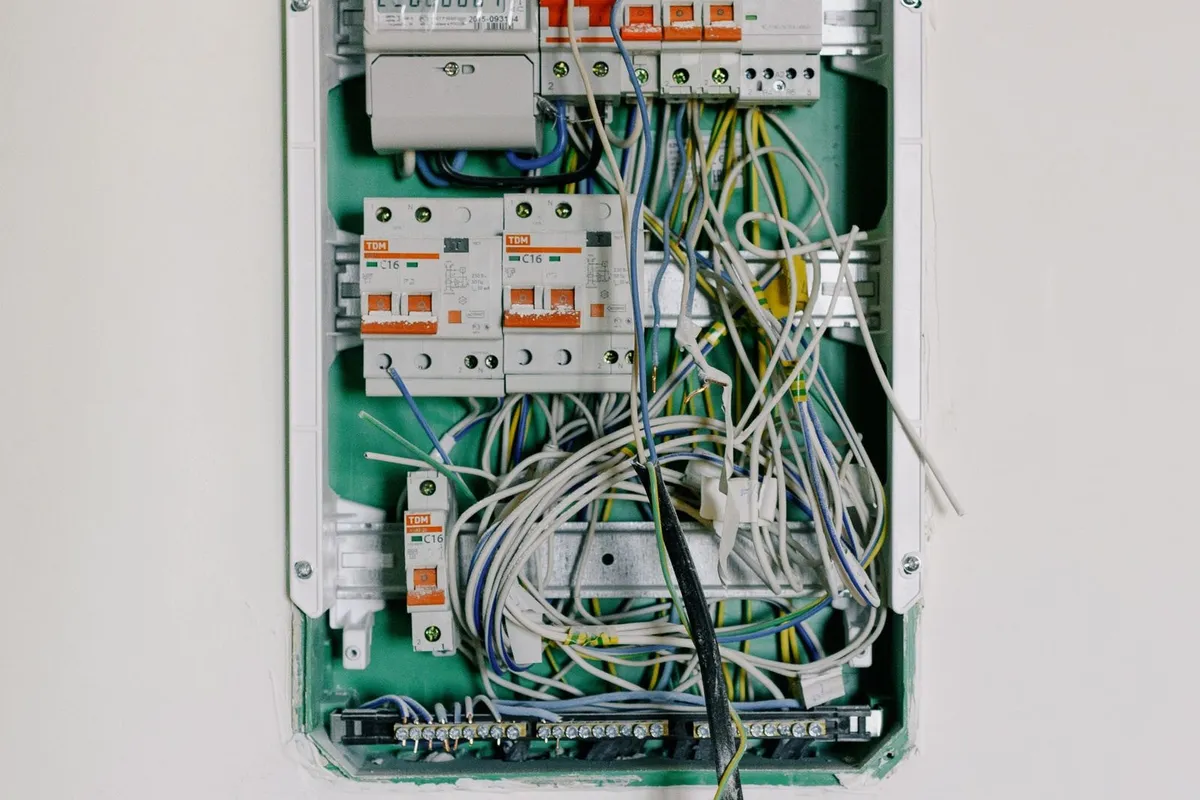
| Written report and safety certificate | 10–18% of total | HomeGuide's inspection includes a safety certificate and a report detailing recommended repairs — the document is the deliverable, because it is what the next electrician quotes from |
| Travel and setup | 5–10% of total | Getting to the property, opening the panel and making the house safe to test — the smallest line, and the reason a panel-only visit still carries a minimum fee |
What moves the price most
Scope is first: iBuyer prices a panel-only check at $75–$125, a standard safety inspection at $100–$200 and a full home inspection at $250–$400 — the same house quotes three different prices depending on how much of the system is opened and tested. Home size and age are second: Angi prices inspector visits at a $110–$125 flat fee rising with house size, and older homes take longer because knob-and-tube, aluminum wiring and ungrounded outlets each need their own checks. Infrared scanning is third: HomeGuide prices it at $150–$350 as an add-on and Angi averages about $250 for it — it finds hot spots inside walls that a visual check cannot, which is why it belongs on older homes and not on every quote. Code compliance is fourth: iBuyer prices a code-compliance check at $35–$90 for the permit, or free with the repair work it follows — a post-work sign-off is not the same product as a pre-purchase inspection. For the panel work an inspection often recommends, see our electrical panel upgrade guide, for the whole-home version, see our home inspection guide, and for the wiring an inspection may flag, see our whole-house rewiring guide.
Worked example: how a typical electrical inspection budget breaks down
Take the typical job — a standard three-bedroom home, standard safety inspection: panel opened, outlets and breakers tested, written report with a safety certificate. Here is a realistic $145 version of that invoice: The budget below totals $145 — the "most homeowners pay around" figure from the top of this page — split using this page's own cost breakdown. It shows how a real quote at that level is usually composed; every line is built from the ranges on this page, and it is an illustration, not a quote for your project.
| Line item | Example budget |
|---|---|
| Electrician labor and testing | $90 |
| Testing equipment use | $25 |
| Written report and safety certificate | $20 |
| Travel and setup | $10 |
| Total | $145 |
What most people get wrong
- Buying the cheapest inspection and skipping the report — the written report is the deliverable, and a verbal all-clear cannot be quoted from.
- Comparing a panel-only quote with a full-home quote on the total — scope is the price, and only the same scope makes two quotes comparable.
- Assuming the inspection fee covers repairs — it covers the check and the report, and the repairs the report recommends are a second quote.
- Skipping the infrared add-on on an older home to save $150–$350 — overheating wiring inside walls is exactly what a visual check cannot see.
Costs in your city
Electrical inspection is electrician-labor pricing around a scope: the same standard inspection quotes near the bottom of the band where electrician rates are low and toward the top in a high-cost metro, while the tester travels with the inspector. Housing stock travels with the city — older neighbourhoods carry knob-and-tube and aluminum wiring that take longer to check and push jobs toward the full-home tier, and new-build markets cluster at the standard band. Ask each bidder for the scope, whether the written report and certificate are included, and whether infrared scanning is in the total or an add-on.
Frequently asked questions
How much does an electrical inspection cost?
A standard safety inspection costs $100–$200, with $145 typical. HomeGuide publishes a $145 national average inside a $100–$200 range, Angi prices standard inspections at $100–$200, and a full home inspection with code review runs $250–$400.
What does an electrical inspection check?
The panel, wiring, outlets, circuit breakers, grounding, AFCI and GFCI protection and smoke detectors, against current electrical code — Angi's scope and iBuyer's checklist agree on the list. The deliverable is a written report and safety certificate detailing recommended repairs.
How often should a home get an electrical inspection?
Angi recommends every three to five years, or every two to three years for an older home. A pre-purchase inspection, a major renovation, and any sign of trouble — flickering lights, warm outlets, breakers that trip repeatedly — are all reasons to book one sooner.
Does an electrical inspection include repairs?
No — the inspection prices the check and the report, not the fixes. iBuyer notes most post-inspection repairs fall into minor fixes under $500 or major system work running into the thousands, which is why the report, not the inspection fee, is what the repair quote is built from.
Is an infrared inspection worth the extra cost?
On an older home, yes. HomeGuide prices infrared scanning at $150–$350 as an add-on and Angi averages about $250 for it — a thermal camera finds overheating wiring and loose connections inside walls that a visual inspection cannot see, which is exactly the failure mode that starts fires.