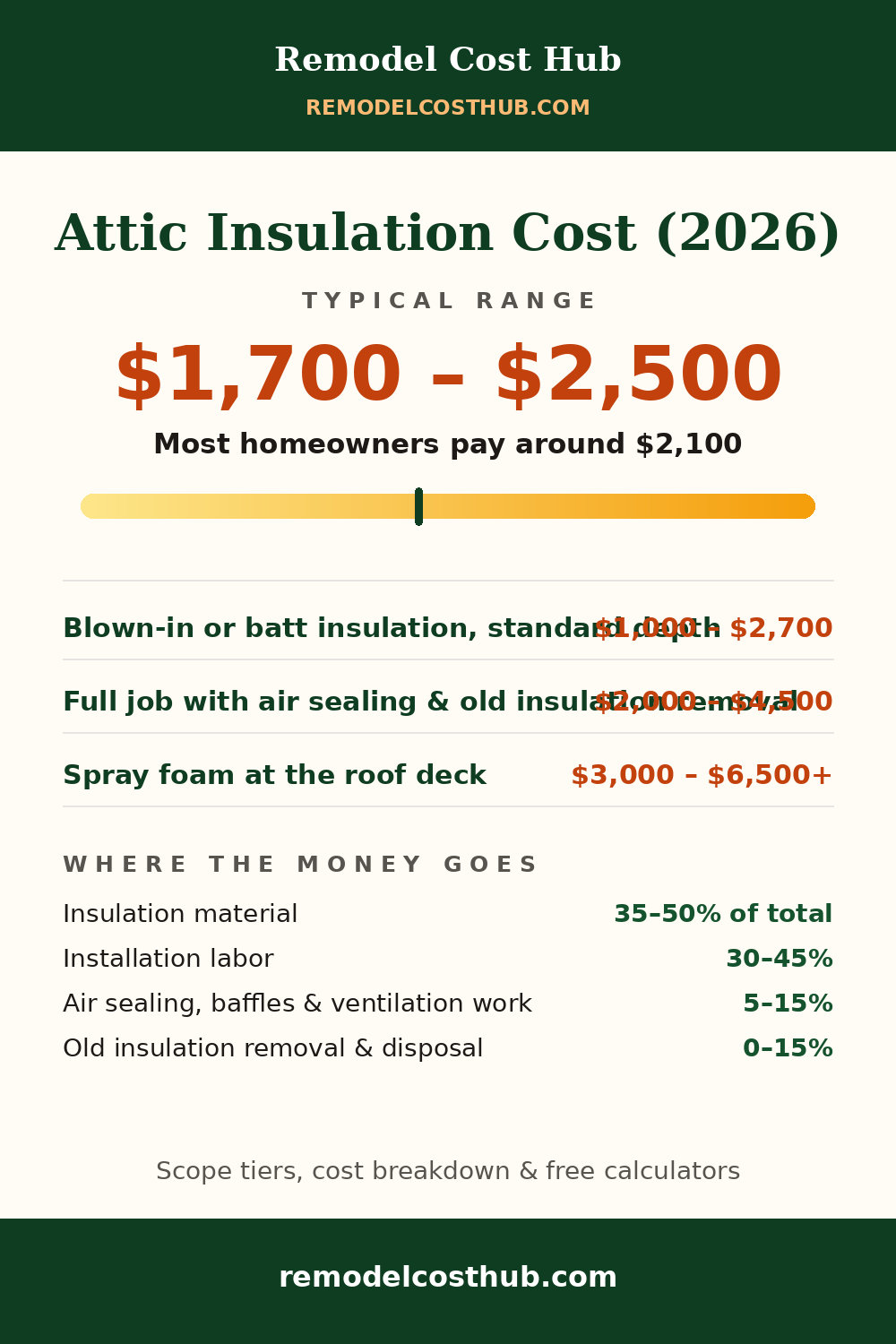
Attic Insulation cost at a glance
- Typical range: $1,700 – $2,500
- Most homeowners pay: around $2,100
- Per square foot: $1 – $3 per sq ft
- Prices vary most by: Insulation material (35–50% of the budget)
Cross-checked against three published sources for this project. Sources used for this page: the Angi attic insulation cost guide, HomeGuide's attic insulation cost guide and Forbes Home's attic insulation cost data. Sources last checked: October 2026 — Forbes Home, HomeGuide, Angi. Last updated October 2026 · How we calculate these costs
Cost by scope
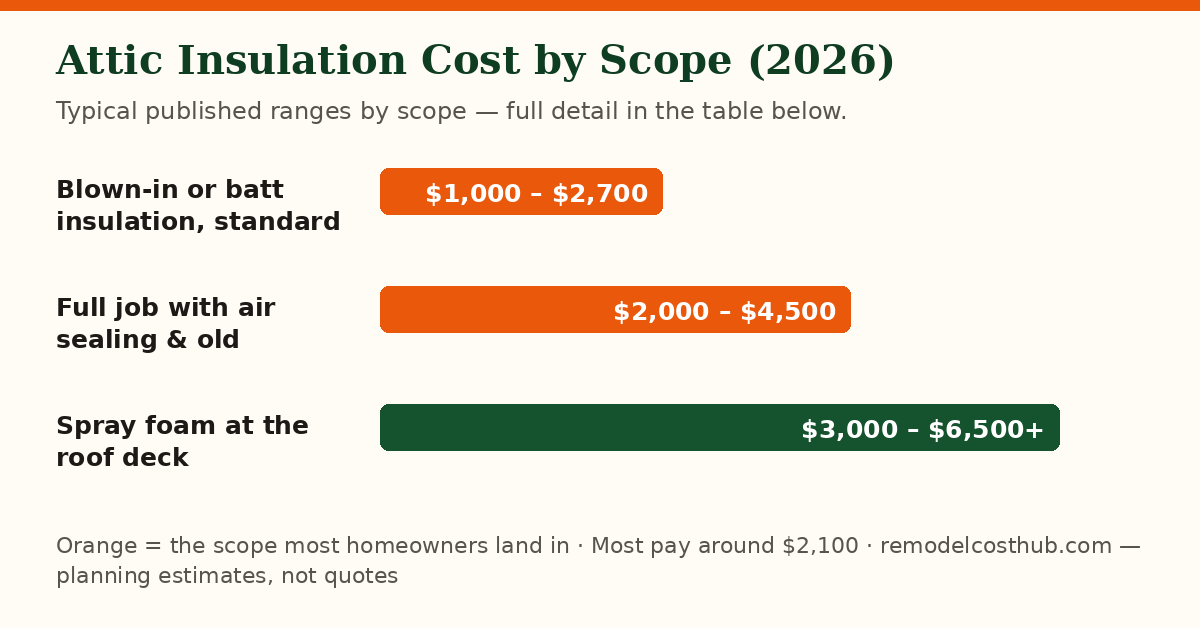
| Scope | Typical cost | What it includes |
|---|---|---|
| Blown-in or batt insulation, standard depth | $1,000 – $2,700 | Blown-in fiberglass or cellulose over the attic floor, or batts laid between the joists, brought up to the R-value your climate zone calls for — where most attic projects land; HomeGuide's installed bands run $0.90–$2.40 per sq ft for blown-in and $0.80–$2.60 for batts |
| Full job with air sealing & old insulation removal | $2,000 – $4,500 | Sealing the ceiling plane's leaks first (Angi prices air sealing at $250–$750), removing and disposing of old, damaged or contaminated insulation at roughly $1–$2 per sq ft, then installing the new material to full depth |
| Spray foam at the roof deck | $3,000 – $6,500+ | Open- or closed-cell foam sprayed to the underside of the roof deck instead of the attic floor, converting the attic to conditioned space — the premium route, quoted per board foot and usually its own project |
Where the money goes
| Part of the job | Share | Note |
|---|---|---|
| Insulation material | 35–50% of total | The material itself — fiberglass and cellulose sit at the low end per square foot, spray foam far above them; depth (target R-value) multiplies whatever you choose |
| Installation labor | 30–45% | A blown-in job is often a single visit for a two-person crew; batts in a cut-up attic and foam at the roof deck take considerably longer |
| Air sealing, baffles & ventilation work | 5–15% | Sealing top plates, can lights and the attic hatch, and fitting vent baffles so the new depth does not block the soffits — the unglamorous work that decides whether the insulation performs |
| Old insulation removal & disposal | 0–15% | Zero when sound existing insulation stays in place and is topped up; a full removal of damaged or animal-contaminated material is priced per square foot before any new work begins |
What moves the price most
Depth — the R-value you are buying — is the first driver. Insulation is priced by the square foot, but the quote is really for a target depth: the recommended attic R-value runs from about R-30 in mild climates to R-49 or R-60 in cold ones, and doubling the depth roughly doubles the material. That is why per-square-foot bands look so wide — Angi's $1–$3 covers standard work, while Forbes Home's $1–$7 span mixes deep and premium-material jobs into the same number. Material choice is the second lever: blown-in fiberglass and cellulose fill around joists, wiring and trusses and are the usual value pick for an open attic floor; batts cost about the same but leave gaps around every obstruction; spray foam costs the most and does a different job — it air-seals as it insulates and moves the boundary to the roof deck. What is already up there comes third: topping up sound existing insulation is the cheapest version of this project, while removing water-damaged or contaminated material adds $1–$2 per sq ft before installation starts. Finally, air sealing: insulation slows conduction, but warm air leaking through gaps around lights, hatches and plumbing stacks bypasses it entirely — which is why the guides price sealing as its own line ($250–$750 in Angi's data) and why skipping it is the classic false economy.
Worked example: how a typical attic insulation budget breaks down
A typical job: a standard attic over an average home, air sealing of the main penetrations included, blown-in insulation brought up to full modern depth over sound existing material. The budget below totals $2,100 — the "most homeowners pay around" figure from the top of this page — split using this page's own cost breakdown. It shows how a real quote at that level is usually composed; every line is built from the ranges on this page, and it is an illustration, not a quote for your project.
| Line item | Example budget |
|---|---|
| Blown-in insulation material | $903 |
| Installation labor | $798 |
| Air sealing, vent baffles and ventilation work | $210 |
| Allowing for some old insulation removal and disposal | $189 |
| Total | $2,100 |
What most people get wrong
- Blowing new insulation over unsealed leaks — attic air leaks around pipes, wires and the hatch are where the heat actually escapes, and burying them makes the cheap fix the permanent one.
- Blocking the soffit vents with new depth — insulation piled into the eaves chokes attic ventilation and trades an energy problem for a moisture and ice problem.
- Removing sound old insulation by default — if it is dry and uncontaminated, topping up is usually the better spend; removal earns its cost when the old material is damaged or fouled.
- Covering recessed lights and flues without checking their ratings — heat sources under insulation are a fire question, not a detail, and the time to ask is before the blower starts.
Costs in your city
Attic work is climate arithmetic. Cold regions buy depth — more inches is the whole job — and they buy air sealing for a second reason: stopping the warm air that feeds ice dams. Hot climates pair insulation with ventilation and radiant strategies, and humid regions watch attic moisture as carefully as temperature. Snow-belt and storm regions also decide how and when crews can work in the space at all. The target depth for your climate zone is a published standard your installer should name without hesitating.
Frequently asked questions
How much does it cost to insulate a 1,000 sq ft attic?
At the standard installed rates on this page — about $1–$3 per sq ft in Angi's data — a 1,000 sq ft attic runs roughly $1,000–$3,000 depending on material and target depth, with most average attics landing in the $1,700–$2,500 typical band. Spray foam at the roof deck prices well above that band.
How long does attic insulation take to install?
A standard blown-in or batt job in an accessible attic is commonly done in a single visit — a few hours to a day. Removing old insulation first, extensive air sealing, or spray foam at the roof deck stretches the work to a day or more, and foam usually requires the house to be vacated while it cures.
How much insulation does my attic need?
It depends on climate zone: published guidance and the guides behind this page work to roughly R-30 in the mildest zones up to R-49–$60 in the coldest. In blown-in terms that is on the order of 10–20 inches of material. An installer should quote you a target R-value and a finished depth, not just a bag count.
Is it worth removing old attic insulation first?
Only when it is water-damaged, smoke-damaged, moldy or contaminated by animals — removal costs roughly $1–$2 per sq ft and buys nothing when the old material is dry and intact. Sound existing insulation is normally left in place and topped up to full depth, which is the cheapest route to the same R-value.
Can I insulate my attic myself?
Batts are the most DIY-friendly option and blown-in machines are commonly rented (sometimes free with a minimum bag purchase at home centers). The DIY traps are the invisible ones: blocking soffit vents with the new material, insulating over recessed lights that are not rated for it, and skipping the air sealing. If you DIY, budget a respirator, attic boards to walk on, and the sealing work — not just the bags.