Tile Flooring cost at a glance
- Typical range: $2,500 – $5,000
- Most homeowners pay: around $3,600
- Per square foot: $10 – $20 per sq ft
- Prices vary most by: Installation labor (40–55% of the budget)
Cross-checked against three published sources for this project. Sources used for this page: the Angi tile floor and ceramic tile installation cost guides, HomeGuide's tile installation cost data and Modernize's flooring installation cost guide. Sources last checked: October 2026 — HomeGuide, Modernize, Angi. Last updated October 2026 · How we calculate these costs
Cost by scope
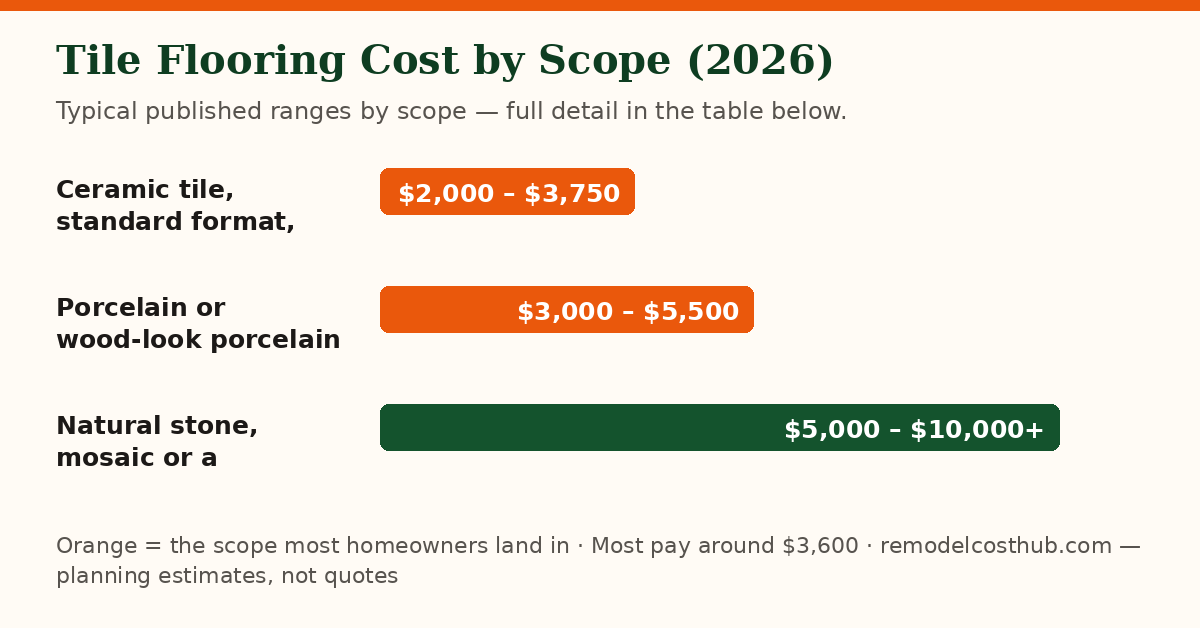
| Scope | Typical cost | What it includes |
|---|---|---|
| Ceramic tile, standard format, straight lay | $2,000 – $3,750 | Standard ceramic field tile in a straight grid over about 250 sq ft of sound, flat floor — at $8–$15 per sq ft installed, the value end of tile and where simple kitchen and bathroom floors land |
| Porcelain or wood-look porcelain | $3,000 – $5,500 | Denser, harder porcelain — including the wood-look planks that dominate current projects — over about 250 sq ft, at $12–$22 per sq ft installed; larger formats and tighter grout joints sit at the top of the tier |
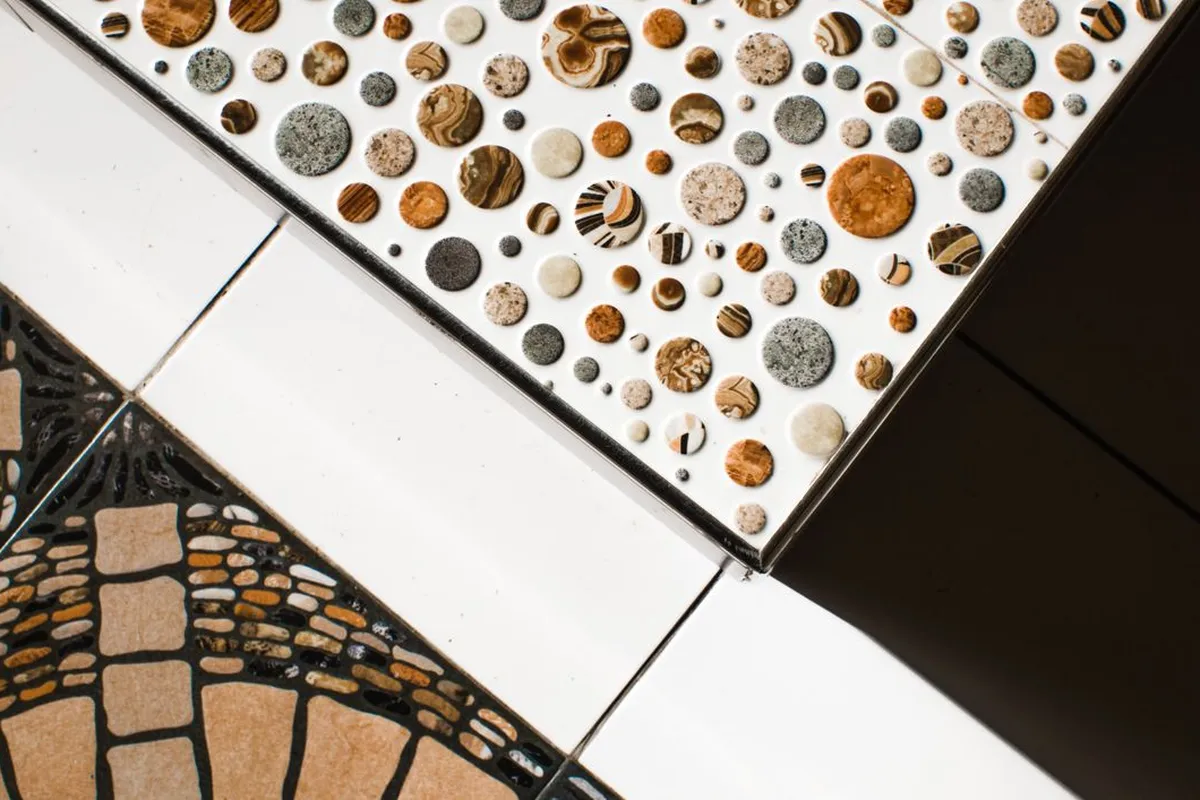
| Natural stone, mosaic or a patterned lay | $5,000 – $10,000+ | Marble, travertine or slate, sheet mosaics, or a herringbone, diagonal or bordered pattern over about 250 sq ft — at $20–$40 per sq ft installed, the material and the setting time are both premium |
Where the money goes
| Part of the job | Share | Note |
|---|---|---|
| Installation labor | 40–55% of total | Tile is a labor-heavy floor: Angi puts setting labor at $3–$15 per sq ft on its own, and format, pattern and room shape move this line more than the price of the tile does |
| Tile material | 25–40% of total | Ceramic at the low end per square foot (Angi: $0.50–$7 for the tile itself), porcelain in the middle ($3–$10), and natural stone and mosaics at the top |
| Backer board, mortar, grout & substrate prep | 10–20% | The setting materials and the flat, stiff substrate the finished floor stands on — skimping here is what telegraphs through as cracked grout lines and lippage later |
| Old floor removal & disposal | 0–10% | Near zero when the new tile can go over a sound existing substrate the installer approves; removing old tile itself runs $2–$7 per sq ft in Angi's data |
What moves the price most
Labor, not tile, is the biggest lever on most tile floors. Angi prices setting labor at $3–$15 per sq ft before the tile itself is counted, and its worked examples put a 200 sq ft kitchen floor at $3,000–$4,000 all-in. HomeGuide's tables put tile flooring anywhere from $10 to $50 per sq ft installed across all tile types, and Modernize puts ceramic and porcelain floors at $10–$31. The honest overlap for a standard ceramic or porcelain floor — roughly $10–$20 per sq ft installed — is the typical band on this page; the wide published spans exist because format and pattern change the setting time so much: a 24-inch porcelain plank in a straight lay sets fast, while small mosaics, hexagons and herringbone patterns are many more pieces, cuts and grout lines in the same square footage. Material class is the second lever — ceramic is the cheapest tile to buy, porcelain is denser and dearer, and natural stone adds sealing and more careful handling. Finally, the substrate: tile needs a flat, rigid base, and floor levelling, backer board or subfloor stiffening is real money that a quote can only price after the old floor comes up.
Costs in your city
Labor is the biggest variable in any remodel, and labor is local — the same bathroom can price very differently in Houston than in Boston. We are adding city editions metro by metro, each with its own labor index, permit notes and climate factors, written for that city rather than copied from this page. Wave 1: Houston, Dallas–Fort Worth, Phoenix, Atlanta, Miami–South Florida, Orlando, Tampa, Charlotte, Austin and San Antonio. Until your city's page is live, use the national range here and weight it the way contractors do: Sun Belt labor often prices near or below the national middle, while coastal California and the Northeast metros often price well above it.
Frequently asked questions
How much does tile flooring cost per square foot installed?
For standard ceramic and porcelain floors, about $10–$20 per sq ft installed is the typical overlap across the published guides. Ceramic in a straight lay sits at the bottom of that band, porcelain and large-format work in the middle, and natural stone, mosaics and patterned lays run $20–$40 or more. Angi's own room examples put a 200 sq ft kitchen floor at $3,000–$4,000.
Is ceramic or porcelain tile better for a floor?
Porcelain is the harder, denser and less water-absorbent tile, and it is the usual recommendation for busy kitchens, entries and homes with dogs; through-body and colour-matched porcelain also hides chips better. Ceramic costs less, cuts more easily, and is entirely adequate for bathrooms and lighter-traffic floors. Both outlast most other flooring when the substrate and setting are done properly.
How much does it cost to tile a 250 sq ft floor?
About $2,500–$5,000 for a standard ceramic or porcelain floor is the typical band on this page, with most projects landing around $3,600. A simple ceramic straight lay can come in near $2,000; stone, mosaics or a patterned lay over the same area runs $5,000–$10,000 or more.
How long does a tile floor take to install?
The setting itself for a standard room is commonly a few days, but the floor is not finished when the last tile goes down: grout goes in after the mortar cures, and the floor typically needs 24–72 hours before normal foot traffic, longer before heavy furniture. Patterned and large-area floors stretch the setting phase itself to the better part of a week.
Can I install tile flooring myself?
A small, square bathroom in standard ceramic, over a sound floor, is one of the more realistic DIY tile jobs — the materials are cheap enough that a practice area is affordable. The failures that cost money are substrate failures: flex, unflatness and skipped prep crack tile and grout no matter how carefully the tile itself was set. Most owners who DIY choose the simplest room and hire out kitchens, large formats and stone.