Granite vs Quartz Countertops cost at a glance
- Typical range: $2,400 – $5,000
- Most homeowners pay: around $3,600
- Per square foot: $40 – $100 per sq ft
- Prices vary most by: Slab material (45–60% of the budget)
Cross-checked against three published sources for this project. Sources used for this page: the Angi quartz vs granite countertops cost guide, HomeGuide's quartz and granite countertop cost data and Forbes Home's quartz countertop cost data (via the countertop guides cross-checked for this site). Sources last checked: October 2026 — Forbes Home, HomeGuide, Angi. Last updated October 2026 · How we calculate these costs
Cost by scope
| Scope | Typical cost | What it includes |
|---|---|---|
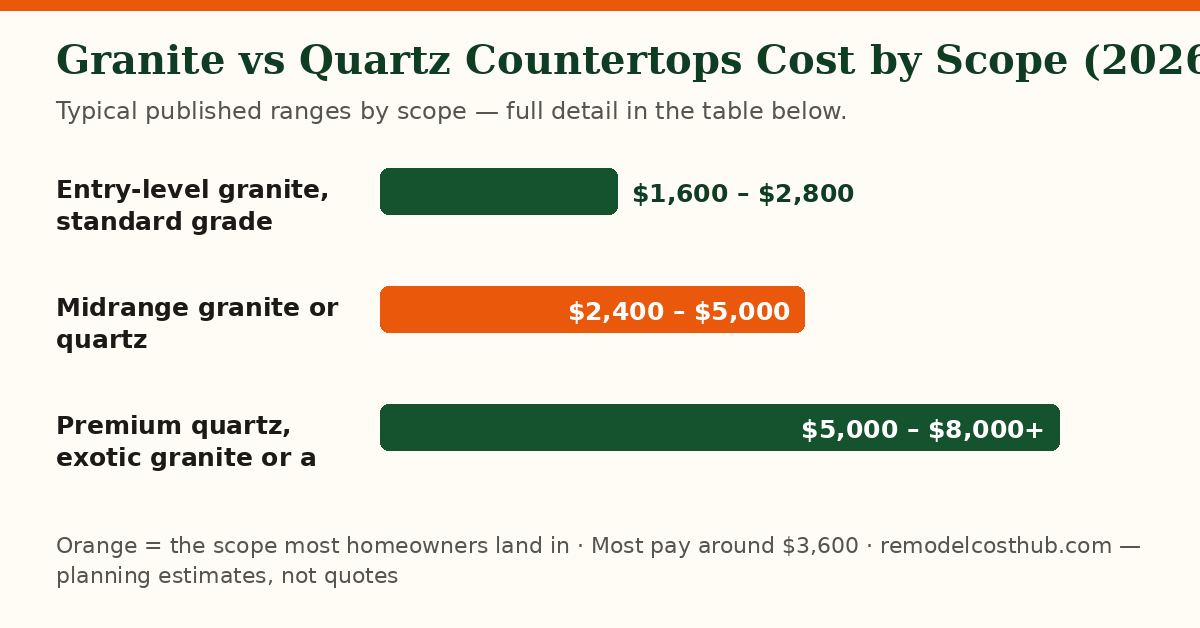
| Entry-level granite, standard grade | $1,600 – $2,800 | Common domestic granite at the low end of the published bands (Angi puts granite at $40–$60 per sq ft), a simple edge profile, one sink cutout and no backsplash upgrade — the cheapest route into real stone for a standard 40 sq ft kitchen |
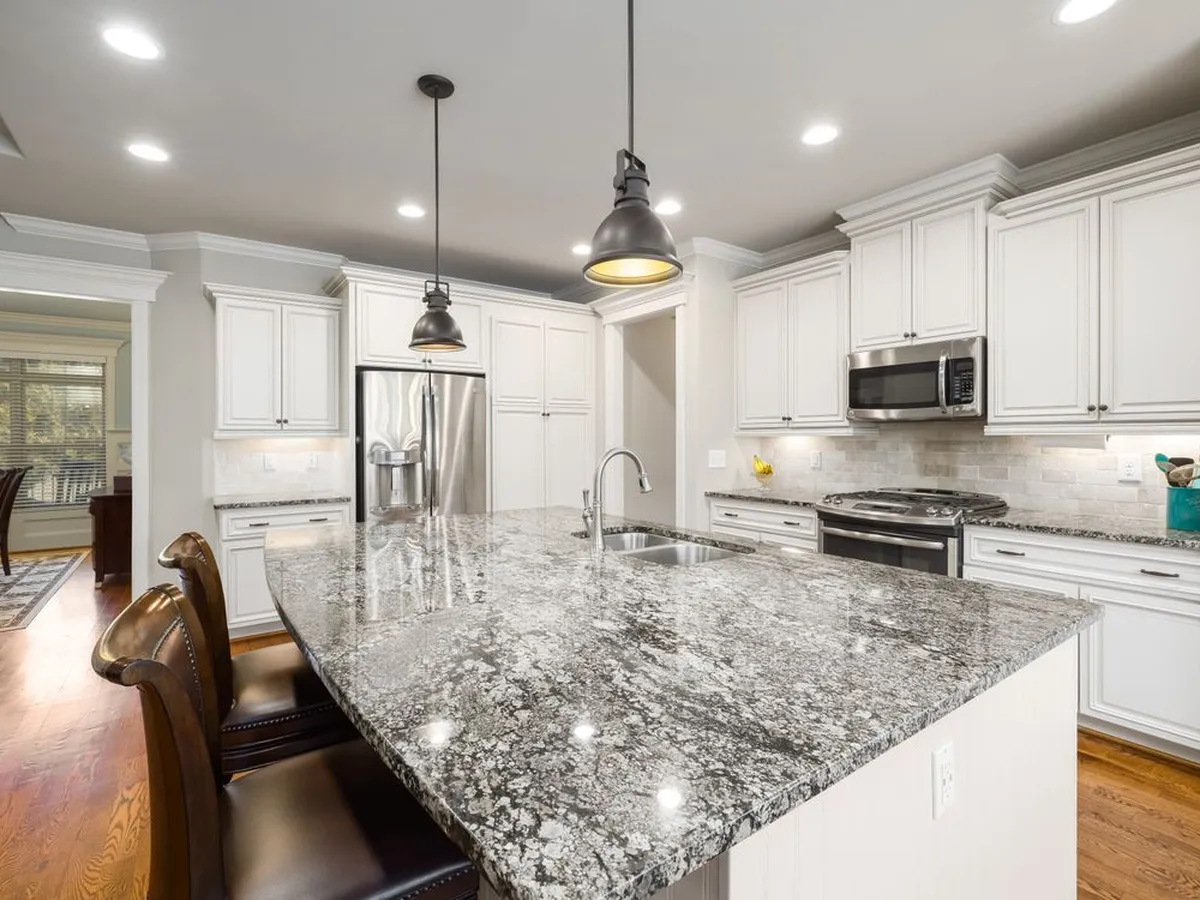
| Midrange granite or quartz | $2,400 – $5,000 | Where most kitchens land: standard-grade granite or midrange quartz at roughly $60–$125 per sq ft installed, with templating, fabrication, sink and cooktop cutouts, seams and installation included |
| Premium quartz, exotic granite or a complex layout | $5,000 – $8,000+ | Premium-brand quartz, rare or heavily veined granite, waterfall ends, a full-height backsplash, multiple seams or an oversized island — slab grade and fabrication complexity, at $125 per sq ft and above, drive this tier |
Where the money goes
| Part of the job | Share | Note |
|---|---|---|
| Slab material | 45–60% of total | The largest share in every stone-counter budget — grade, rarity and brand set it: entry granite sits at the bottom of the band, premium quartz and exotic granite at the top |
| Fabrication — templating, cutting, edges & cutouts | 20–30% | The shop work done before install day: measuring and templating, cutting the slab, polishing the edge profile and cutting sink and cooktop openings |
| Installation, seams & sealing | 10–20% | Delivery, levelling, setting the stone, joining and finishing seams, and sealing granite (quartz needs no sealer) — heavy slabs and difficult access push this line up |
| Old counter removal, plumbing reconnect & backsplash | 5–15% | Near the bottom when the old counters are already out and no backsplash is added; a tiled or full-height stone backsplash is a real line of its own |
What moves the price most
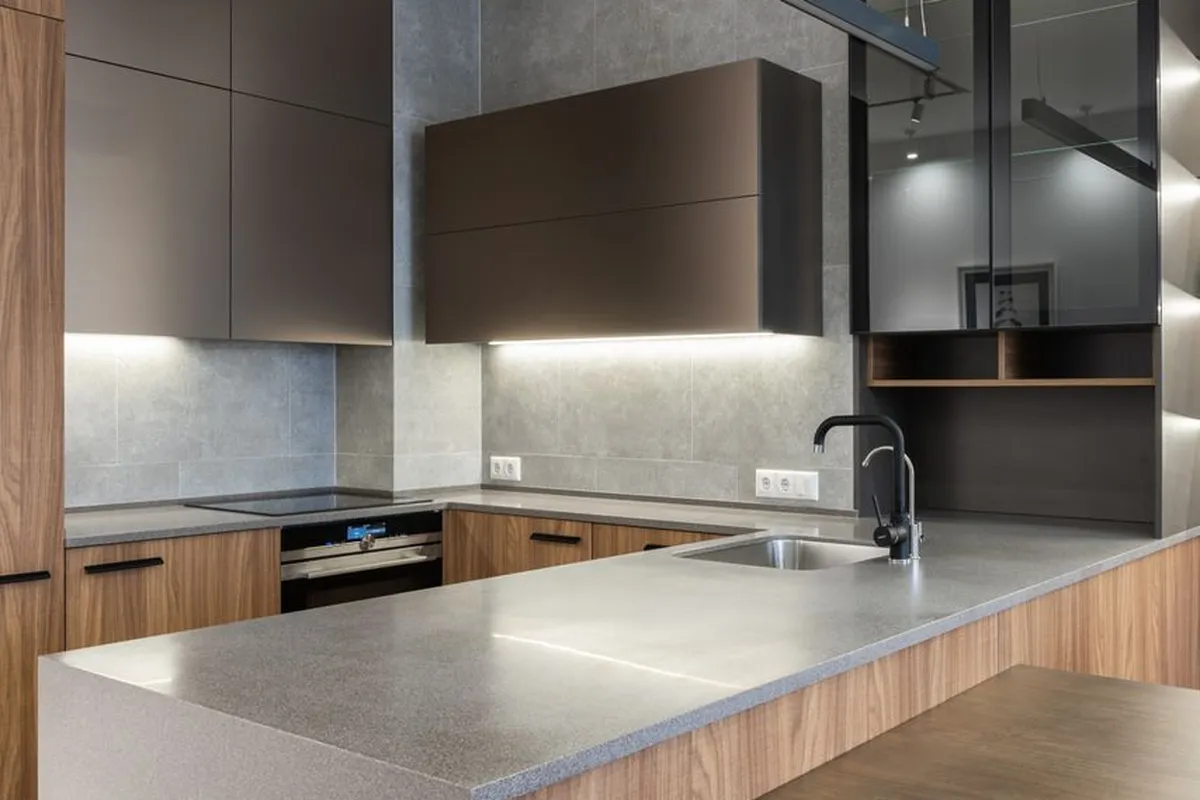
Slab grade is the first and biggest lever, and it is not close. Angi prices granite at $40–$60 per sq ft against quartz at $70–$100, while HomeGuide's broader tables put granite at $40–$200 and quartz at $50–$150 per sq ft installed — the overlap is the honest story: common granite is usually the cheaper way in, the two materials cross in the middle, and rare granite or premium-brand quartz is where the top of the range lives. Choosing the specific slab, not the material name, is what sets your price. The material difference that matters day to day is maintenance and heat: quartz is engineered and nonporous, so it never needs sealing and resists staining; granite is natural stone that wants resealing roughly yearly and shrugs off hot pans that can mark quartz resin. Layout and fabrication come third — every seam, cutout, inside corner and waterfall end is shop time, and a big island cut from a single slab prices very differently from straight runs. Finally, thickness and edge profile: a standard edge in 3cm stone is the baseline every guide prices; built-up edges, ogee profiles and 2cm stone with a laminated edge all move the fabrication line.
Costs in your city
Labor is the biggest variable in any remodel, and labor is local — the same bathroom can price very differently in Houston than in Boston. We are adding city editions metro by metro, each with its own labor index, permit notes and climate factors, written for that city rather than copied from this page. Wave 1: Houston, Dallas–Fort Worth, Phoenix, Atlanta, Miami–South Florida, Orlando, Tampa, Charlotte, Austin and San Antonio. Until your city's page is live, use the national range here and weight it the way contractors do: Sun Belt labor often prices near or below the national middle, while coastal California and the Northeast metros often price well above it.
Frequently asked questions
Which is cheaper, granite or quartz?
At entry level, granite usually is: Angi puts granite at $40–$60 per sq ft installed against quartz at $70–$100, and puts the average granite kitchen at about $3,250 against about $4,500 for quartz. The gap narrows and can reverse with premium slabs — exotic granite costs more than standard quartz — so compare the actual slabs you are choosing between, not just the material names.
How much do granite or quartz countertops cost for a typical kitchen?
A typical kitchen has roughly 40 sq ft of counter. At the standard-grade bands on this page that works out to about $1,600–$2,800 in entry granite and $2,400–$5,000 across midrange granite and quartz, with most kitchens landing around $3,600. Premium slabs, waterfall ends and full-height backsplashes push a kitchen to $5,000–$8,000 or more.
Does granite or quartz need sealing?
Granite does — it is a porous natural stone and most guides recommend resealing about once a year, a quick DIY job with a spray sealer. Quartz is engineered with resin, is nonporous, and never needs sealing. That difference is the main maintenance gap between the two; both want trivets under very hot pans, quartz more strictly than granite.
How long does it take to get stone countertops installed?
The pattern in published guides is consistent: templating happens once cabinets are set, fabrication then takes roughly one to two weeks, and the installation itself is usually a single day. The waiting is in the shop queue and in slab delivery for less common stones, not in the fitting.
Can I install granite or quartz countertops myself?
Realistically, no — and the guides are blunt about why: a kitchen's worth of 3cm stone weighs several hundred pounds, slabs crack if they are carried or set wrong, and the cutting and polishing happens with shop equipment. This is one of the clearest hire-it-out projects on the site; the DIY saving that does exist is removing the old counters and disconnecting the plumbing yourself, if your fabricator agrees to it in advance.