Hardwood Flooring cost at a glance
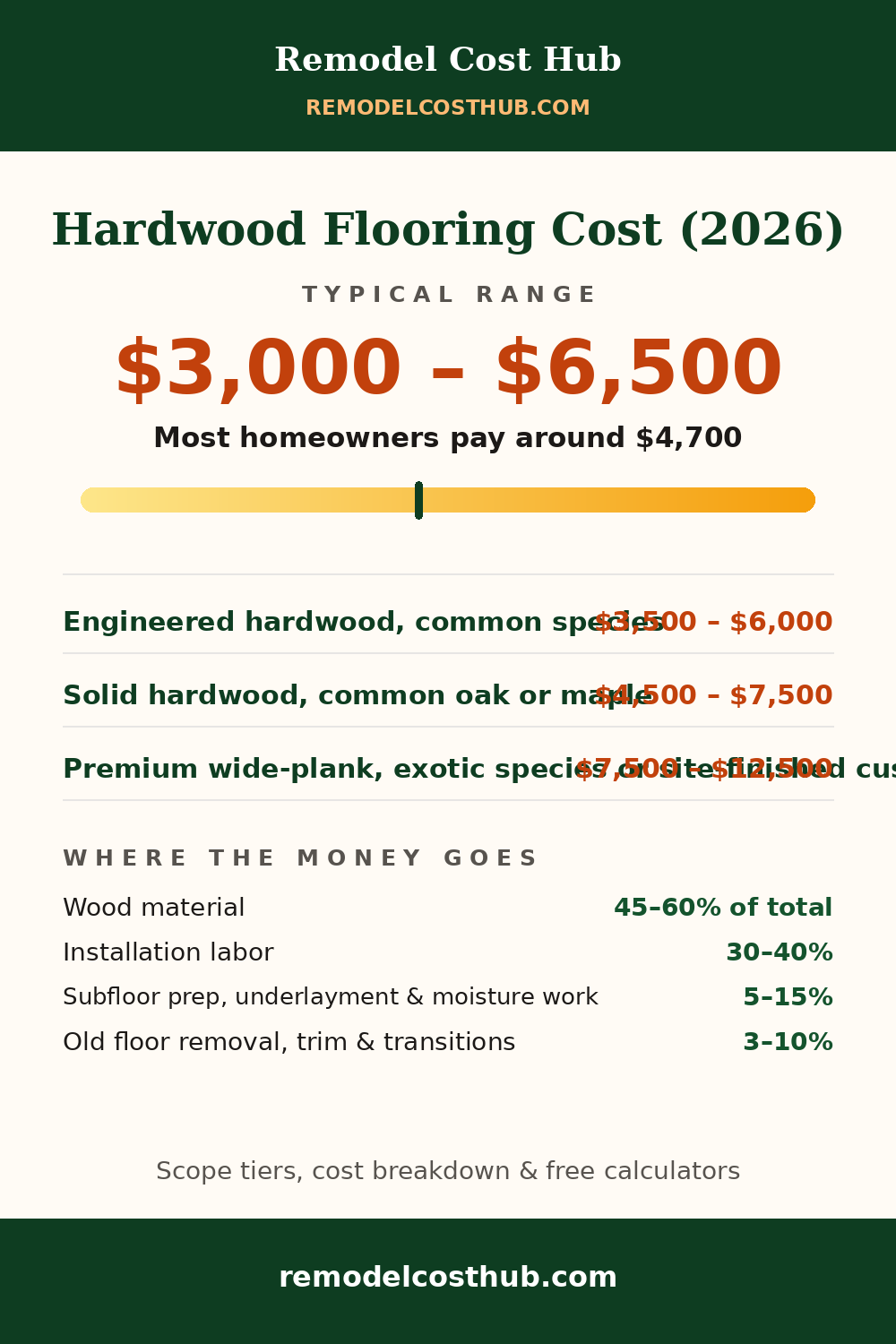
- Typical range: $3,000 – $6,500
- Most homeowners pay: around $4,700
- Per square foot: $6 – $13 per sq ft
- Prices vary most by: Wood material (45–60% of the budget)
Cross-checked against three published sources for this project. Sources used for this page: the Angi hardwood flooring installation cost guide, HomeGuide's hardwood flooring cost guide and NerdWallet's hardwood floor replacement cost guide (Angi-based). Sources last checked: October 2026 — NerdWallet, HomeGuide, Angi. Last updated October 2026 · How we calculate these costs
Cost by scope
| Scope | Typical cost | What it includes |
|---|---|---|
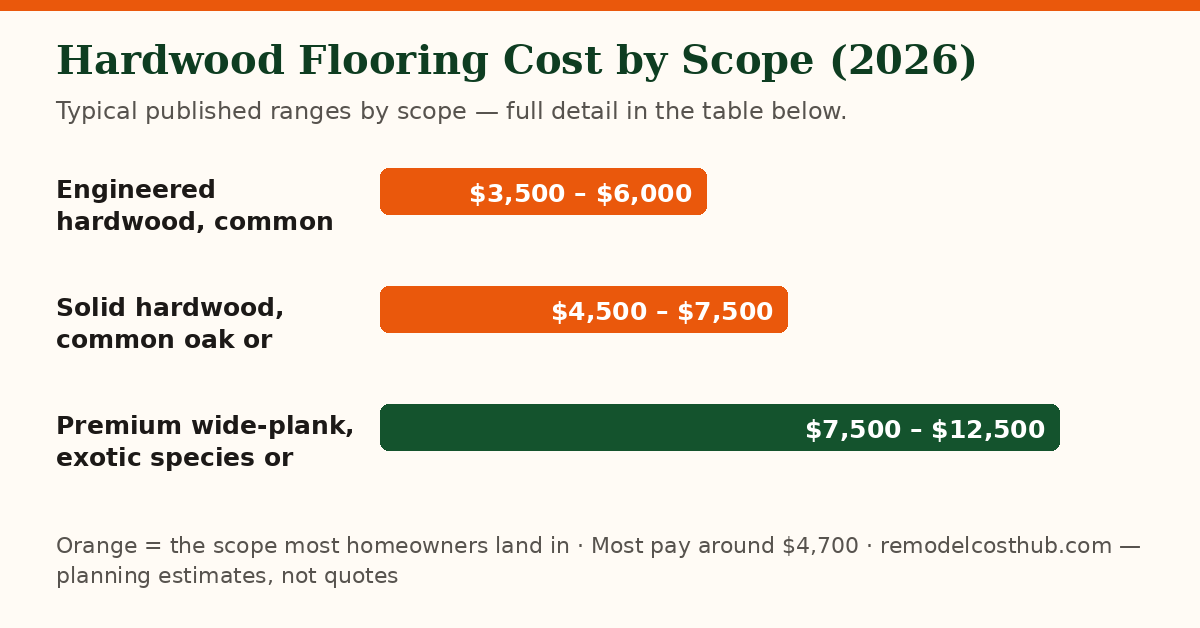
| Engineered hardwood, common species | $3,500 – $6,000 | A real-wood veneer over a layered core in oak or a similar species, floated, glued or nailed over about 500 sq ft — Angi puts engineered hardwood at $7–$20 per sq ft installed, and standard products in straightforward rooms sit at the low end of that span |
| Solid hardwood, common oak or maple | $4,500 – $7,500 | Solid 3/4-inch boards, nail-down, prefinished or site-finished, over about 500 sq ft — where most classic hardwood projects land; Angi's overall project average sits near $4,700 |
| Premium wide-plank, exotic species or site-finished custom work | $7,500 – $12,500 | Wide planks, walnut, Brazilian cherry and other exotics, herringbone or other patterned lays, or a site-applied custom stain and finish over about 500 sq ft — at $15–$25 per sq ft installed in the published guides |
Where the money goes
| Part of the job | Share | Note |
|---|---|---|
| Wood material | 45–60% of total | The board itself is the biggest line in every published breakdown — species, grade, plank width and solid versus engineered construction set it |
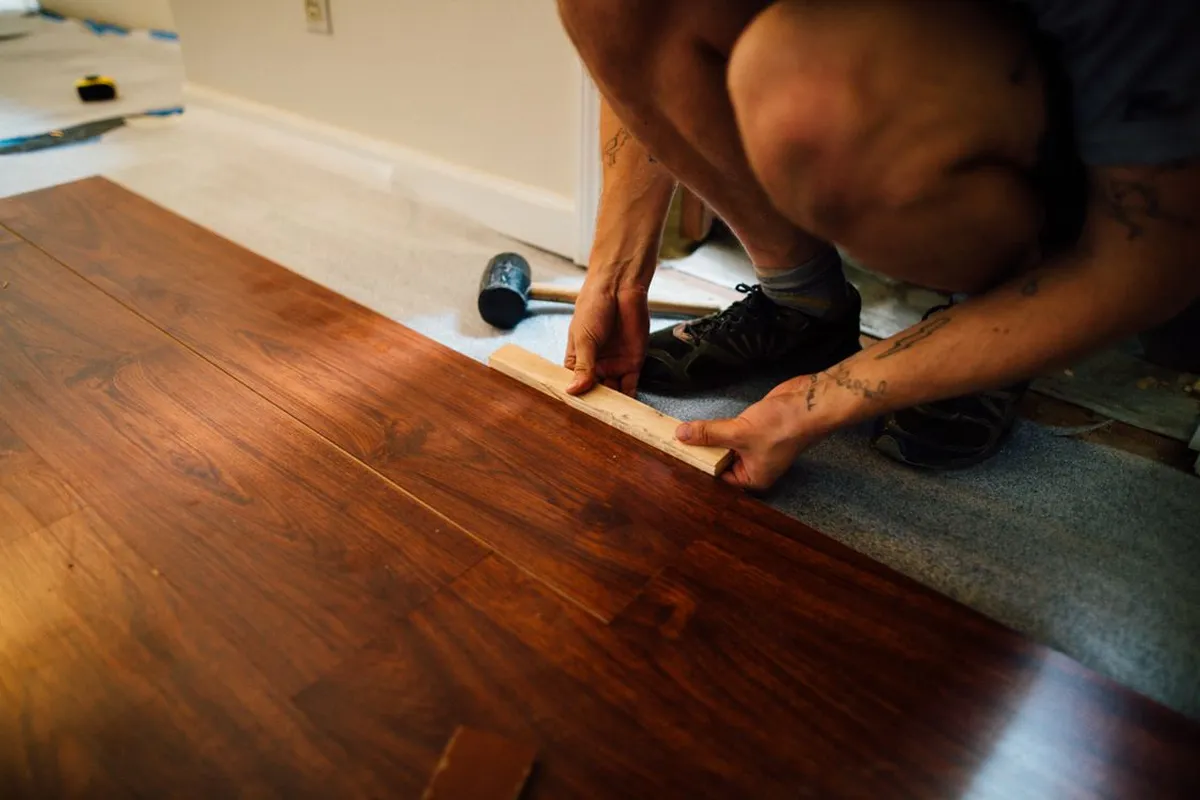
| Installation labor | 30–40% | Nail-down solid hardwood is slower work than floating or click-lock engineered floors, and site-finishing adds sanding and coating days on top of laying the floor |
| Subfloor prep, underlayment & moisture work | 5–15% | Levelling, patching and moisture barriers under the new floor — when a subfloor needs real repair, Angi prices that work at $900–$3,000 on its own |
| Old floor removal, trim & transitions | 3–10% | Pulling and disposing of the old floor, undercutting door casings, and the baseboards, thresholds and stair nosing that finish the edges |
What moves the price most
Species and construction set the baseline, and the published bands are wide for a reason. Angi puts hardwood installation at $6–$25 per sq ft installed overall, with an average project near $4,700; HomeGuide splits the same market into engineered hardwood at $9–$20 and solid hardwood at $11–$25 per sq ft; NerdWallet, working from Angi's data, puts common projects at $6–$12 per sq ft. The overlap — roughly $6–$13 for common oak and maple floors — is the typical band on this page, and everything above it is a species, width or pattern decision. Solid versus engineered is the second lever: solid boards can be sanded and refinished many times over a lifetime but cannot go over concrete or below grade; engineered floors install faster, handle moisture and concrete better, and refinish only once or twice. Plank width and pattern come third — wide planks cost more per board and a herringbone lay is slower, more wasteful work than a straight lay. Finally, the subfloor: a flat, dry, sound subfloor is the invisible assumption inside every per-square-foot price, and repairs, levelling or moisture mitigation are quoted on top when the house does not provide one.
Costs in your city
Labor is the biggest variable in any remodel, and labor is local — the same bathroom can price very differently in Houston than in Boston. We are adding city editions metro by metro, each with its own labor index, permit notes and climate factors, written for that city rather than copied from this page. Wave 1: Houston, Dallas–Fort Worth, Phoenix, Atlanta, Miami–South Florida, Orlando, Tampa, Charlotte, Austin and San Antonio. Until your city's page is live, use the national range here and weight it the way contractors do: Sun Belt labor often prices near or below the national middle, while coastal California and the Northeast metros often price well above it.
Frequently asked questions
How much does hardwood flooring cost for 500 sq ft?
For common species, about $3,000–$6,500 installed is the typical band on this page, with Angi's average project at roughly $4,700. Engineered floors in standard species sit at the lower half, solid oak and maple in the middle, and premium wide-plank or exotic floors run $7,500–$12,500 for the same area.
What is the cheapest hardwood floor option?
Engineered hardwood in a common species such as red oak, in a standard plank width and a straight lay, is the value end of real wood — it uses a thin wear layer of the expensive species over a cheaper core and installs faster than solid boards. Low (character) grades of solid oak are the other route: more knots and colour variation, less money per board.
Is solid or engineered hardwood better?
They suit different houses. Solid hardwood can be refinished many times and can genuinely last generations, but it expands and contracts with humidity and should not go below grade or directly over concrete. Engineered hardwood is more dimensionally stable, works over concrete and radiant heat, and is often the only real-wood option in a basement or a slab home — at the cost of a limited number of refinishes.
How long does hardwood floor installation take?
A straightforward 500 sq ft engineered floor is commonly a few days of work; solid nail-down takes longer, and site-finished floors add sanding, staining and coating days plus drying time before furniture comes back. Solid boards also need acclimation time in the house before installation — skipping it is how gaps and cupping happen.
Can I install hardwood flooring myself?
Click-lock and floating engineered floors are the realistic DIY version, and they are the ones the guides point experienced DIYers toward. Nail-down solid hardwood, glue-down work over questionable subfloors, and site finishing are where mistakes get expensive — the material itself is the costly part of this project, which is why most owners hire the laying and finishing and save money on removal and prep instead.