Home › Cost Guides › Solar Battery Installation
Cost Guide

How Much Does a Solar Battery Installation Cost? (2026)

By Ahsan ul Haq · Last updated: 11 November 2026 · Planning estimate — not a quote · How we estimate

Typical range
$9,000 – $16,000
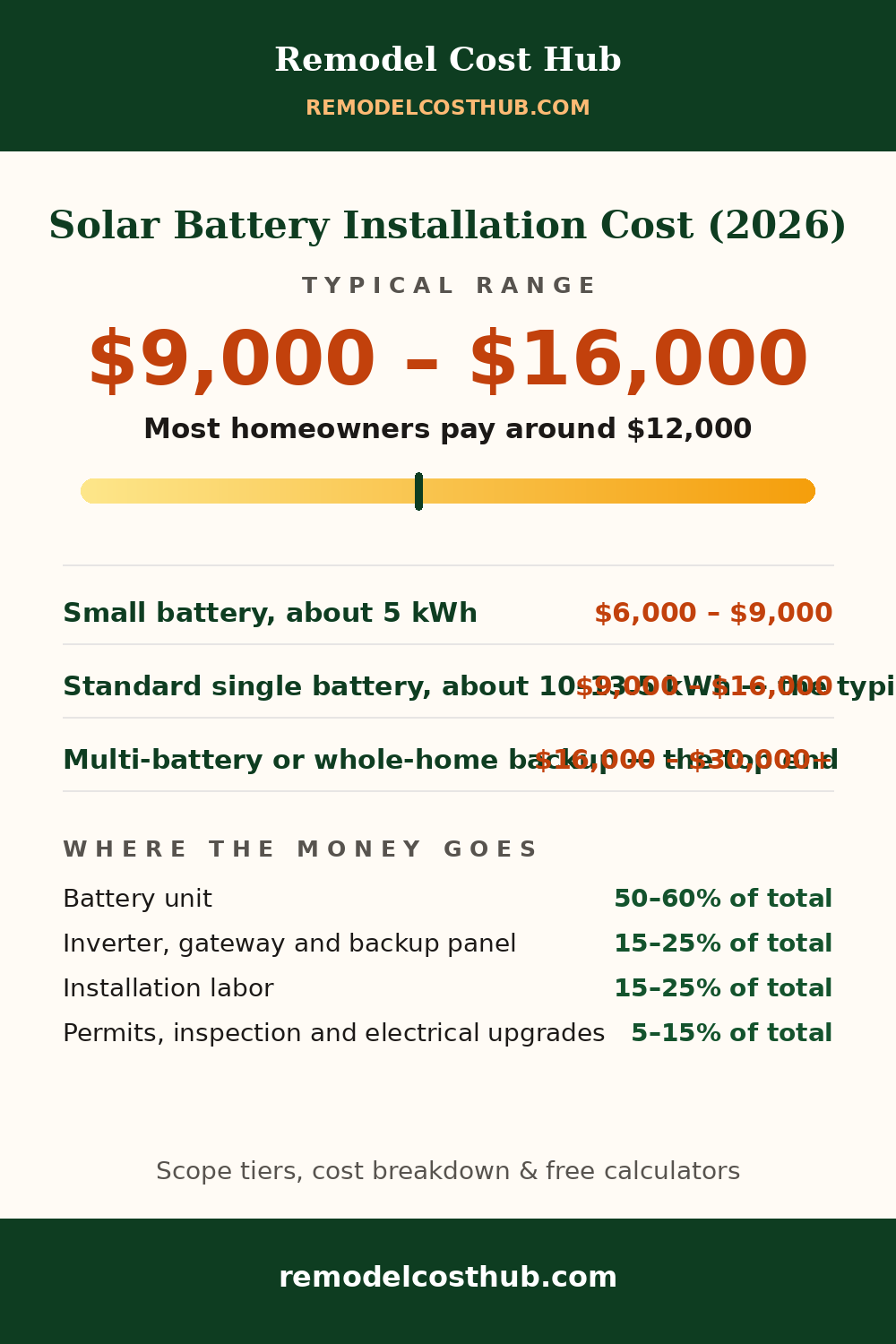
Most homeowners pay around $12,000 · A solar battery installation typically costs $9,000 – $16,000 for a standard single battery of about 10–13.5 kWh installed, with about $12,000 the figure most jobs land near — Angi averages $10,000 inside its $6,000–$12,000 band for smaller and add-on systems, EnergySage averages $15,647 for a 13.5 kWh system at $1,159 per kWh, and the Simple Solar Guide puts a typical total at $8,000–$15,000+. The guides disagree on the average because they price different sizes: Angi's band is the smaller-battery case, EnergySage's point is one full-size battery, and this page's typical band spans both. Panels are not in this price: it is the battery, inverter and electrical work only, before any state or local incentive.
typical
$9,000$16,000
Low end = minor scope  ·  marker = typical middle  ·  high end = major scope. Add 10–20% contingency to any budget.
Technician positioning a solar panel on a house roof

Solar Battery Installation cost at a glance

  • Typical range: $9,000 – $16,000
  • Most homeowners pay: around $12,000
  • Prices vary most by: Battery unit (50–60% of the budget)

Cross-checked against two published sources for this project. Sources used for this page: Angi's solar battery cost guide, updated October 29, 2026 (national average $10,000, most $6,000–$12,000, full range $400–$20,000; $400–$750 per kWh, a 10 kWh battery $4,000–$7,500; totals to $30,000 for multiple batteries; brand starting costs EG4 $8,500, LG $6,000, SunPower $12,000; solar panels $18,400–$36,400 as a separate cost), EnergySage's home battery guide, updated August 26, 2026 (average $15,647 installed for a 13.5 kWh battery before incentives, $1,159 per kWh; equipment 50–60% of the price; top-10 brands $706–$1,437 per kWh in first-half 2026 quotes) and the Simple Solar Guide's 2026 battery guide (equipment $5,000–$12,000, installation labor $1,500–$3,000, electrical upgrades $500–$2,000, permits and inspection $300–$800, typical total $8,000–$15,000+; federal tax credit $0 for 2026 installs after the credit ended December 31, 2025). Sources last checked: October 2026 — Angi, EnergySage. How we calculate these costs

Cost by scope
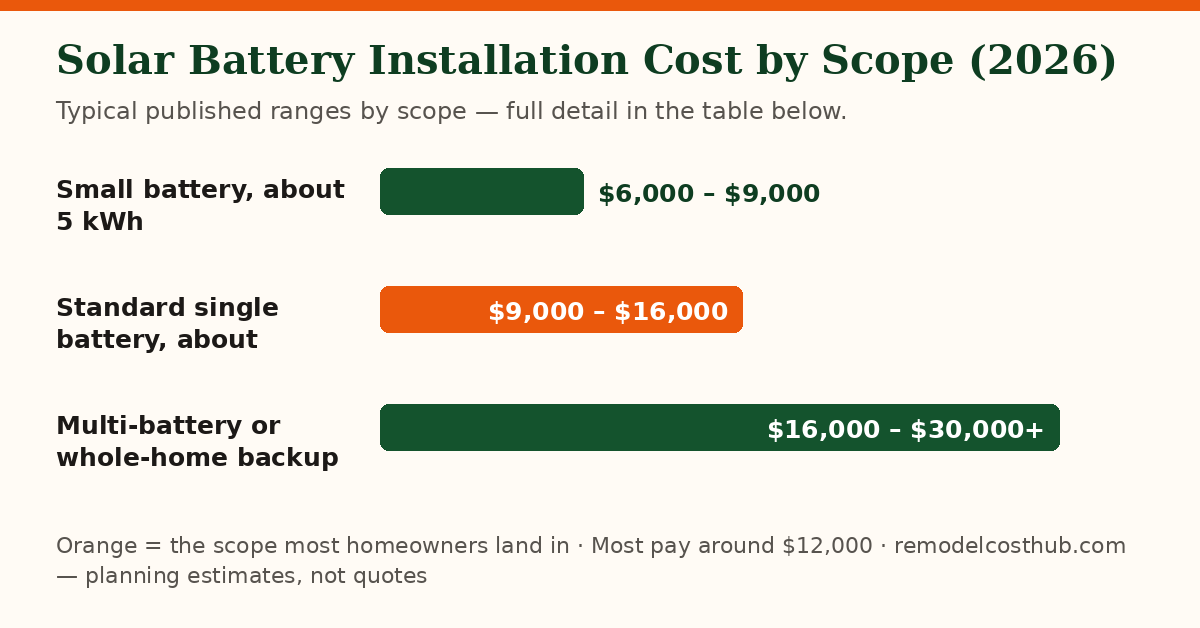
Solar Battery Installation cost ranges by scope — chart of the table below
ScopeTypical costWhat it includes
Small battery, about 5 kWh$6,000 – $9,000The cheap end: Angi's band starts at $6,000, and its $400–$750 per kWh rate puts a 5 kWh unit at the bottom of the ladder — enough for a few essential circuits for a short outage
Standard single battery, about 10–13.5 kWh — the typical job$9,000 – $16,000The shared band itself: Angi's $10,000 average against EnergySage's $15,647 for 13.5 kWh — one battery, a backup gateway and a critical-loads panel, sized to keep essentials running
Multi-battery or whole-home backup — the top end$16,000 – $30,000+The expensive end: Angi puts multi-battery totals up to $30,000, and EnergySage's per-kWh rate doubles the bill on a second battery — whole-home backup, not just essentials

Where the money goes

Part of the jobShareNote
Battery unit50–60% of totalThe unit itself: EnergySage puts equipment at 50–60% of the price, and its $1,159 per kWh average is the capacity ladder
Inverter, gateway and backup panel15–25% of totalThe conversion and switching gear: the inverter turns stored DC into household AC, and the gateway decides what stays powered in an outage
Installation labor15–25% of totalThe fitting: the Simple Solar Guide prices labor at $1,500–$3,000, with a retrofit to an existing array at the top end
Permits, inspection and electrical upgrades5–15% of totalThe paper and the panel: the Simple Solar Guide prices permits at $300–$800 and electrical upgrades at $500–$2,000 where the existing panel cannot take the battery
Battery unit · 50–60%Inverter, gateway and backup panel · 15–25%Installation labor · 15–25%Permits, inspection and electrical upgrades · 5–15%
Estimator’s note: on a solar battery installation, battery unit is usually where quotes swing most (50–60% of total of a typical budget). Ask every contractor to itemize that line in writing — totals are only comparable when that part is.
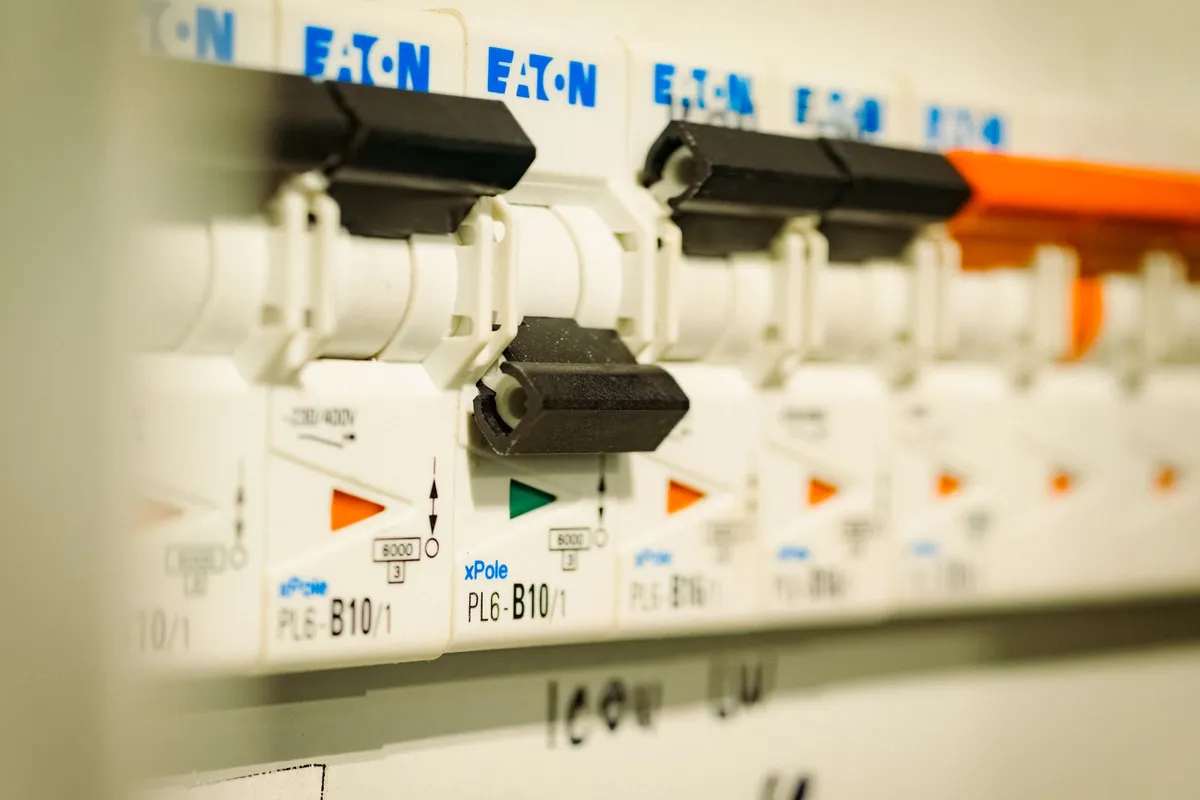
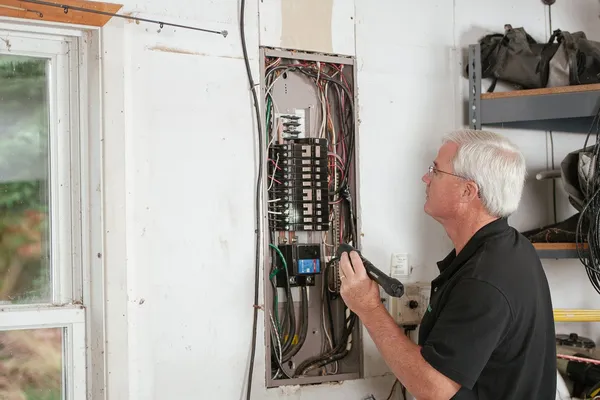
A breaker panel in close view: the electrical side of a battery job — permits, inspection and panel upgrades sit in the 5–15% line, with the Simple Solar Guide pricing upgrades at $500–$2,000

What moves the price most

Capacity is the first driver. Batteries are priced by the kilowatt-hour, and EnergySage's $1,159 per kWh average means every extra 5 kWh adds roughly $5,800 before labor — which is why the guides agree that sizing to actual essential loads, not to the whole house, is the saving. Retrofit or new install is second: a battery added to an existing array needs inverter compatibility work that a battery installed with new panels does not, and the Simple Solar Guide prices that complexity into its labor band. Backup scope is third: essential circuits (fridge, lights, internet, a pump) need one battery; whole-home backup needs two or three and a larger gateway, which is the step from the typical tier to the top tier. Finally, the panel question: an older or full service panel may need an upgrade before the battery can connect, and that $500–$2,000 line is the most common surprise in an otherwise fixed quote.

Work out your quantities: before you compare quotes, run your measurements through our free remodeling calculators (paint, tile, concrete and flooring) — each one shows its formula and runs entirely in your browser.

Costs in your city

Labor is the biggest variable in any remodel, and labor is local — the same bathroom can price very differently in Houston than in Boston. We are adding city editions metro by metro, each with its own labor index, permit notes and climate factors, written for that city rather than copied from this page. Wave 1: Houston, Dallas–Fort Worth, Phoenix, Atlanta, Miami–South Florida, Orlando, Tampa, Charlotte, Austin and San Antonio. Until your city's page is live, use the national range here and weight it the way contractors do: Sun Belt labor often prices near or below the national middle, while coastal California and the Northeast metros often price well above it.
How this estimate was built: the range on this page is a synthesis of at least three published industry sources (national cost guides and the Remodeling Magazine Cost vs. Value data among them), cross-checked in October 2026. We publish planning ranges, never a single pretend-precise price. Full method: How We Estimate Costs.
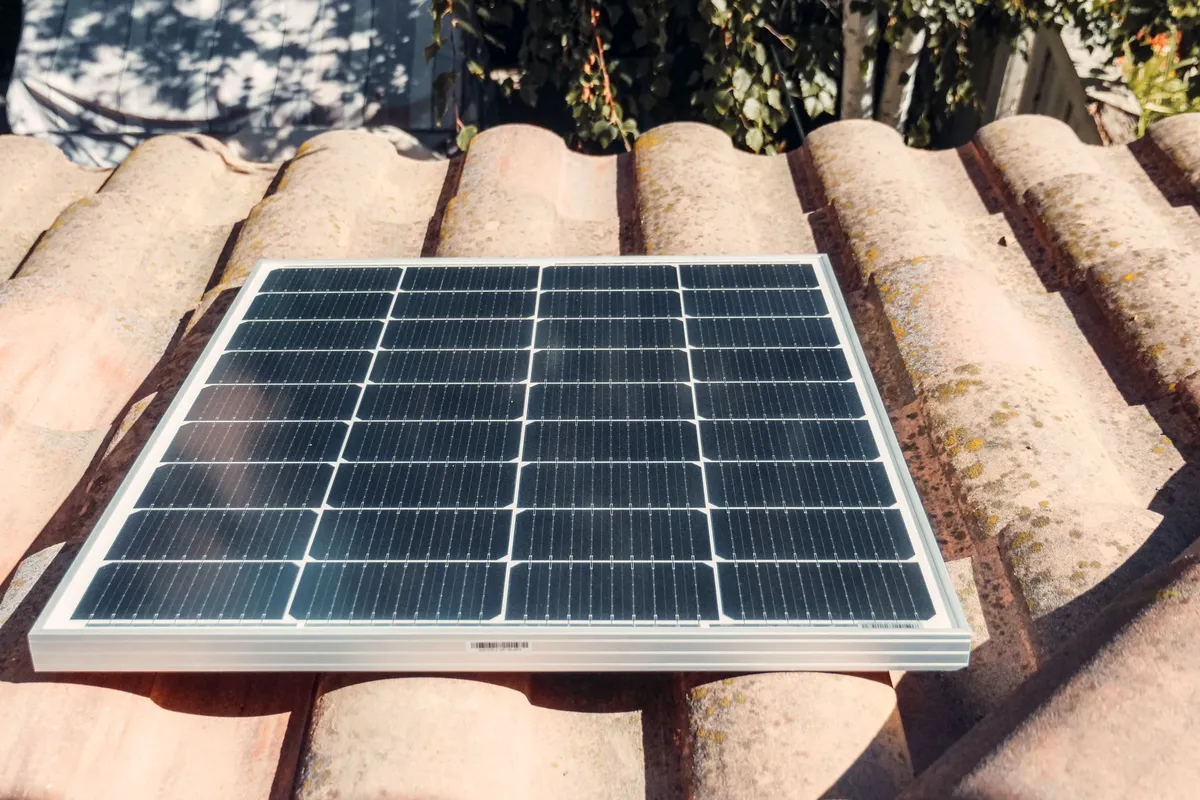
A solar panel on a tiled roof: the battery itself is not pictured here — capacity, at EnergySage's $1,159 per kWh, is what decides whether one battery or two is the quote

Frequently asked questions

How much does a solar battery installation cost?

Typically $9,000–$16,000 for a standard single battery of about 10–13.5 kWh installed, with about $12,000 the figure most jobs land near — Angi averages $10,000 for smaller systems and EnergySage averages $15,647 for a 13.5 kWh system.

What size battery do I need?

Size it to your essential loads, not your whole house: EnergySage's 13.5 kWh reference size keeps essentials running through a typical outage, while a 5 kWh battery covers a few circuits for a few hours. A load list from the installer — fridge, lights, well pump, internet — sets the size, not a rule of thumb.

Can I add a battery if I already have solar panels?

Yes, and it is the most common job: the battery is retrofitted to the existing array, but inverter compatibility decides whether it is a straightforward add-on or needs new inverter hardware, which is why retrofit labor sits at the top of the Simple Solar Guide's $1,500–$3,000 band.

Is there still a federal tax credit for batteries in 2026?

Do not budget for one: the 30% Residential Clean Energy Credit does not apply to property placed in service after December 31, 2025, per IRS guidance cited in the 2026 battery guides. State and utility incentives still exist in some places and are the only incentive to price in.

How long does a home battery last?

Most residential lithium batteries are warranted for about 10 years or a set number of cycles, with usable capacity declining over that life. Replacement is a new battery purchase, not a repair — which is why the warranty's warranted capacity, not just its years, belongs in the quote comparison.
Before you sign: get at least 3 written local quotes for the same written scope, confirm permits and who pulls them, and keep a 10–20% contingency separate from the contract price.

Ahsan ul Haq — Editor, Remodel Cost Hub

Ahsan compiles and edits the cost guides on Remodel Cost Hub, cross-checking every range against at least three published sources before it is published — the full method is on our Methodology page. Spot an error on this page? Send a correction.

Solar Battery Installation cost range graphic
Save this range for later: Pin it on Pinterest

Related cost guides

Electrician inspecting an open residential breaker panel in a garage with a flashlight

Electrical Panel Upgrade Cost

$1,300 – $2,500

Typical upgrade to 200-amp service with a new breaker panel, installed by a licensed electrician

An electrician's gloved hands testing wiring in an open control panel with a yellow multimeter

Whole House Generator Installation Cost

$6,000 – $12,000

$9,000 is Forbes Home's published whole-house average — most homeowners pay around $9,000 for a fully installed standby system ($4,000–$25,000+ installed). HomeGuide's typical installed band is $6,000–$11,000 and Modernize's is $6,000–$12,000; Generac's own installed range is $8,000–$16,000. Angi's lower $5,154 average covers ALL generator projects in its dataset, including partial and essentials-only units, so it is not the whole-house figure. A permanently installed standby generator starts itself within seconds of an outage and powers the home on natural gas or propane — a different product from a portable generator ($500–$2,500, a few circuits only) and from battery backup (see our solar battery guide).

Technician working on an open breaker panel with rows of breakers and color-coded wiring

Electrical Subpanel Installation Cost

$500 – $1,750

A standard 100-amp subpanel installed near the main panel, feeder run included — detached buildings and long buried runs priced separately below

Open electrical panel with rows of circuit breakers

Whole-House Surge Protector Installation Cost

$200 – $450

A standard Type 2 surge protector mounted at the main panel by a licensed electrician — the panel-mounted device most homes actually get

Three open outlet boxes with blue terminals on a white tiled wall

Electrical Inspection Cost

$100 – $200

A standard electrical safety inspection for a typical home typically costs $100 – $200, with about $145 the figure most standard inspections land near — HomeGuide publishes a $145 national average inside a $100–$200 average range, Angi prices standard inspections at $100–$200 with a full-home inspection around $350, and iBuyer prices a standard safety check at $100–$200 against $250–$400 for a full home inspection. This guide prices the inspection and written report — panel, wiring, outlets and safety devices — not the repairs the report recommends.

Worker on a ladder installing red conduit wiring in an unfinished room during renovation

Whole House Rewiring Cost

$6,000 – $15,000

Whole house rewiring typically costs $6,000 – $15,000 for a full rewire of a ~1,500-square-foot home with attic, basement or crawlspace access and the existing panel kept, at about $4–$10 per square foot, with about $10,000 the figure most standard jobs land near — InstaElectricians prices a medium 1,500–2,500-square-foot home at $6,000–$15,000, HomeGuide prices a rewire through attic, basement or floor joists at $10,000–$20,000, and Angi's calculator prices rewiring at $2–$4 per square foot. Angi's headline verified-project average of $1,567 covers small or partial jobs, not a full rewire, and is not used for this band. A single circuit or partial rewire lands below the band, and opening the walls or replacing knob-and-tube wiring runs above it, while the wire, labor, permits and drywall patching below are all inside the total.