Smart Lock Installation cost at a glance
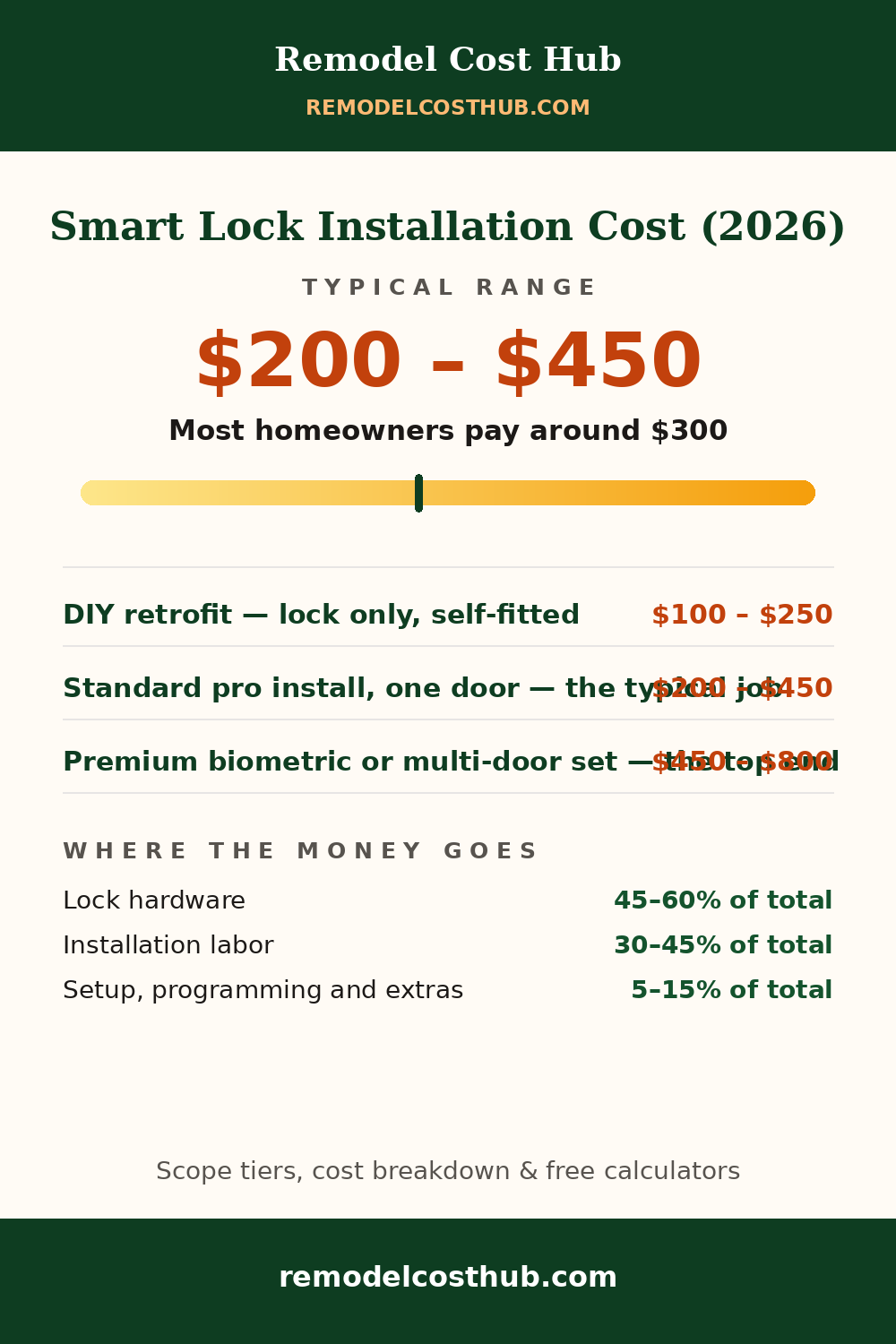
- Typical range: $200 – $450
- Most homeowners pay: around $300
- Prices vary most by: Lock hardware (45–60% of the budget)
Cross-checked against one published sources for this project. Sources used for this page: Angi’s locksmith cost guide, updated Oct 2, 2026 (national average $164, typical $107–$242; new lock installation $100–$300; smart lock programming +$30–$100; smart lock setup $100–$200), Angi’s smart lock guides (smart locks $100–$250 hardware, upgrade $200–$800; smart deadbolt material $100–$350; pro deadbolt installation $70–$300 per lock, average $175; batteries $5–$20; subscriptions $3–$10/month) and EngineerFix’s smart lock cost guide (entry keypad $75–$150; Wi-Fi/biometric $250–$500; professional installation $100–$200).. Sources last checked: October 2026 — Angi. How we calculate these costs
Cost by scope
| Scope | Typical cost | What it includes |
|---|---|---|
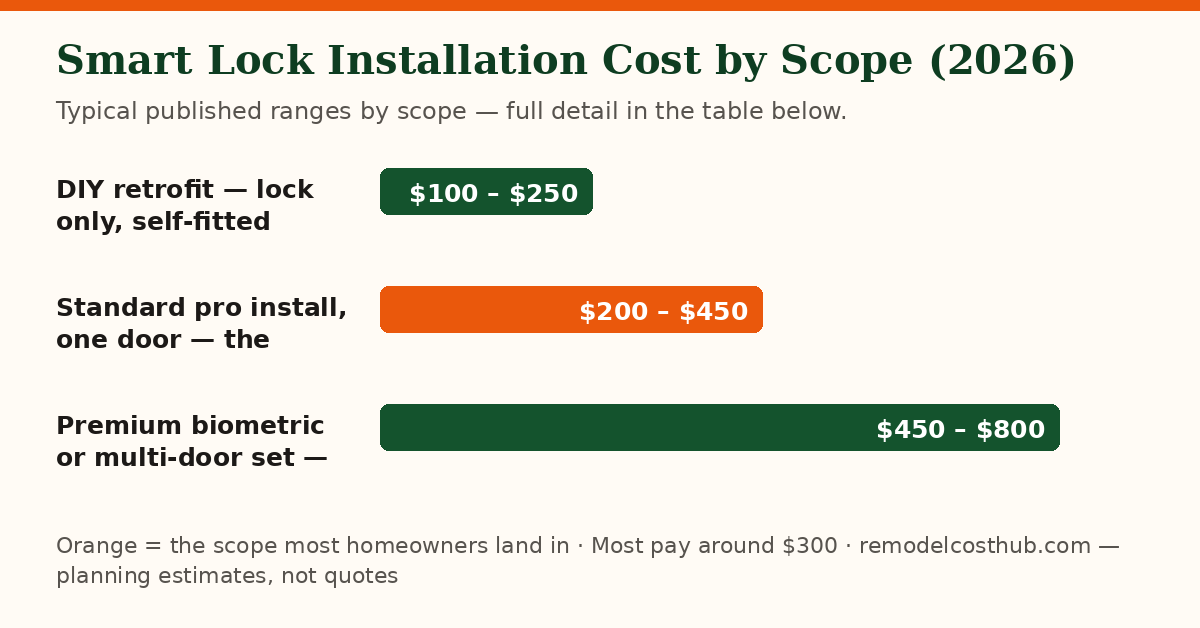
| DIY retrofit — lock only, self-fitted | $100 – $250 | The cheap end: Angi prices smart locks at $100–$250 for the hardware, and most battery models swap onto an existing deadbolt with a screwdriver — no labor line, but you carry the measuring, fitting and app setup yourself |
| Standard pro install, one door — the typical job | $200 – $450 | The shared band itself: hardware at $100–$250 in Angi plus professional fitting at $100–$200 in EngineerFix — a locksmith or handyman fits, aligns and programs the lock, and checks it against your existing door |
| Premium biometric or multi-door set — the top end | $450 – $800 | The expensive end: Angi prices upgrading to a smart lock at $200–$800, EngineerFix prices Wi-Fi and biometric models at $250–$500 for the hardware alone, and a whole-home set multiplies the per-door fitting — before any wiring or door work |
Where the money goes
| Part of the job | Share | Note |
|---|---|---|
| Lock hardware | 45–60% of total | The lock itself: Angi prices smart locks at $100–$250 and smart deadbolts at $100–$350 by material, against $30–$50 for a plain deadbolt — keypad, fingerprint and Wi-Fi models climb the same ladder |
| Installation labor | 30–45% of total | The fitting: EngineerFix prices professional installation at $100–$200, Angi prices new lock installation at $100–$300, and smart-lock programming adds $30–$100 — alignment and strike-plate work are what separate a smooth lock from a sticky one |
| Setup, programming and extras | 5–15% of total | The small lines: app setup, code and fingerprint enrollment, Wi-Fi or hub pairing, batteries at $5–$20 a set in Angi, and any subscription at $3–$10 a month for advanced remote features |
What moves the price most
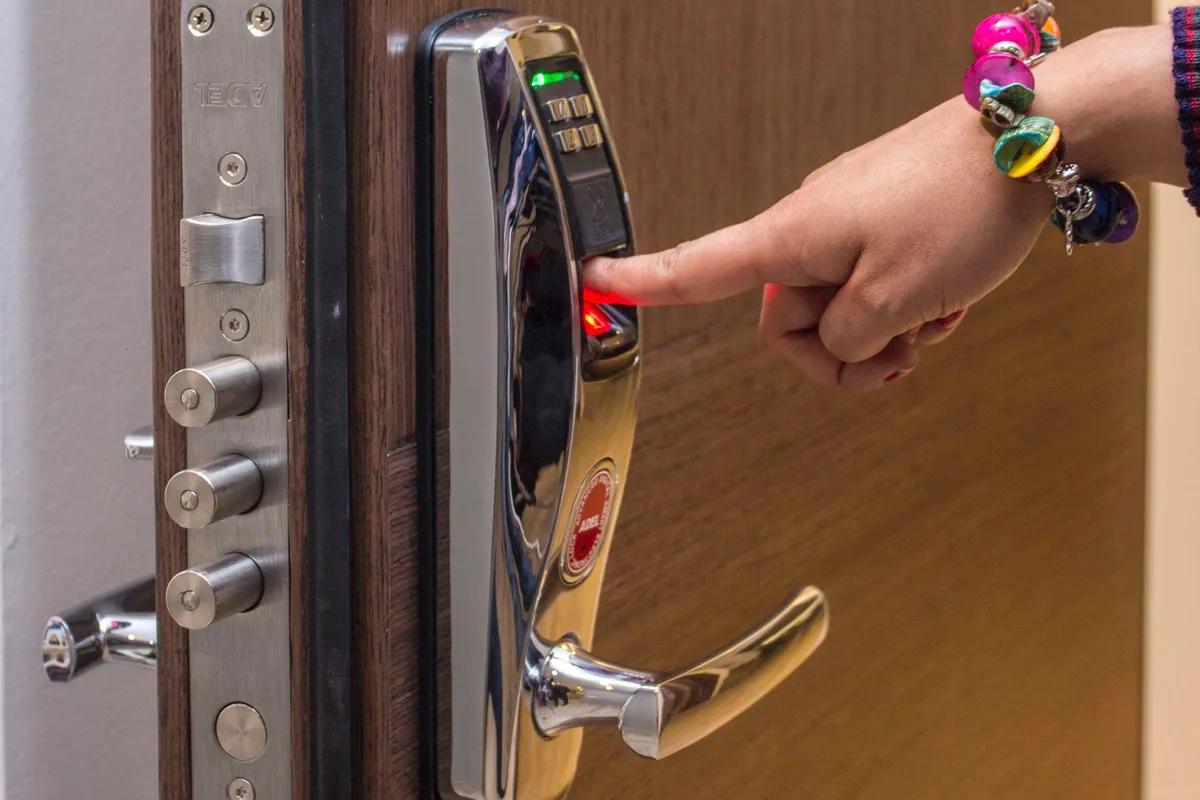
Lock type is the first driver: EngineerFix prices entry keypad locks at $75–$150 against Wi-Fi and biometric models at $250–$500 for the hardware, and Angi prices smart deadbolts at $100–$350 by material — the feature set is the price ladder. Door condition is second: Angi’s deadbolt guide says lock type and door material drive the total, and a door that needs a new bore, a mortise change or strike-plate repair pays extra labor before the lock itself is even fitted. Pro versus DIY is third: Angi averages a locksmith visit at $164 with a typical $107–$242 range, and most retrofit smart locks need only a screwdriver — DIY saves the fitting line, but programming help alone adds $30–$100 in Angi if you hire that part out. Connectivity is fourth: Bluetooth locks pair to a phone nearby, while Wi-Fi locks add remote access and sometimes a $3–$10 monthly subscription in Angi for advanced features — decide before buying, because the radio is in the lock, not added later. Finally, ongoing costs are small but real: batteries at $5–$20 a set in Angi, and a key backup stays wise because a dead battery plus no key is a lockout, not a feature.
Costs in your city
Labor is the biggest variable in any remodel, and labor is local — the same bathroom can price very differently in Houston than in Boston. We are adding city editions metro by metro, each with its own labor index, permit notes and climate factors, written for that city rather than copied from this page. Wave 1: Houston, Dallas–Fort Worth, Phoenix, Atlanta, Miami–South Florida, Orlando, Tampa, Charlotte, Austin and San Antonio. Until your city's page is live, use the national range here and weight it the way contractors do: Sun Belt labor often prices near or below the national middle, while coastal California and the Northeast metros often price well above it.
Frequently asked questions
How much does smart lock installation cost?
About $200–$450 for one standard door fitted by a professional with a mid-range lock, with about $300 the common middle. Angi’s wider upgrade band runs $200–$800, covering basic keypad retrofits at the bottom and premium biometric or multi-door sets at the top.
Can I install a smart lock myself?
Usually yes: Angi notes most keyless locks swap onto an existing deadbolt with a screwdriver, and battery models need no wiring. Hire a locksmith for a door that needs a new bore, a misaligned frame, or a wired model — and for programming help, which Angi prices at $30–$100 on top of fitting.
Keypad, fingerprint or Wi-Fi — which smart lock is the best value?
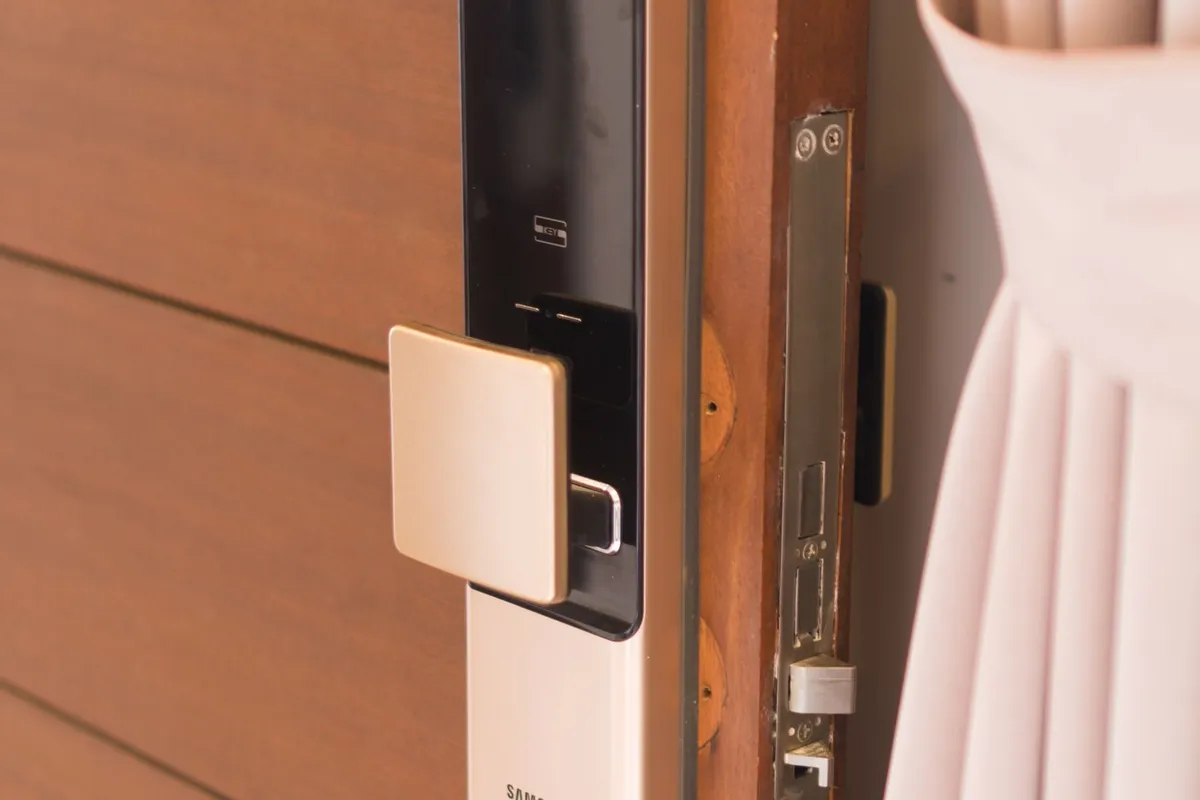
Keypad for the lowest cost, fingerprint for the fastest daily use, Wi-Fi for remote access: EngineerFix prices entry keypad locks at $75–$150 against Wi-Fi and biometric models at $250–$500 for the hardware, and Wi-Fi is the one that can add a monthly subscription for advanced remote features.
Do smart locks need wiring or power?
Almost all retrofit smart locks are battery-powered and need no wiring — batteries run $5–$20 a set in Angi, with low-battery alerts before they die. Wired or video models are the exception, and new wiring is a separate electrician line, not part of the standard fitting.
Are smart locks secure, and what happens if the battery dies?
Angi’s position is that smart locks are as secure as traditional locks when the Wi-Fi uses a strong password and regular updates, with better encryption on higher-quality models. Most models keep a physical key backup and warn well before the battery dies — keep the key somewhere you can reach it, and the battery problem stays an errand, not a lockout.