Spray Foam Insulation cost at a glance
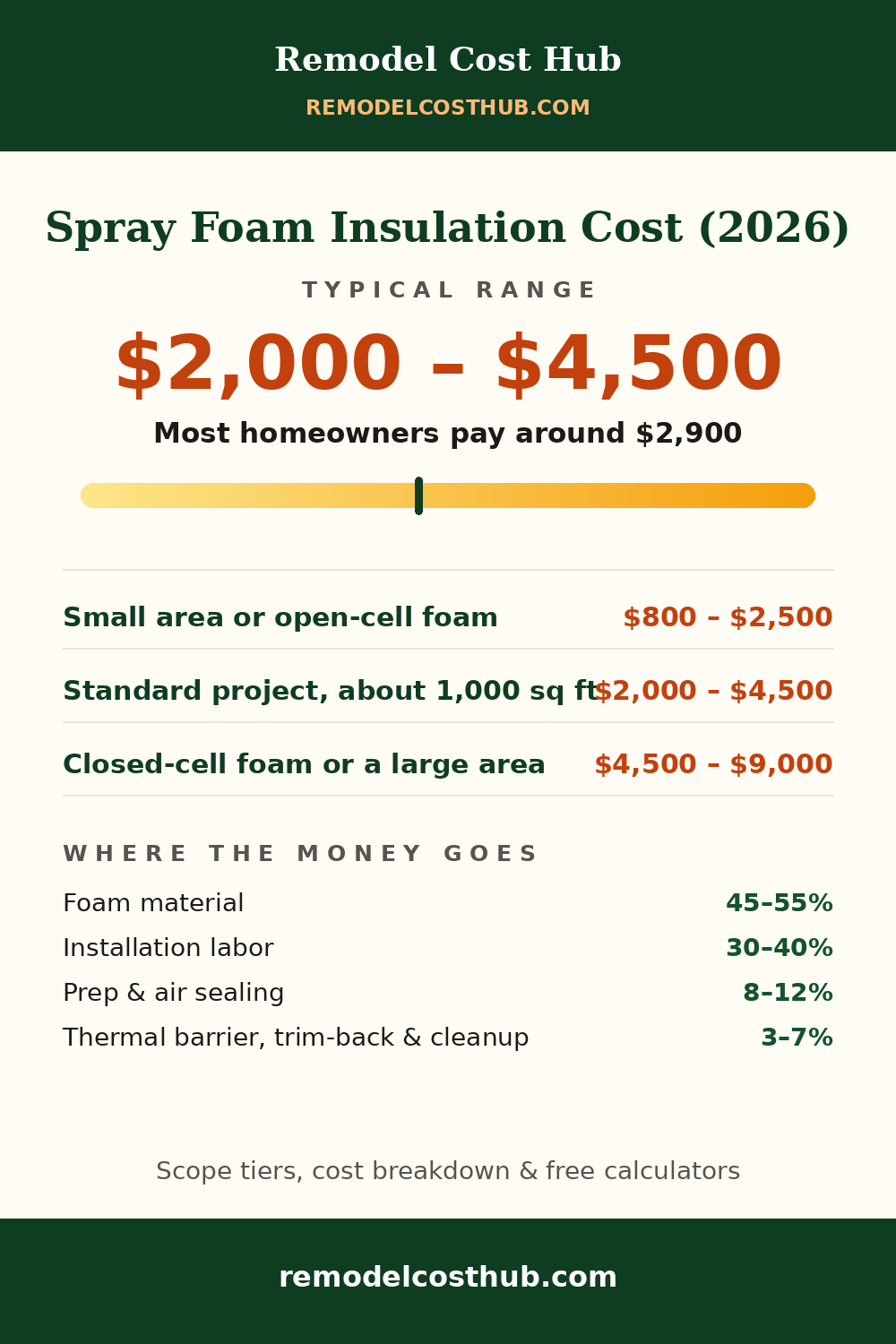
- Typical range: $2,000 – $4,500
- Most homeowners pay: around $2,900
- Prices vary most by: Foam material (45–55% of the budget)
Cross-checked against three published sources for this project. Sources used for this page: the Angi spray foam insulation cost guide, HomeGuide's spray foam insulation cost data and Modernize's spray foam insulation cost guide. Sources last checked: October 2026 — HomeGuide, Modernize, Angi. Last updated October 2026 · How we calculate these costs
Cost by scope
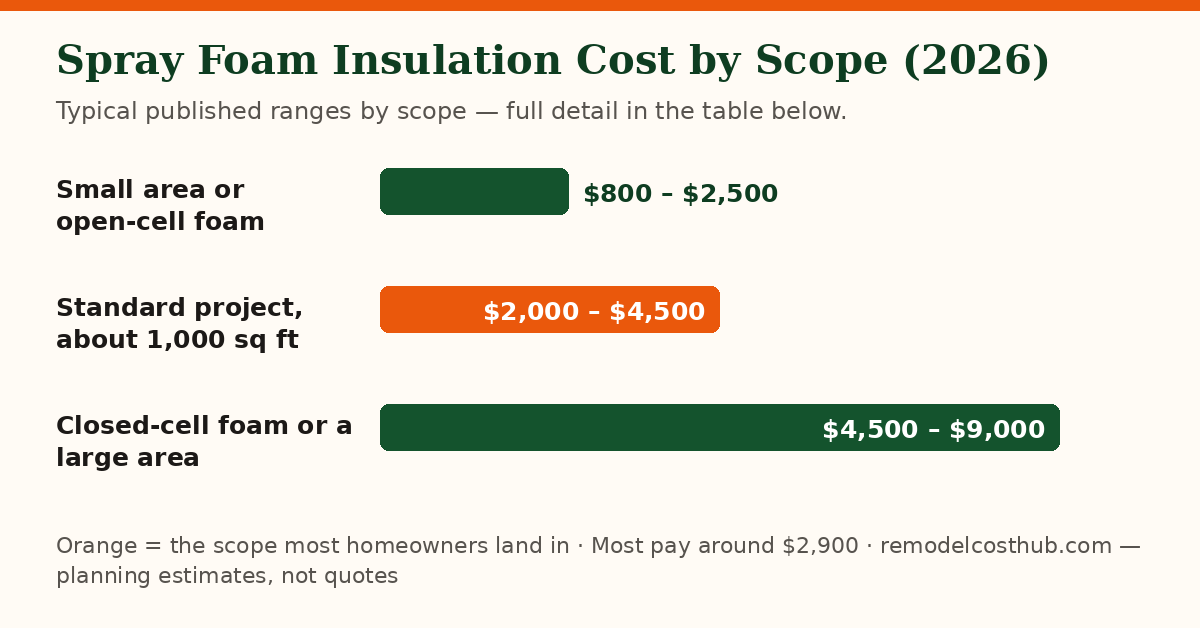
| Scope | Typical cost | What it includes |
|---|---|---|
| Small area or open-cell foam | $800 – $2,500 | Rim joists, a single room or a small attic in the lighter foam. Angi totals 500 square feet at $500–$2,500 installed at $1–$5 per square foot, Modernize totals a small 500-square-foot project at $1,500–$2,500, and open-cell foam is the cheaper material in every source at $0.60–$1.60 per board foot in Angi. |
| Standard project, about 1,000 sq ft | $2,000 – $4,500 | The typical project on this page. Angi averages spray foam at $2,887 across verified projects, with most homeowners paying $1,455–$4,337, and Modernize totals a medium 1,200-square-foot project at $2,500–$4,000 — the two independent totals bracket the same job. |
| Closed-cell foam or a large area | $4,500 – $9,000 | The dense foam, or simply more house. Angi prices closed-cell at $1.30–$3.10 per board foot against open-cell's $0.60–$1.60, HomeGuide's attic guide totals spray foam at $1,100–$9,000 for a 1,100–1,500 square foot attic, and Angi totals 1,500 square feet at $1,500–$7,500 before the closed-cell premium is applied throughout. |
Where the money goes
| Part of the job | Share | Note |
|---|---|---|
| Foam material | 45–55% | Priced by the board foot — one square foot at one inch thick. Angi prices open-cell foam at $0.60–$1.60 per board foot and closed-cell at $1.30–$3.10, so a 3.5-inch fill multiplies the rate before a single labor hour is counted |
| Installation labor | 30–40% | A two-person rig crew with heated hoses and proportioning equipment — Angi prices spray foam labor at $50–$100 per hour, and the crew, the rig and the truck are why professional foam never prices like a bag of batts |
| Prep & air sealing | 8–12% | Masking, ventilation set-up and sealing the gaps the foam will not bridge alone. Foam is its own air barrier once cured, but penetrations, plates and junctions are detailed by hand first or the expensive material covers an unfinished job |
| Thermal barrier, trim-back & cleanup | 3–7% | Foam over-spray is trimmed flush, and code requires a thermal or ignition barrier over foam in most occupied spaces — the finishing line that separates a complete quote from a spray-only quote |
What moves the price most
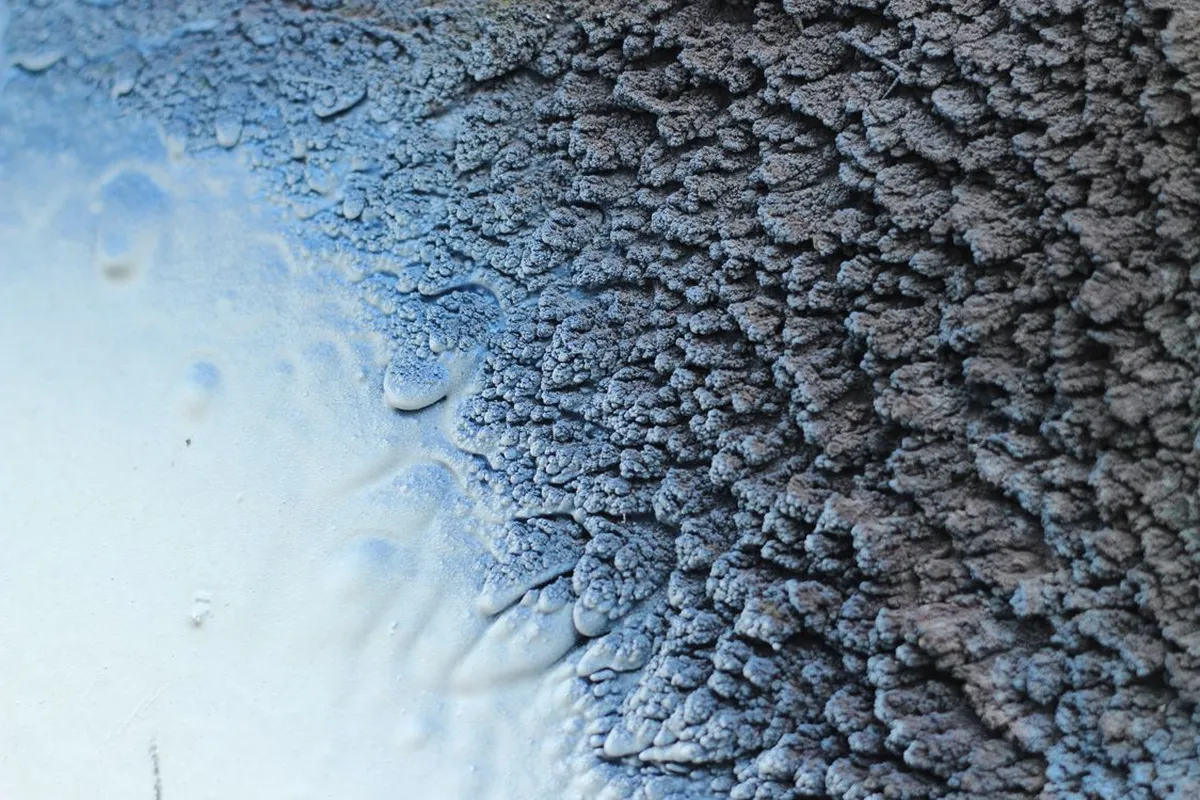
Board feet, not square feet, set the material bill. A board foot is a square foot one inch deep: Angi prices open-cell foam at $0.60–$1.60 per board foot and closed-cell at $1.30–$3.10, so doubling the depth doubles the material line at the same area. Foam type is the biggest single choice: open-cell delivers R-3.5 to R-3.7 per inch in Angi, closed-cell R-5 to R-7 — closed-cell reaches a target R-value thinner, acts as its own vapor retarder and costs roughly double per board foot. Where it goes moves the total more than how much: Angi's location table runs a basement at $1,500–$6,200, an attic at $1,100–$9,000 and a crawl space at $1,200–$6,900. New work is cheaper than retrofit: Angi prices new construction at $1–$4 per square foot against $3–$5 in an existing home, where access, masking and old-insulation removal slow the rig down. Finally, thickness targets are code-set — the required R-value for your climate zone decides the inches, and the inches decide the board feet.
Worked example: how a typical spray foam insulation budget breaks down
A typical job: open-cell spray foam sprayed 3.5 inches deep across a 1,000-square-foot attic floor — joist bays masked and prepped, penetrations sealed, foam trimmed back where it over-expanded, and the space ventilated until the cure cleared. The budget below totals $2,900 — the "most homeowners pay around" figure from the top of this page — split using this page's own cost breakdown. It shows how a real quote at that level is usually composed; every line is built from the ranges on this page, and it is an illustration, not a quote for your project.
| Line item | Example budget |
|---|---|
| Foam material (about 3,500 board feet) | $1,450 |
| Installation labor (two-person rig crew) | $1,015 |
| Prep & air sealing | $290 |
| Thermal barrier, trim-back & cleanup | $145 |
| Total | $2,900 |
What most people get wrong
- Comparing quotes per square foot without the depth — foam is priced per board foot in Angi at $0.60–$1.60 open-cell and $1.30–$3.10 closed-cell, so a cheaper square-foot quote is often just a thinner one.
- Spraying closed-cell where open-cell would do, or the reverse — Angi puts closed-cell at R-5 to R-7 per inch against open-cell's R-3.5 to R-3.7, and the right choice is set by the assembly and the moisture picture, not by habit.
- Foaming over old insulation and leaks — a roof leak into closed-cell foam hides until the deck rots, and every source's prep line exists because foam faithfully seals in whatever condition it covers.
- Forgetting the thermal barrier — most codes require one over foam in occupied space, and a spray-only quote that omits it is not a finished quote.
Costs in your city
Spray foam pricing is climate-zone arithmetic wearing local labor rates. The material is national — Angi prices open-cell foam at $0.60–$1.60 per board foot and closed-cell at $1.30–$3.10 wherever it is sprayed — but your climate zone sets the required R-value, the R-value sets the inches, and the inches set the board feet, so a northern attic at a deep fill carries a materially larger bill than the same attic in a mild zone. Labor moves the rest: Angi prices spray crews at $50–$100 per hour, and existing homes price above new construction in Angi at $3–$5 per square foot against $1–$4, because retrofit masking and access are slower everywhere. Ask each bidder for the foam type, the sprayed depth and the per-board-foot rate in writing — with those three numbers, any two quotes can be compared honestly.
Frequently asked questions
How much does spray foam insulation cost?
Most homeowners pay $2,000–$4,500 for a professional spray foam project of about 1,000 square feet, with $2,900 typical. Angi averages $2,887 across more than 4,000 verified projects with most paying $1,455–$4,337, and Modernize totals installed projects at $1,500–$6,000 depending on area and foam type.
How much does spray foam cost per square foot?
Angi prices installed spray foam at $1–$5 per square foot and HomeGuide at $1.50–$5.00 per square foot installed. The honest way to compare quotes is per board foot — Angi prices open-cell at $0.60–$1.60 and closed-cell at $1.30–$3.10 per board foot — because a per-square-foot quote hides the depth being sprayed.
Is open-cell or closed-cell spray foam cheaper?
Open-cell, by roughly half: $0.60–$1.60 per board foot in Angi against $1.30–$3.10 for closed-cell, and Modernize's board-foot table runs the same order at $0.40–$0.65 open-cell and $1.00–$1.50 closed-cell. Closed-cell earns its premium with R-5 to R-7 per inch against open-cell's R-3.5 to R-3.7, plus rigidity and moisture resistance.
How much does it cost to spray foam an attic?
HomeGuide's attic guide totals spray foam at $1,100–$9,000 for an 1,100–1,500 square foot attic, and Angi's location table puts attic work at $1,100–$9,000 as well. Roof-deck spraying — foam against the underside of the roof — sits at the top of the range because the area is larger than the attic floor and the depth target is higher.
Can I install spray foam myself with a DIY kit?
For rim joists and small gaps, yes — kits cover small areas and are the one part of this page homeowners routinely do themselves. Whole attics and walls are professional work in every source's framing: the foam is mixed on site by the rig, off-ratio foam does not cure properly, and Angi's labor market of $50–$100 per hour reflects a trained two-person crew, not a rental.