Deck Railing Installation cost at a glance
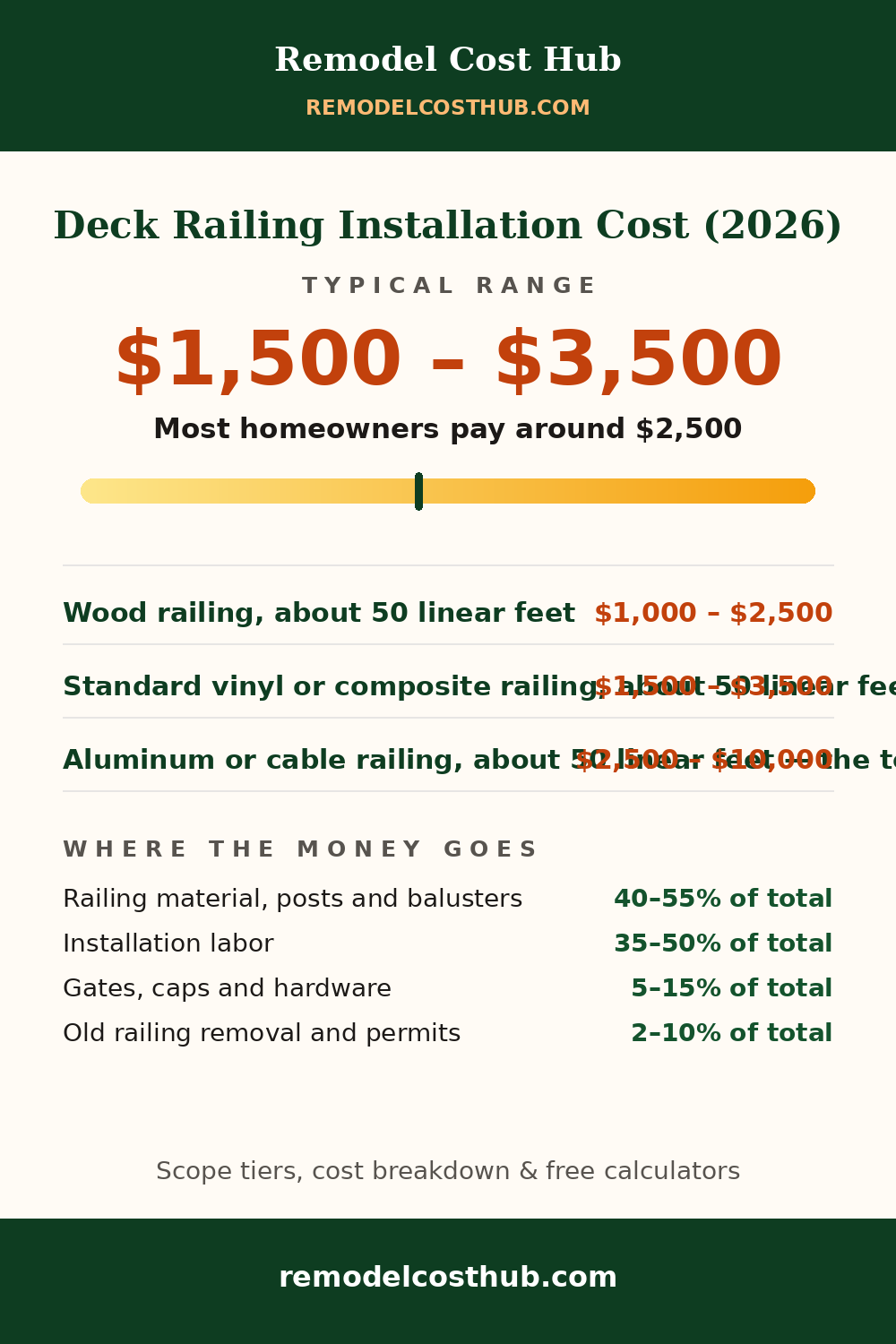
- Typical range: $1,500 – $3,500
- Most homeowners pay: around $2,500
- Prices vary most by: Railing material, posts and balusters (40–55% of the budget)
Cross-checked against two published sources for this project. Sources used for this page: Angi's deck railing guide, updated October 6, 2026 (national average $2,500, most $400–$4,800; $10–$50 per linear foot overall; labor $10–$50 averaging $30 per linear foot; wood $15–$50, composite $15–$60, aluminum $50–$200 per linear foot; 10 by 10 deck 40 feet $400–$2,000; demolition about $7 per linear foot, permits $300–$2,000 in its replacement guide), HomeGuide's porch and deck railing guide (wood $20–$50, vinyl $25–$60, composite $25–$60, aluminum $50–$200 per linear foot installed; decks over 30 inches high need railings, typically 36–38 inches high with baluster gaps under 4 inches) and Deck Cost Guide's composite and PVC railing guide, reviewed September 10, 2026 (composite and PVC $25–$150 per linear foot installed; basic vinyl and straightforward composite $25–$60, premium reinforced PVC $60–$120, designer mixed infill $90–$150+). Sources last checked: October 2026 — HomeGuide, Angi. How we calculate these costs
Cost by scope
| Scope | Typical cost | What it includes |
|---|---|---|
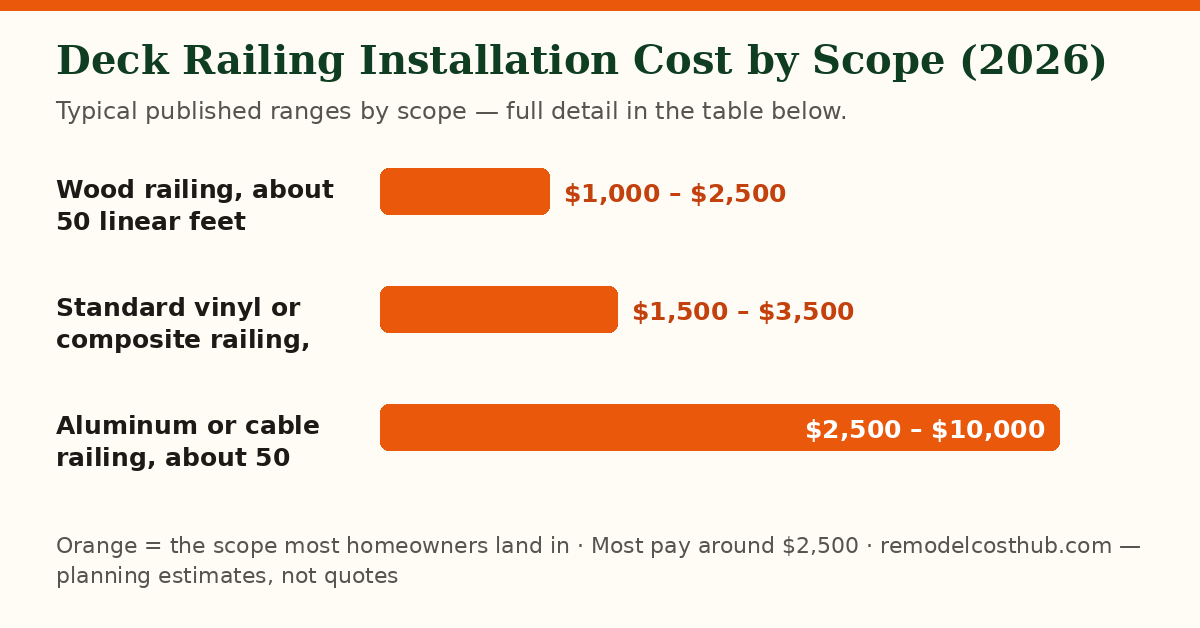
| Wood railing, about 50 linear feet | $1,000 – $2,500 | The cheap end: HomeGuide prices wood at $20–$50 per linear foot installed and Angi at $15–$50 — pressure-treated or cedar, the lowest upfront cost and the most maintenance |
| Standard vinyl or composite railing, about 50 linear feet — the typical job | $1,500 – $3,500 | The shared band itself: HomeGuide's $25–$60 per linear foot for both vinyl and composite, against Angi's $2,500 average job — low maintenance, standard profiles |
| Aluminum or cable railing, about 50 linear feet — the top end | $2,500 – $10,000 | The expensive end: HomeGuide prices aluminum at $50–$200 per linear foot installed and Angi puts cable at $50–$200 — slim profiles and a clear view, at several times the wood price |
Where the money goes
| Part of the job | Share | Note |
|---|---|---|
| Railing material, posts and balusters | 40–55% of total | The system itself: HomeGuide's per-foot table runs from wood at $20–$50 to aluminum at $50–$200 — material choice alone moves this line more than any other factor |
| Installation labor | 35–50% of total | The fitting: Angi prices railing labor at $10–$50 per linear foot, averaging $30 — posts set plumb, rails levelled, balusters spaced to code |
| Gates, caps and hardware | 5–15% of total | The extras: a self-closing gate, post caps and stair hardware are priced per item, and stairs add linear feet that a straight-run quote can miss |
| Old railing removal and permits | 2–10% of total | The small lines: Angi prices demolition at about $7 per linear foot on replacement jobs, and permits at $300–$2,000 where the deck work triggers one |
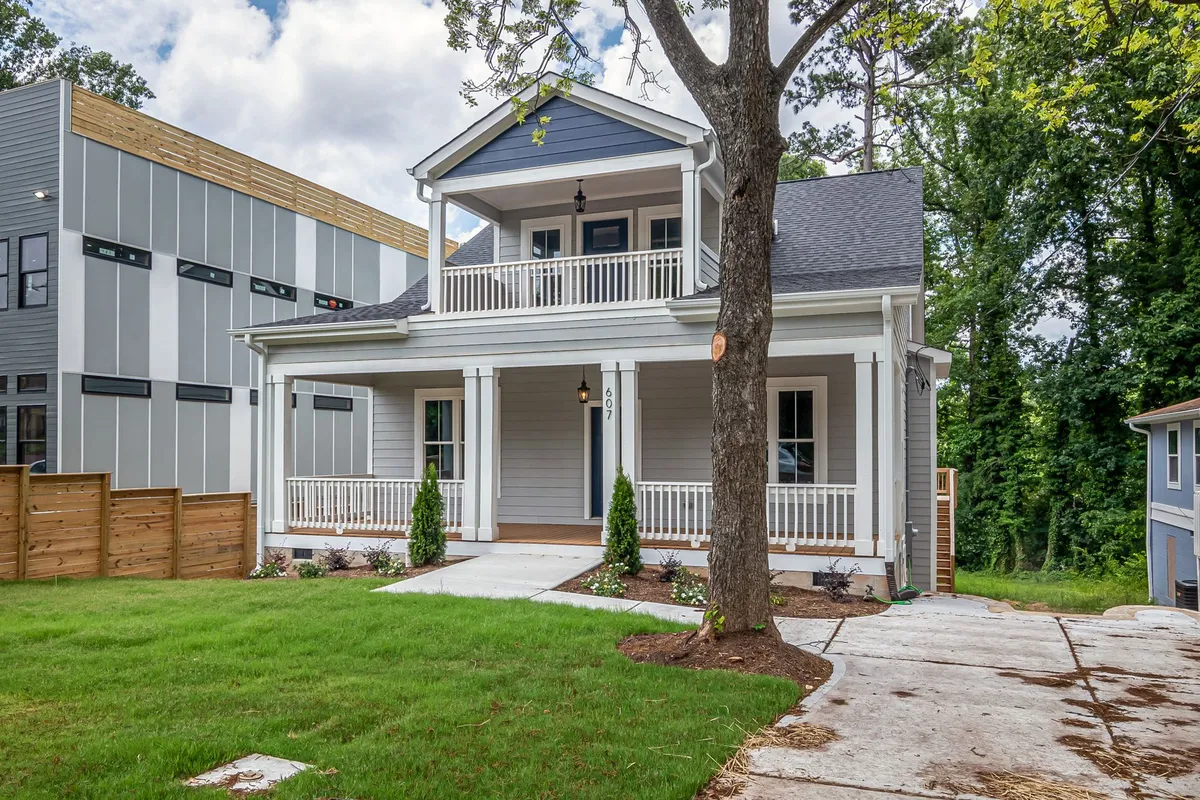
What moves the price most
Length is the first driver. Railing is priced by the linear foot, and Angi's size table runs from $400–$2,000 for a 10 by 10 deck's 40 feet upward — measuring the true railed perimeter, including stairs, is what sets the total. Material is second: HomeGuide's ladder runs wood $20–$50, vinyl and composite $25–$60, aluminum $50–$200 per linear foot, and glass $100–$600 — glass is the genuine top end and is not folded into the typical tier. Stairs and custom work are third: stair sections, angles and curves take longer per foot than straight runs, and cable systems need tension hardware that a wood rail does not. Finally, code is not optional: HomeGuide notes decks over 30 inches high need compliant railings, typically 36–38 inches high with baluster gaps under 4 inches — a short or wide-spaced rail is a failed inspection, not a saving.
Costs in your city
Labor is the biggest variable in any remodel, and labor is local — the same bathroom can price very differently in Houston than in Boston. We are adding city editions metro by metro, each with its own labor index, permit notes and climate factors, written for that city rather than copied from this page. Wave 1: Houston, Dallas–Fort Worth, Phoenix, Atlanta, Miami–South Florida, Orlando, Tampa, Charlotte, Austin and San Antonio. Until your city's page is live, use the national range here and weight it the way contractors do: Sun Belt labor often prices near or below the national middle, while coastal California and the Northeast metros often price well above it.
Frequently asked questions
How much does deck railing installation cost?
Typically $1,500–$3,500 for about 50 linear feet of standard wood, vinyl or composite railing, with about $2,500 the figure most jobs land near — Angi's $2,500 average job, against HomeGuide's $20–$60 per linear foot for wood, vinyl and composite.
How much is deck railing per linear foot?
Wood runs $20–$50, vinyl $25–$60 and composite $25–$60 per linear foot installed in HomeGuide, with aluminum $50–$200 and glass $100–$600. Angi's overall installed range is $10–$50 per linear foot for standard systems, with labor averaging $30.
How high must a deck railing be?
HomeGuide notes decks more than 30 inches off the ground need a railing, typically 36–38 inches high with baluster gaps under 4 inches. Local code sets the exact height, so the installer's quote should name the code height it builds to.
Wood or composite railing — which is better value?
Wood is cheapest to buy and needs staining or sealing every few years; composite costs more per foot and needs little beyond cleaning. Over a decade the maintenance gap closes much of the upfront difference, which is why composite is the typical tier on this page.
Can I install deck railing myself?
Straight wood or vinyl runs are realistic DIY for an experienced homeowner, but post anchoring and baluster spacing are structural and code items — a post that is not blocked and bolted to the deck framing will not hold the load the code requires, whatever the rail looks like.