Tree Trimming cost at a glance
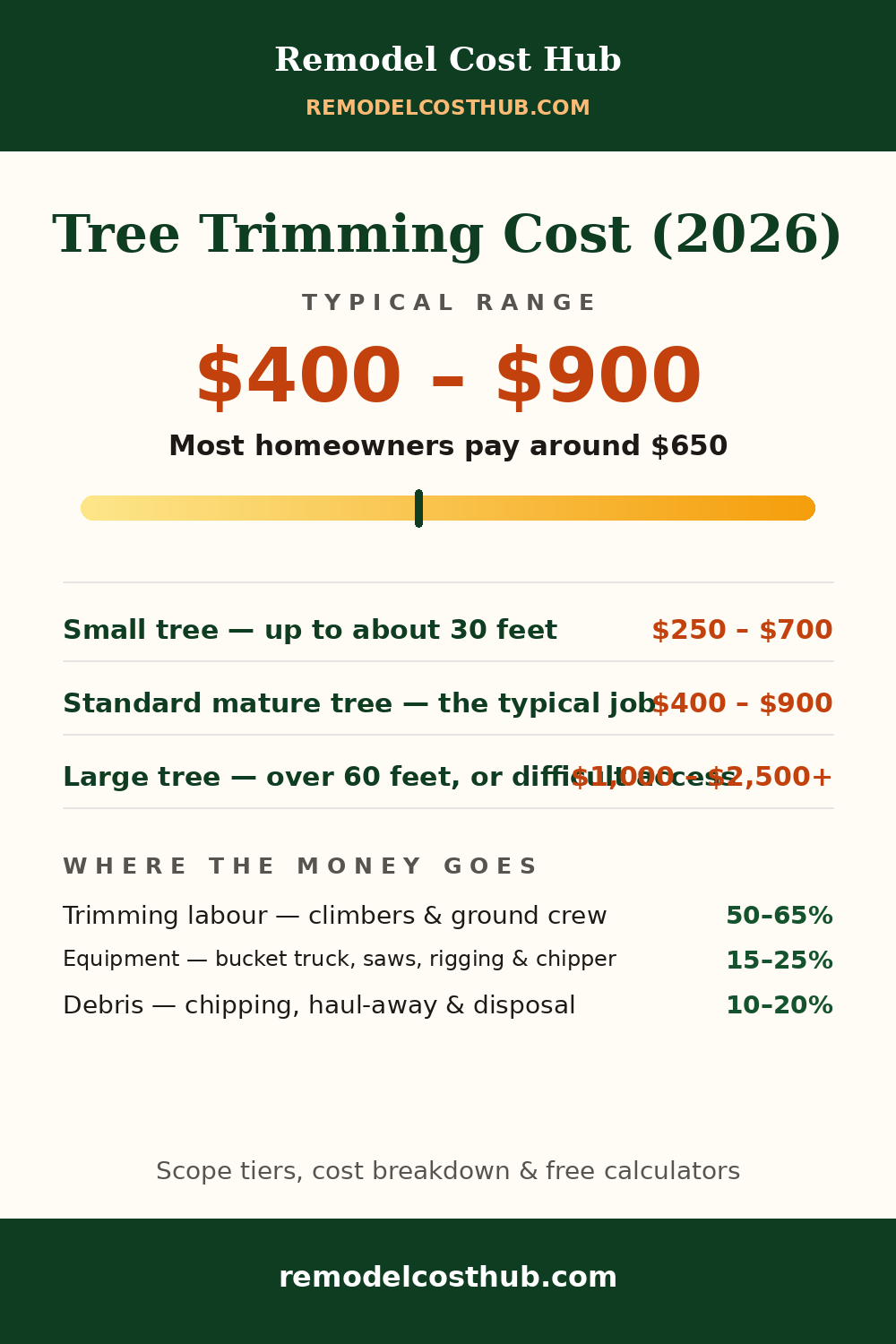
- Typical range: $400 – $900
- Most homeowners pay: around $650
- Prices vary most by: Trimming labour — climbers & ground crew (50–65% of the budget)
Cross-checked against three published sources for this project. Sources used for this page: HomeGuide's tree trimming cost guide, the Angi tree trimming cost guide and Thumbtack's tree trimming pricing data. Sources last checked: October 2026 — HomeGuide, Angi, Thumbtack. How we calculate these costs
Cost by scope
| Scope | Typical cost | What it includes |
|---|---|---|
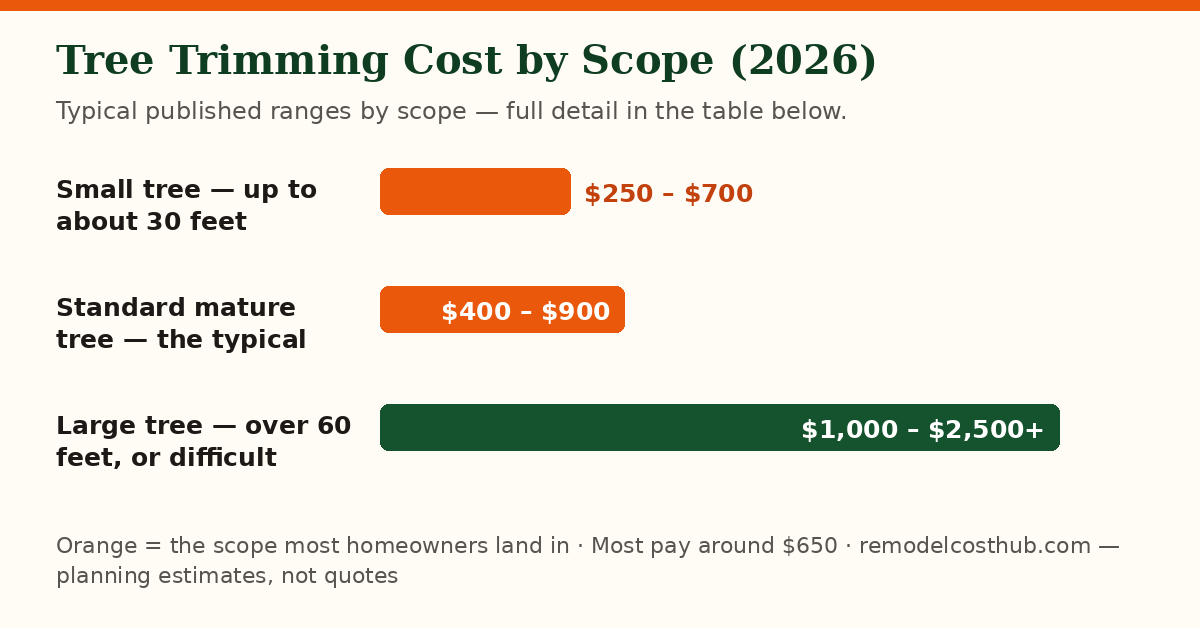
| Small tree — up to about 30 feet | $250 – $700 | HomeGuide's small-tree band: crabapple, crepe myrtle, dogwood and young ornamentals, much of the work reachable with a pole saw from the ground. Angi's city tables price the smallest jobs lower still, at $100–$350 for trees under 25 feet; minimum job fees of $100–$300+ apply either way in HomeGuide. |
| Standard mature tree — the typical job | $400 – $900 | One established shade or fruit tree, roughly 30–60 feet, trimmed and chipped in a single visit. HomeGuide's average range is $400–$900 per tree with a $650 national average; Angi's broader range runs $270–$1,800 with a $460 average across its wider mix of work, and Thumbtack's platform puts trimming and pruning at $436–$1,221. |
| Large tree — over 60 feet, or difficult access | $1,000 – $2,500+ | HomeGuide's top band for oak, pine, mature maple and other tall species, where bucket trucks, cranes or careful rigging over roofs and lines set the price. Angi's range tops out at $1,800 and its Dallas table prices over-50-foot trees at $500–$1,800; storm-damaged or diseased trees price above this band, not inside it. |
Where the money goes
| Part of the job | Share | Note |
|---|---|---|
| Trimming labour — climbers & ground crew | 50–65% | The skilled hours at height: HomeGuide prices trimming labour at $50–$125 an hour, with certified arborists above general trimmers. No source publishes percentage shares for this service, so this split is derived from the guides' hourly rates and debris lines and is labelled as derived in the method box |
| Equipment — bucket truck, saws, rigging & chipper | 15–25% | The truck-and-chipper share of the visit: HomeGuide prices wood chipping at $100–$150 an hour as a standalone service, and a tall tree that must be climbed because a bucket cannot reach it prices at the top of every guide's band |
| Debris — chipping, haul-away & disposal | 10–20% | HomeGuide prices debris removal at $75–$250 when it is billed as an add-on; bundled into a $650 typical job, the share sits inside this range. Keeping the chips as mulch removes most of the haul-away line |
What moves the price most
Height is the price ladder. HomeGuide's table runs up to 30 feet at $250–$700, 30–60 feet at $600–$1,200 and over 60 feet at $1,000–$2,500+; Angi's Dallas table tells the same story a rung lower, at $100–$350, $200–$850 and $500–$1,800. Species moves a tree within its rung: oak at $450–$1,500 and pine at $250–$1,600 in HomeGuide against palm at $100–$900 and crepe myrtle at $80–$400. Access is the multiplier — a canopy over a roof, fence or power line needs rigging and a bigger crew, and diseased or storm-damaged wood is slower and riskier to cut. Minimums and bundles cut the other way: job minimums run $100–$300+ (HomeGuide), and the per-tree price falls when several trees are trimmed in one visit. Season helps: late-spring-to-fall is peak in HomeGuide, winter scheduling can price lower, and emergency storm work prices above every band on this page.
Worked example: how a typical tree trimming budget breaks down
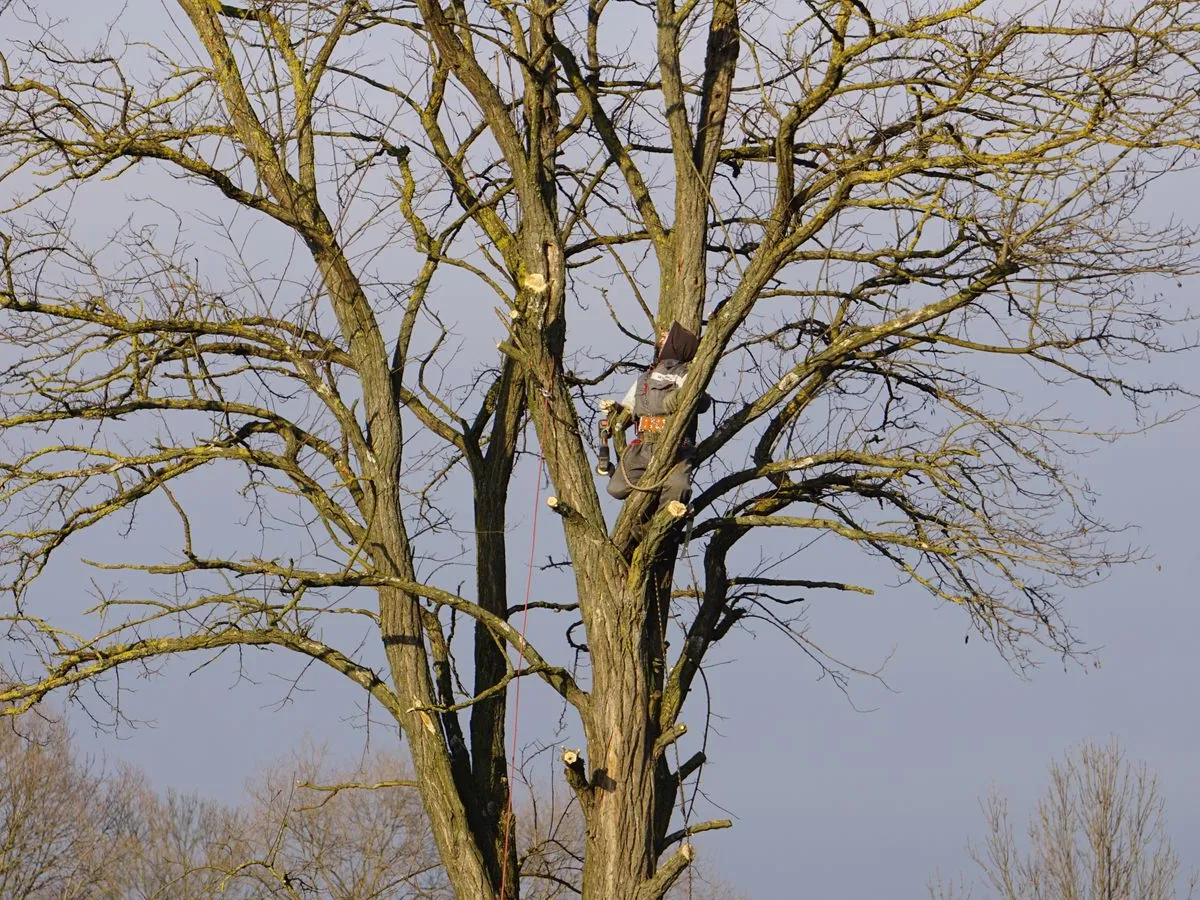
Take the typical job — one mature shade tree of about 40 feet in an open backyard: a climber and a ground hand for half a day, cuts rigged down clear of the fence, brush chipped at the kerb and hauled away. Here is a realistic $650 version of that invoice, at HomeGuide's national average and inside every source's range: The budget below totals $650 — the "most homeowners pay around" figure from the top of this page — split using this page's own cost breakdown. It shows how a real quote at that level is usually composed; every line is built from the ranges on this page, and it is an illustration, not a quote for your project.
| Line item | Example budget |
|---|---|
| Trimming labour — climber & ground crew | $390 |
| Bucket truck, saws, rigging & chipper share | $130 |
| Brush chipping, haul-away & tidy-up | $130 |
| Total | $650 |
What most people get wrong
- Accepting topping sold as trimming. HomeGuide lists topping at $150–$500 as its own line — it is the cheap, harmful cut that stubs a canopy and forces weak regrowth. A quote that says 'top' or 'round over' a mature tree is not a trimming quote.
- Hiring on a phone quote, sight unseen. Every guide prices by height, species, health and access together; a firm price given without looking at the tree is a guess that gets renegotiated on the day, upward.
- Skipping the insurance question. The work happens over roofs, fences and people. HomeGuide's hiring checklist starts with licensed and insured, with liability and workers' compensation in writing — an uninsured low bid transfers the risk to your policy.
- Comparing a per-tree quote with a per-hour quote without converting. Trimming labour runs $50–$125 an hour in HomeGuide; a two-person crew at the top of that band burns a $650 job value in about half a day. Ask what crew size and hours the flat quote assumes.
Costs in your city
Tree trimming follows local labour rates and the local tree stock together. HomeGuide notes coastal and metropolitan crews charge premium prices while rural work prices lower, and Angi's Dallas table — average $474, with most homeowners paying $278–$1,856 — shows a mid-cost metro landing under the national $650 average on a typical tree. Species shift cities as much as wages do: palm country buys a simpler $100–$900 cut (HomeGuide), while oak and pine belts live in the $450–$1,600 rows. Storm regions add a third variable — emergency and post-storm work prices above every published band, and the same job booked as planned winter maintenance can price at the bottom of its rung. Ask each company for the per-tree price with chipping and haul-away stated in or out, and city quotes become comparable line by line.
How we got these numbers
Cross-checked against HomeGuide's tree trimming cost guide — opened and read in full this run (average range $400–$900 per tree, national average $650, minimum $80, maximum $2,500+; by height: up to 30 ft $250–$700, 30–60 ft $600–$1,200, over 60 ft $1,000–$2,500+; by species: oak $450–$1,500, pine $250–$1,600, palm $100–$900; labour $50–$125 an hour; debris removal $75–$250; minimum fees $100–$300+), the Angi tree trimming cost guide (range $270–$1,800, average $460; Dallas size table: under 25 ft $100–$350, 25–50 ft $200–$850, over 50 ft $500–$1,800) and Thumbtack's tree trimming pricing data (trimming and pruning at $436–$1,221 on platform data; national average range $270–$450 in its FAQ). The typical band is HomeGuide's average range, which contains Angi's average and overlaps Thumbtack's platform band. Angi's lower $460 average reflects its wider mix, including small-tree work this page tiers separately; the most-pay figure is HomeGuide's $650 national average, which sits inside all three sources. No source publishes percentage shares for this service; the breakdown is derived from the guides' hourly rates and debris lines and is labelled as derived on the page.
Frequently asked questions
What is the difference between tree trimming and tree pruning?
Trimming shapes the tree — size, form and clearance from roofs and lines. Pruning is health work: dead, diseased, crossing and weak branches come out so the tree heals and holds its structure. HomeGuide prices them in the same bands (pruning at $200–$800 a tree against trimming at $400–$900), and a good crew does both in one visit and says which cuts are which.
How often should a tree be trimmed?
Every 3 to 5 years for most mature trees (HomeGuide). Young trees need lighter, more frequent structural work in their first years, and fast growers like willow and silver maple may need attention annually. Dead or hanging branches should never wait for the cycle — those are a hazard call, not a schedule item.
When is the best time of year to trim a tree?
Late winter to early spring, while the tree is dormant, is the standard answer in HomeGuide: the structure is visible, the tree is under least stress, and it heals as growth resumes. Light clearance work can happen in any season, and hazardous limbs should come off immediately whatever the month.
Who is responsible for trimming trees near power lines?
The utility company, not you and not your tree crew. HomeGuide is explicit that line clearance is the electric company's responsibility under the 2005 Energy Policy Act, and trimming around live lines is the most dangerous work in the trade. Call the utility first; a private crew should only price the parts of the canopy well clear of the conductors.
Can I trim the branches of a neighbour’s tree that hang over my yard?
In most areas you may cut back to the property line, at your cost, without entering the neighbour's land — but you are liable if the work kills or destabilises the tree, and protected-tree rules vary locally (HomeGuide). The cheaper route is usually a conversation first: shared trees are often trimmed once, properly, at a split cost.