Shower Remodel cost at a glance
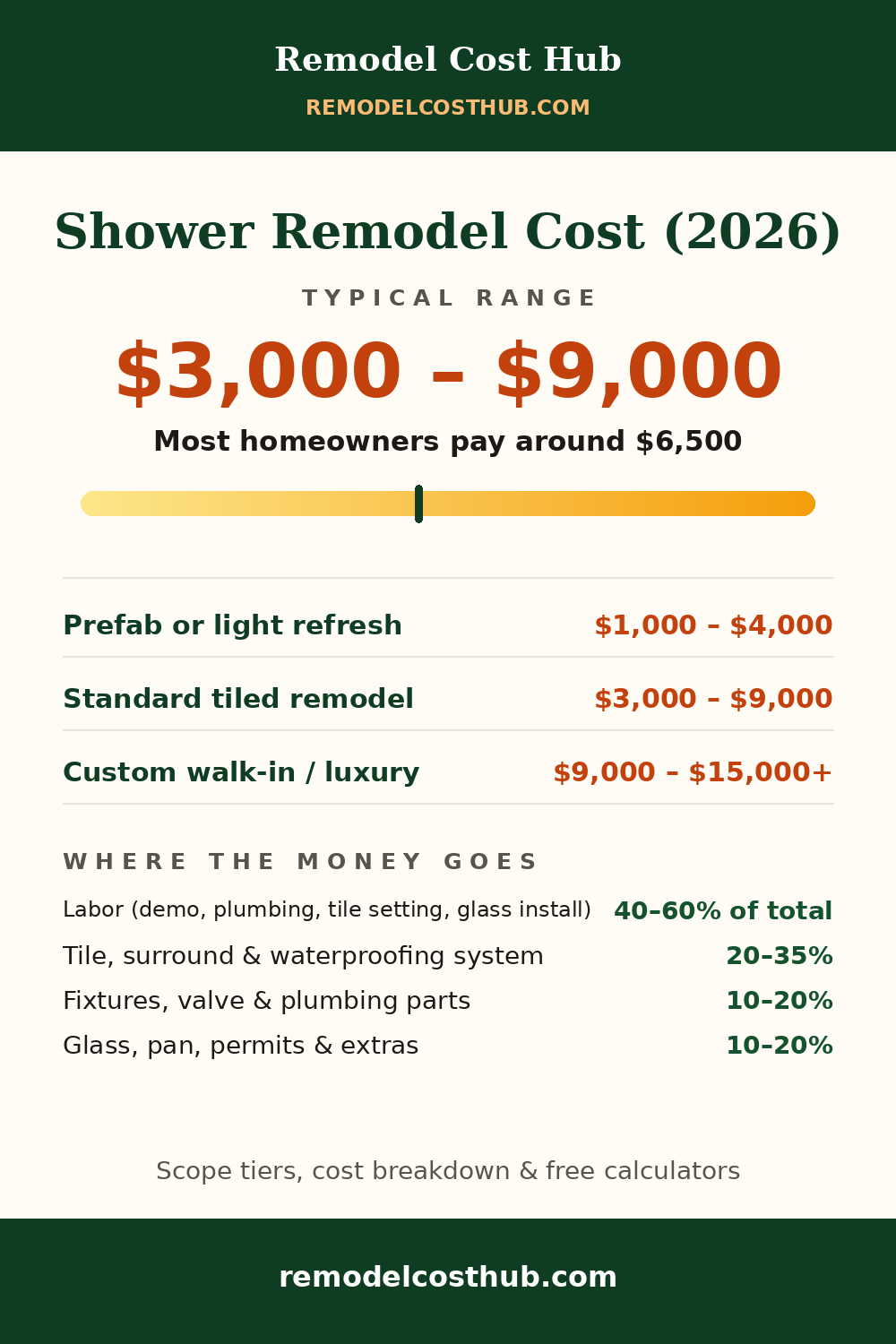
- Typical range: $3,000 – $9,000
- Most homeowners pay: around $6,500
- Prices vary most by: Labor (demo, plumbing, tile setting, glass install) (40–60% of the budget)
Cross-checked against three published sources for this project. Sources used for this page: the Angi shower remodel guide, HomeGuide's Shower Remodel Cost guide and the Modernize shower remodel guide. Last updated October 2026 · How we calculate these costs
Cost by scope
| Scope | Typical cost | What it includes |
|---|---|---|
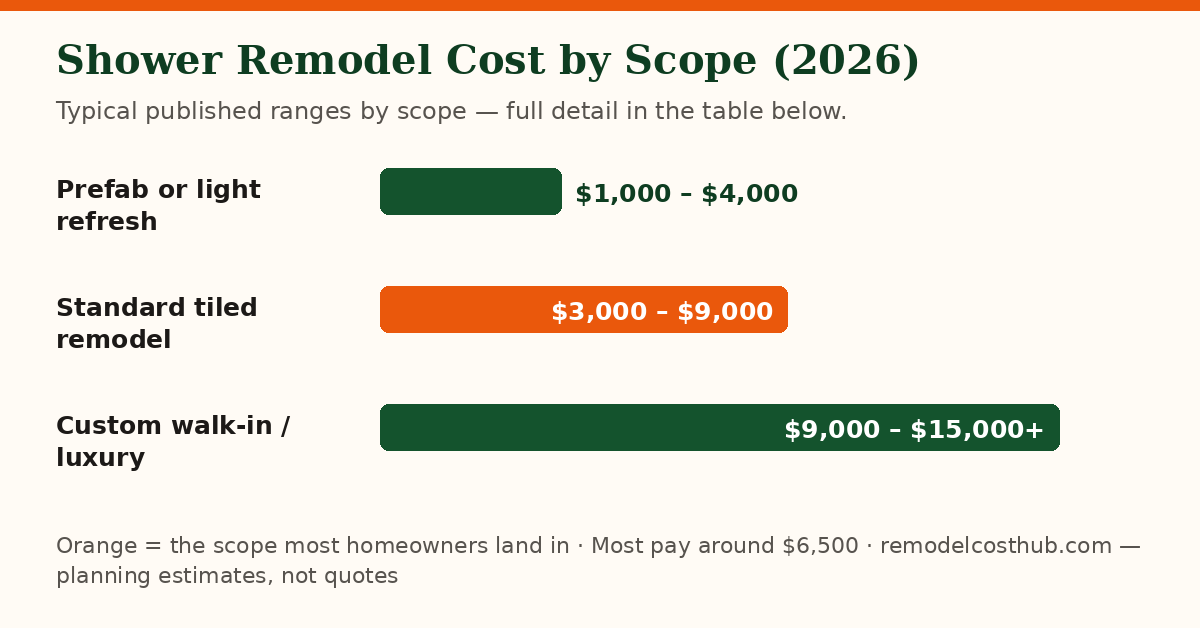
| Prefab or light refresh | $1,000 – $4,000 | New acrylic or fiberglass surround or kit, new valve and fixtures, door or curtain refresh — no layout change, no drain move, fastest timeline |
| Standard tiled remodel | $3,000 – $9,000 | Demo to studs, new waterproofing and pan, ceramic or porcelain tile, new fixtures and a framed or semi-frameless door — where most full shower remodels land |
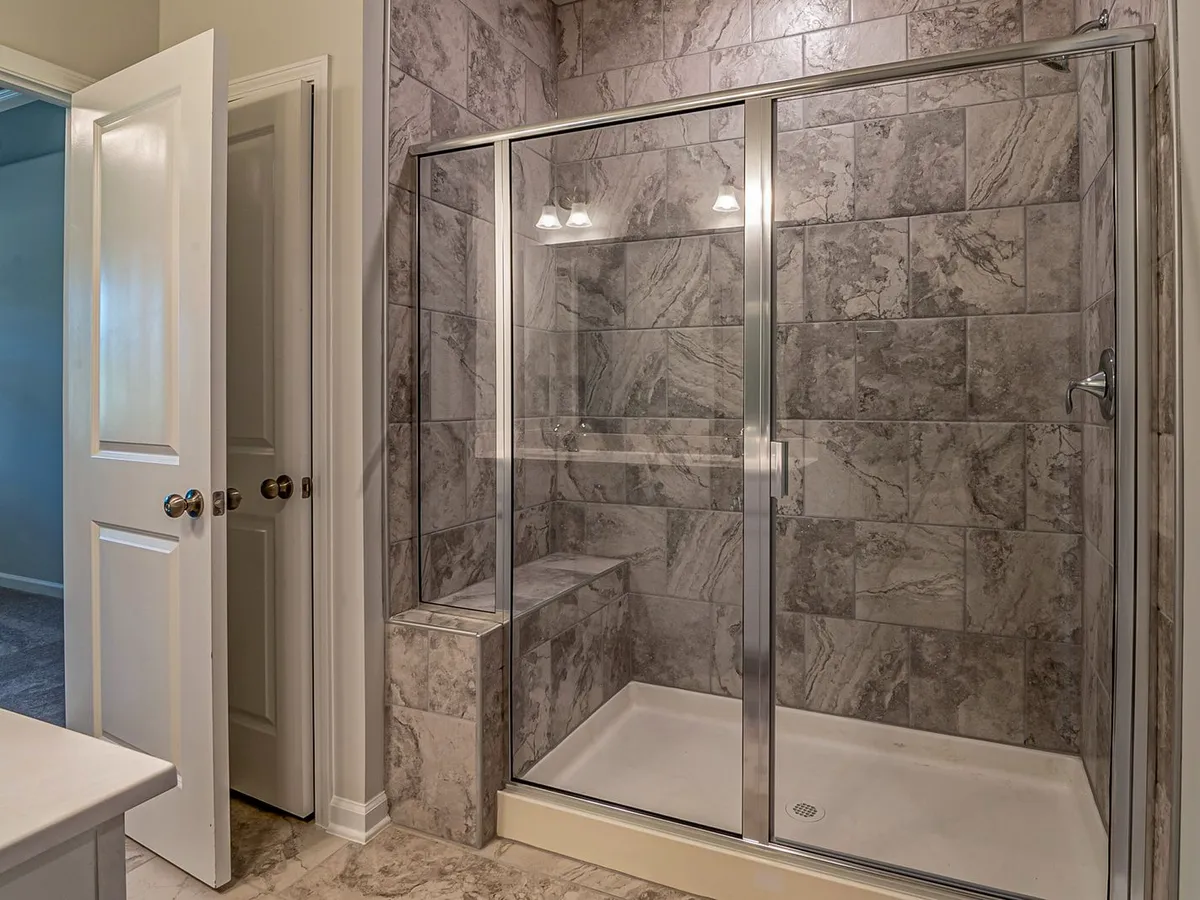
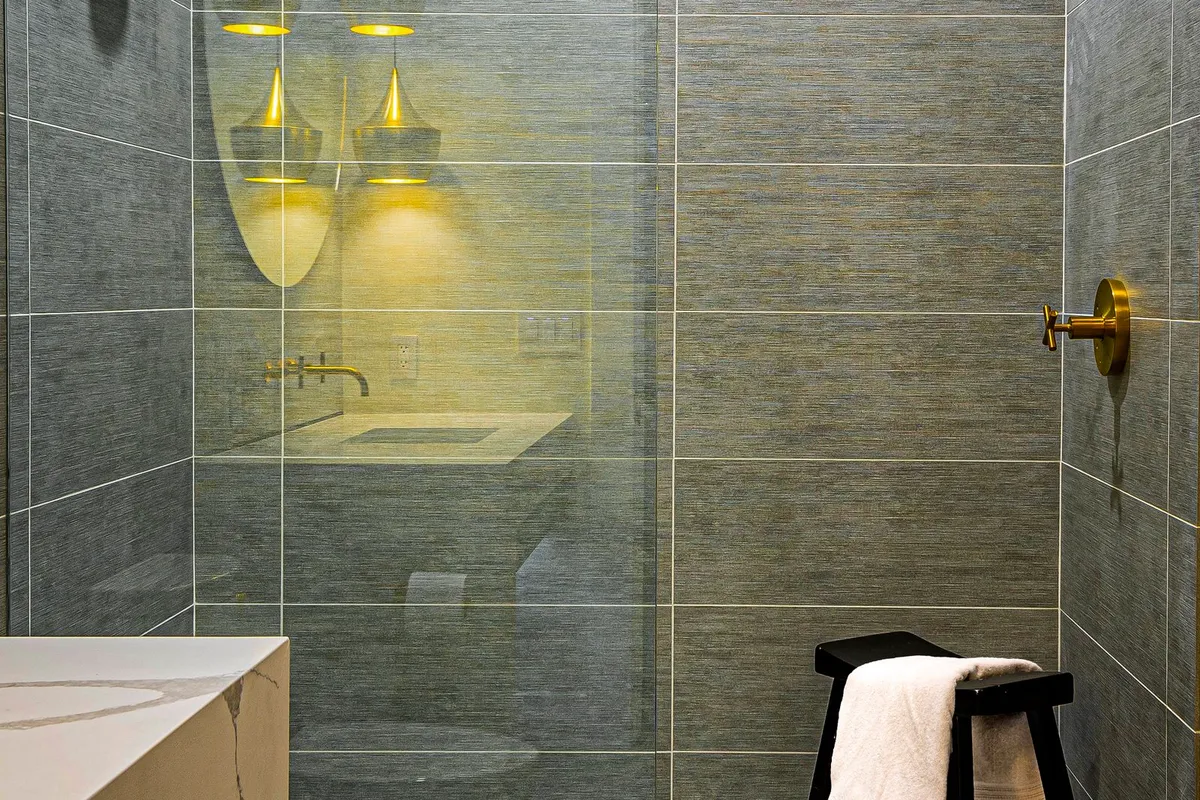
| Custom walk-in / luxury | $9,000 – $15,000+ | Larger or curbless walk-in, large-format or stone tile, frameless glass, bench and niche, body sprays or steam — premium materials and custom glass fabrication |
Where the money goes
| Part of the job | Share | Note |
|---|---|---|
| Labor (demo, plumbing, tile setting, glass install) | 40–60% of total | The largest share in every published guide — waterproofing and tile work are skilled, sequential trades |
| Tile, surround & waterproofing system | 20–35% | Prefab panels sit at the low end; ceramic and porcelain in the middle; natural stone and large-format work at the top |
| Fixtures, valve & plumbing parts | 10–20% | A standard valve and head versus a thermostatic system with body sprays is a wide spread inside this line |
| Glass, pan, permits & extras | 10–20% | Framed doors cost far less than frameless custom glass; a molded pan costs less than a site-built tiled pan; benches and niches add here |
What moves the price most
Keeping the drain and valve where they are is the biggest saving. Published guides consistently separate same-footprint remodels from layout changes, because moving a drain — especially in a slab — adds plumbing labor, concrete work and inspection time to almost every other trade. Surround material is the second cliff: a prefab acrylic or fiberglass system installs in a day or two with factory waterproofing, while a custom tiled shower needs a pan, a waterproofing membrane, setting and curing time, and grout — more labor days and a wider material spread from standard ceramic to natural stone. Glass is the third lever — a curtain or framed door is a modest line item, while frameless custom glass is measured, fabricated and installed as its own sub-project. Finally, what demolition reveals decides the surprises: showers are the wettest room corner in the house, so rotted backing, failed waterproofing and slow leaks behind the old surround are common findings, and repairing that damage belongs in the contingency, not in an argument after the walls are open.
Costs in your city
Local labor moves a remodel price more than almost anything else, so we are publishing city-adjusted ranges metro by metro — each with its own local cost index, permit notes and climate factors, not a find-and-replace of this page. Wave 1 cities: Houston, Dallas–Fort Worth, Phoenix, Atlanta, Miami–South Florida, Orlando, Tampa, Charlotte, Austin and San Antonio. Until your city's page is live, use the national range here and weight it: Sun Belt labor often prices near or below the national middle; coastal California and the Northeast metros often price well above it.
Frequently asked questions
How much does a standard shower remodel cost?
Most standard, same-footprint remodels land in the $3,000–$9,000 band on this page, with a common middle around $6,500. A prefab refresh can come in below that band, and a custom tiled walk-in with frameless glass usually lands above it.
How long does a shower remodel take?
A prefab swap commonly takes about 1–3 days. A standard tiled remodel typically runs about 3–7 days of work plus curing time, and a custom walk-in can run 1–2 weeks or more — tile, waterproofing and custom glass each have built-in waiting periods that cannot be rushed safely.
Is a prefab shower or a tiled shower better value?
Prefab costs less up front, installs faster and needs little maintenance beyond caulk, with a shorter expected service life. Tile costs more, takes longer and needs periodic grout care, but allows custom sizes and usually lasts considerably longer when the waterproofing is done correctly. For a home you will sell soon, prefab often makes financial sense; for a long-term home, tile is usually the stronger spend.
Do I need a permit for a shower remodel?
A like-for-like fixture swap usually does not. Work that moves plumbing or electrical, changes the drain, or alters structure normally does, and published guides put permit fees anywhere from a small flat fee to four figures depending on scope and city. Confirm with your building department before demo — unpermitted plumbing is a resale and insurance problem.
Can I remodel a shower myself?
Swapping a showerhead, re-caulking and some prefab kits are realistic DIY. The waterproofing, pan slope, drain connection and valve work are where DIY showers fail — a slow leak behind tile can cause more damage in a year than the labor you saved. Most homeowners hire the wet work and DIY the finishes.