Bathtub to Shower Conversion cost at a glance
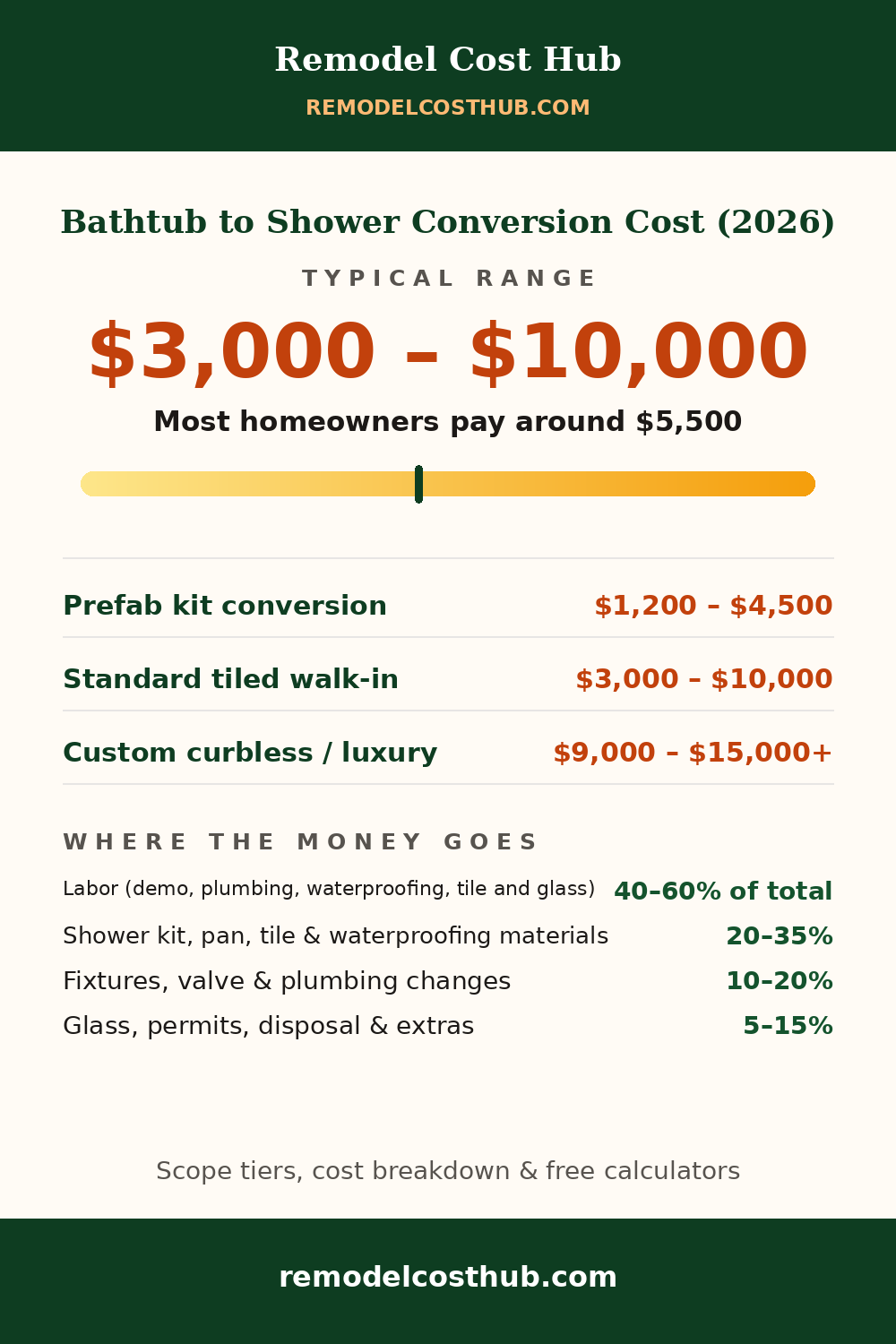
- Typical range: $3,000 – $10,000
- Most homeowners pay: around $5,500
- Prices vary most by: Labor (demo, plumbing, waterproofing, tile and glass) (40–60% of the budget)
Cross-checked against three published sources for this project. Sources used for this page: the Angi tub-to-shower conversion cost guide, HomeGuide's Tub to Shower Conversion Cost guide and Modernize's shower conversion cost data. Last updated October 2026 · How we calculate these costs
Cost by scope
| Scope | Typical cost | What it includes |
|---|---|---|
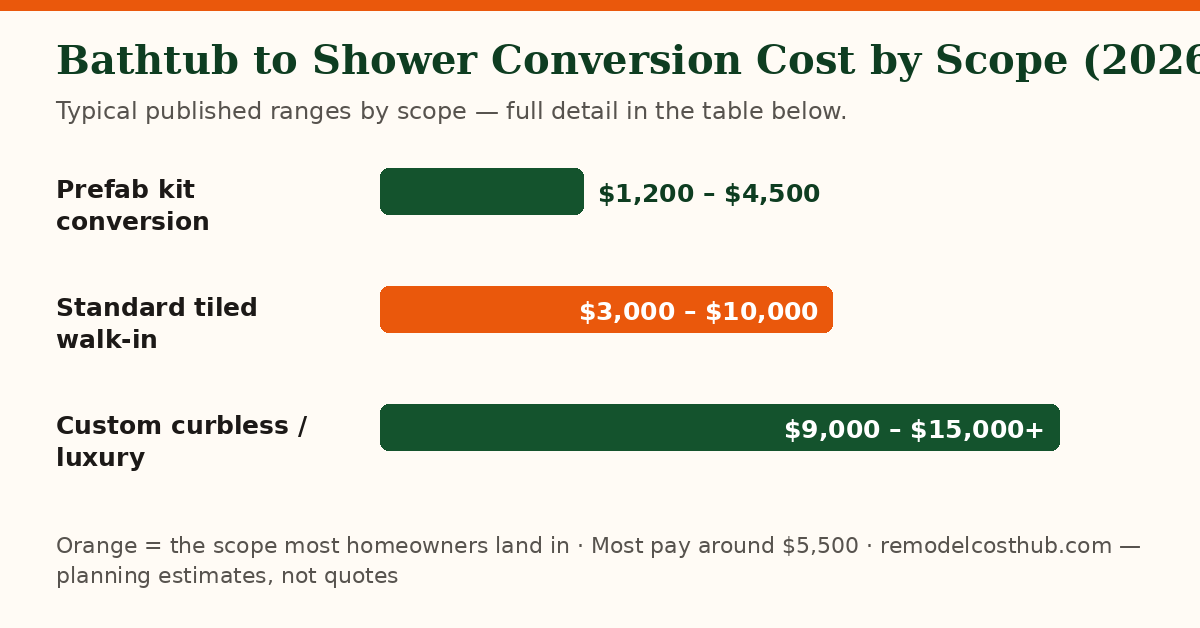
| Prefab kit conversion | $1,200 – $4,500 | Tub out, acrylic or fiberglass shower kit and pan in the same alcove, new valve and trim, drain left in place — the fastest and cheapest route |
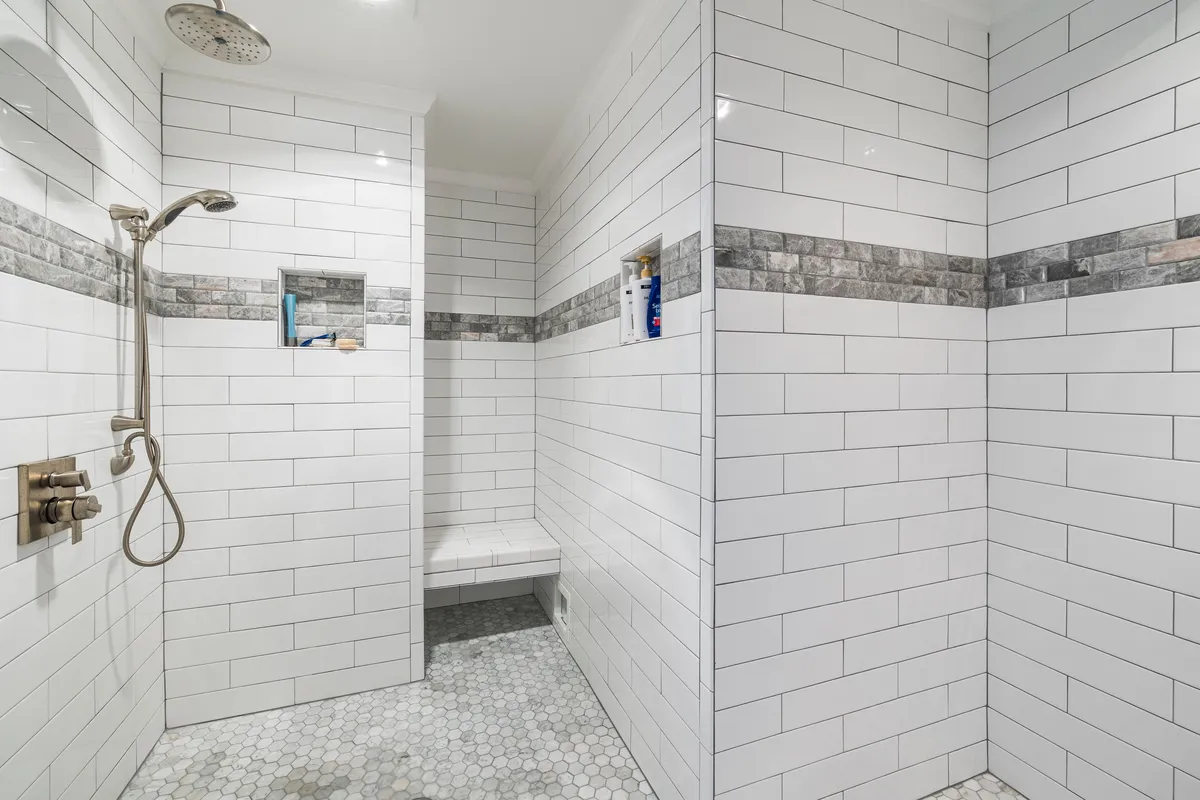
| Standard tiled walk-in | $3,000 – $10,000 | Demo to studs, new pan and waterproofing, ceramic or porcelain tile, new fixtures and a framed or semi-frameless door — where most conversions land |
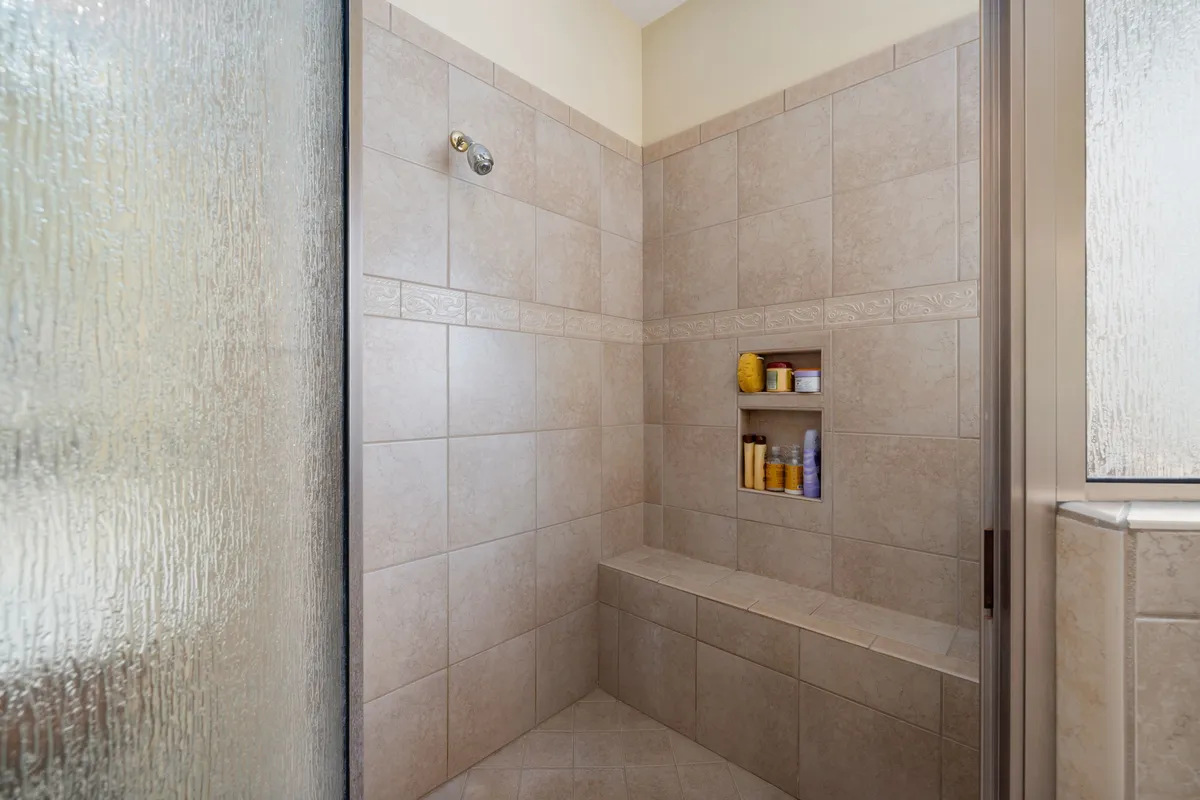
| Custom curbless / luxury | $9,000 – $15,000+ | Curbless or linear-drain floor, large-format or stone tile, frameless glass, bench, niche and premium fixtures — accessibility work included |
Where the money goes
| Part of the job | Share | Note |
|---|---|---|
| Labor (demo, plumbing, waterproofing, tile and glass) | 40–60% of total | A conversion is several trades in sequence in one small space — labor is the largest share in every published guide |
| Shower kit, pan, tile & waterproofing materials | 20–35% | A prefab kit sits at the low end; a site-built tiled pan and walls sit at the top |
| Fixtures, valve & plumbing changes | 10–20% | Keeping the drain where it is holds this down; moving it, especially in a slab, is the expensive version |
| Glass, permits, disposal & extras | 5–15% | Frameless custom glass costs far more than a framed door or curtain; benches, niches and grab bars add here |
What moves the price most
The drain decides the plumbing bill. A tub drain and a shower drain rarely sit in exactly the same spot, but a conversion that keeps the new drain close to the old one is a modest plumbing job, while moving it across the floor — or cutting a slab to reach it — adds days and inspection steps. Kit versus tile is the second cliff: a prefab kit installs in a couple of days with factory waterproofing, while a tiled walk-in needs a pan, a membrane system, setting and curing time, and a wider material spread from standard ceramic to natural stone. Accessibility changes the scope, not just the fixtures — a curbless entry needs the floor structure reworked for slope, which is real carpentry and waterproofing work, not an add-on grab bar. Finally, the old tub alcove is a common place to find hidden water damage: rotted subfloor and leaking tub valves are regularly uncovered at demo, and that repair belongs in the contingency.
Costs in your city
Local labor moves a remodel price more than almost anything else, so we are publishing city-adjusted ranges metro by metro — each with its own local cost index, permit notes and climate factors, not a find-and-replace of this page. Wave 1 cities: Houston, Dallas–Fort Worth, Phoenix, Atlanta, Miami–South Florida, Orlando, Tampa, Charlotte, Austin and San Antonio. Until your city's page is live, use the national range here and weight it: Sun Belt labor often prices near or below the national middle; coastal California and the Northeast metros often price well above it.
Frequently asked questions
How much does it cost to convert a tub to a shower?
Most standard conversions land in the $3,000–$10,000 band on this page, with a common middle around $5,500. A prefab kit conversion can come in below that band, and a custom curbless tiled shower with frameless glass usually lands above it.
How long does a tub-to-shower conversion take?
A prefab kit conversion commonly takes about 2–3 days of work. A tiled walk-in typically runs about 5–8 days plus curing time, and a curbless custom build can take longer because the floor slope and waterproofing cannot be rushed.
Does converting a tub to a shower hurt resale value?
It can if it removes the only bathtub in the home — many buyers with young children still want at least one tub. If another full bathroom keeps a tub, a well-built walk-in shower is usually neutral to positive, and it is a genuine accessibility gain for aging in place.
Do I need a permit for a tub-to-shower conversion?
Usually yes when plumbing is changed — and a conversion almost always changes at least the drain or the valve. Published guides put permit fees anywhere from a couple of hundred dollars to four figures depending on city and scope; confirm before demo starts.
Can I convert a tub to a shower myself?
Removing a tub and fitting a prefab kit are within reach of an experienced DIYer. The drain move, the valve work and above all the waterproofing are where DIY conversions leak — and a slow leak inside a shower wall does expensive damage before it is ever seen. Most owners hire the wet work and DIY the finishes.