Skylight Installation cost at a glance
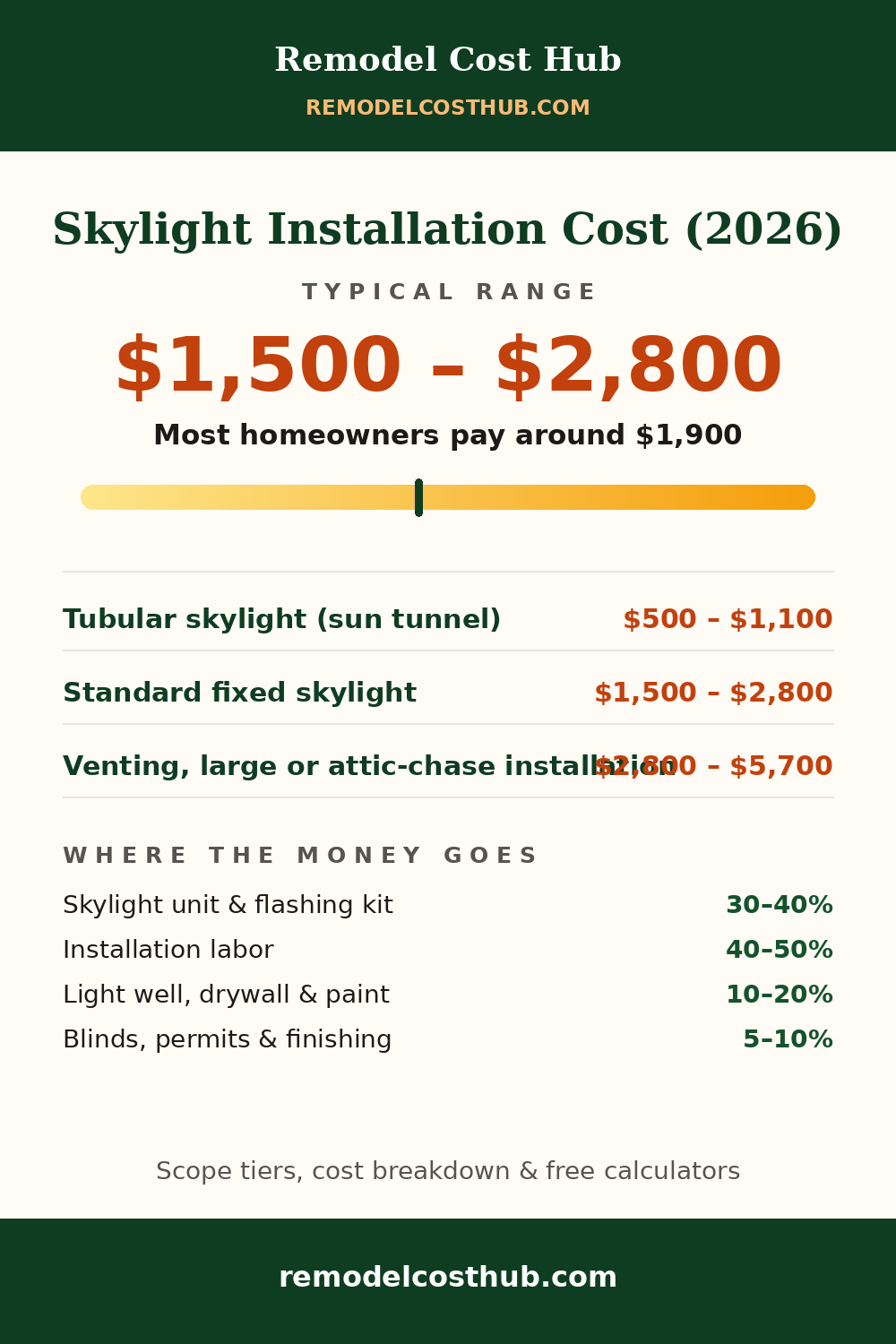
- Typical range: $1,500 – $2,800
- Most homeowners pay: around $1,900
- Prices vary most by: Installation labor (40–50% of the budget)
Cross-checked against three published sources for this project. Sources used for this page: Angi's skylight installation cost guide, HomeGuide's skylight installation cost guide and CostHelper's skylight cost data. Sources last checked: October 2026 — HomeGuide, Angi. Last updated October 2026 · How we calculate these costs
Cost by scope
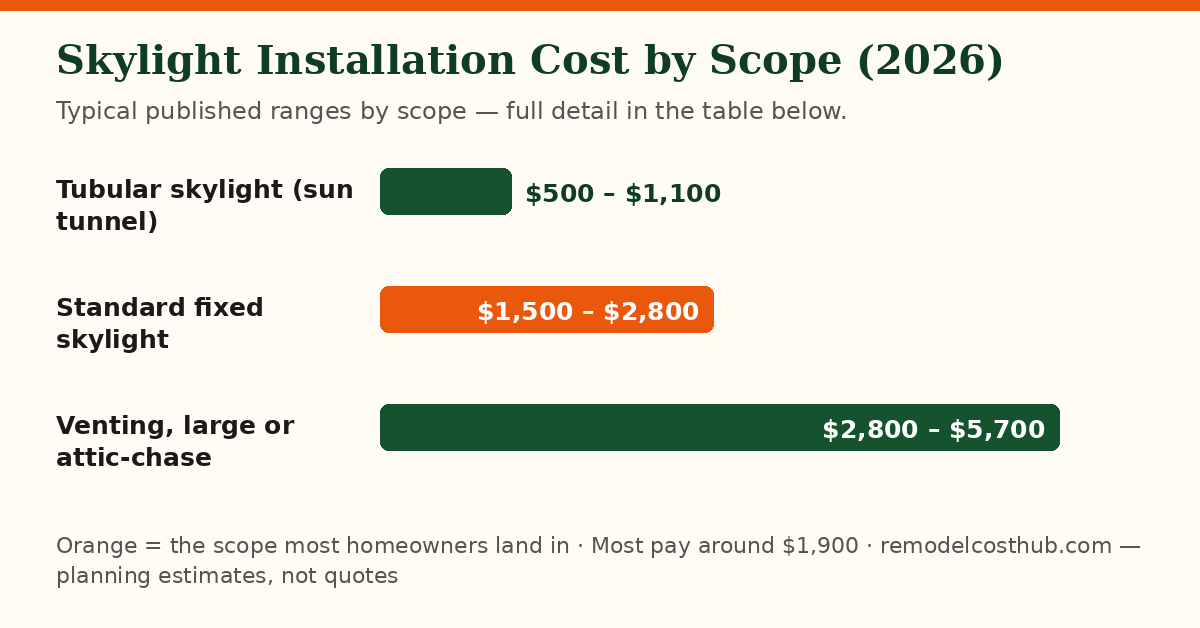
| Scope | Typical cost | What it includes |
|---|---|---|
| Tubular skylight (sun tunnel) | $500 – $1,100 | A 10–22 inch reflective tube that carries daylight from a small roof dome to a ceiling lens — the standard fix for bathrooms, halls and closets with no room for a full skylight. CostHelper totals $475–$1,100 installed depending on size and tube length; HomeGuide prices tubular units at $500–$1,000. |
| Standard fixed skylight | $1,500 – $2,800 | The typical project on this page: one fixed (non-opening) skylight of standard size, set into the roof slope with its matched flashing kit and the ceiling finished below. Angi’s band is $1,014–$2,828 with an average near $1,920; HomeGuide prices fixed skylights installed at $1,500–$4,000. |
| Venting, large or attic-chase installation | $2,800 – $5,700 | A venting unit (manual, electric or solar, often with built-in blinds), an oversize or custom unit, or any skylight whose light must cross an attic in a framed, drywalled chase. HomeGuide prices venting skylights at $1,600–$4,700 and chase installations at $2,600–$5,700; CostHelper puts a loaded venting unit at up to $5,000. |
Where the money goes
| Part of the job | Share | Note |
|---|---|---|
| Skylight unit & flashing kit | 30–40% | The unit itself plus the flashing kit matched to the roof covering: HomeGuide prices units at $150–$2,000, and CostHelper’s ladder runs from $150–$250 for a basic fixed unit to $650–$1,000+ for an electric venting model |
| Installation labor | 40–50% | Cutting the opening, framing between rafters, mounting and weatherproofing — the largest line on the page: HomeGuide prices installation labor at $1,200–$3,200, because the job is split between the roof outside and the ceiling inside |
| Light well, drywall & paint | 10–20% | Framing and finishing the shaft where the ceiling does not follow the roof: HomeGuide’s attic-chase projects total $2,600–$5,700 against $1,500–$4,000 where the ceiling is the slope itself, which is the honest size of this line when it applies |
| Blinds, permits & finishing | 5–10% | Shading and paperwork: CostHelper prices blinds and shades at $200–$300 or more, and permits run $100–$500 in HomeGuide and $50–$400 in Angi |
What moves the price most
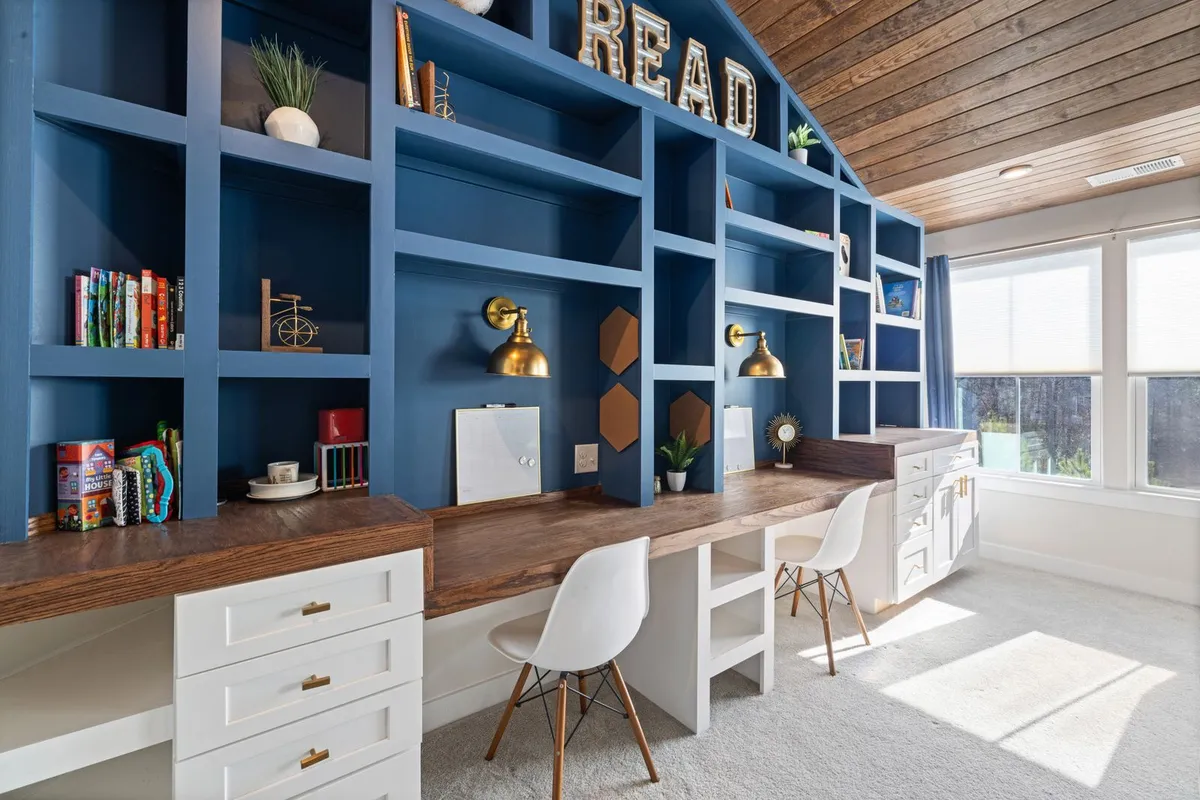
The ceiling decides the labor. Where the ceiling follows the roof slope (a vaulted or cathedral ceiling), the installer cuts one opening and finishes one frame. Where an attic sits between roof and ceiling, the light needs a framed, insulated and drywalled chase — HomeGuide prices those projects at $2,600–$5,700 against $1,500–$4,000 for a fixed unit straight into the slope. The unit is the second lever: fixed units start at $150–$250 in CostHelper, manual venting at $300–$600 and electric venting at $650–$1,000+, with HomeGuide’s full unit range running $150–$2,000 by size and glazing. The roof is the third: pitch and covering set the flashing kit and the hours — HomeGuide prices flat-roof installations separately at $2,100–$4,800, and tile or metal roofs need their own kits and slower work than shingles. Finally, orientation and shading: a south- or west-facing slope brings heat with the light, which is why blinds ($200–$300+ in CostHelper) belong in the original budget rather than as a retrofit, and why the same unit prices differently per climate zone — CostHelper notes a skylight suited to Florida is not the one for Michigan.
Worked example: how a typical skylight installation budget breaks down
A typical job: one standard fixed skylight, deck-mounted into a sloped shingle roof above a vaulted ceiling — opening cut between rafters, header framing, unit set on its matched flashing kit, and the interior frame trimmed and painted. The budget below totals $1,900 — the "most homeowners pay around" figure from the top of this page — split using this page's own cost breakdown. It shows how a real quote at that level is usually composed; every line is built from the ranges on this page, and it is an illustration, not a quote for your project.
| Line item | Example budget |
|---|---|
| Fixed skylight unit and flashing kit | $650 |
| Installation labor (roof and ceiling work) | $900 |
| Interior trim, drywall touch-up and paint | $200 |
| Permit and finishing | $150 |
| Total | $1,900 |
What most people get wrong
- Ordering the unit before confirming the flashing kit matches the roof covering — shingle, tile and metal roofs each need their own kit, and sealant smeared over the wrong kit is the leak story every roofer tells.
- Skipping blinds on a south- or west-facing slope — the light you wanted arrives with heat; CostHelper prices blinds and shades at $200–$300 or more, and retrofitting them later costs more than bundling them with the unit.
- Oversizing the unit past the rafter spacing without pricing the structural work — a unit wider than the bay needs a framed header and often a permit review, which turns a standard install into the chase-tier prices on this page.
- Placing the skylight where the ceiling plan cannot follow — over an attic, the light well has to be framed, insulated and drywalled (HomeGuide totals those jobs at $2,600–$5,700), so a tape-measure walk of the attic belongs before the order, not after.
Costs in your city
Skylight pricing follows local roofing labor more than the unit price: HomeGuide puts installation labor at $1,200–$3,200, and the same unit installs at the bottom of that range in a low-rate market and the top in a metro where roofers are booked out. Roof stock travels with the city — tile and metal roofs common in the South and West need their own flashing kits and slower work than the shingle roofs of the Northeast and Midwest, and steep or two-storey roofs add access time everywhere. Climate sets the glazing spec: CostHelper notes a skylight suited to Florida is wrong for Michigan, and Energy Star rates units by climate zone, so northern quotes should show low-e, insulated glazing as standard. Permit fees run $100–$500 in HomeGuide. Ask each bidder which flashing kit the quote assumes, whether interior finishing is included, and who warranties the roof penetration.
Frequently asked questions
How much does it cost to install one skylight?
For a standard fixed skylight in a sloped roof, budget $1,500–$2,800: Angi’s band is $1,014–$2,828 with an average near $1,920, and HomeGuide prices fixed units installed at $1,500–$4,000. CostHelper’s reader-reported totals for basic fixed units run lower ($500–$1,300), reflecting simple swaps and small units rather than a new opening with finished interior work.
How much does a tubular skylight cost installed?
CostHelper totals $475–$700 for a basic tubular unit installed and $650–$1,100 for a larger one; HomeGuide prices tubular skylights at $500–$1,000. There is no structural framing — the tube fits between rafters — which is why the whole job lands near the price of the unit plus a few hours of labor.
Do skylights always leak?
No — leaks are an installation problem, not a product inevitability. CostHelper names slope and moisture control as the two most important factors in the whole project, and the US Department of Energy guidance it cites recommends professional installation of an energy-efficient unit. The flashing kit must match the roof covering, and step flashing woven into the shingles — not surface sealant — is what keeps water out.
How much more does a venting skylight cost than a fixed one?
HomeGuide prices fixed skylights installed at $1,500–$4,000 and venting models at $1,600–$4,700: the mechanism adds a few hundred at unit level (CostHelper: fixed from $150–$250, manual venting $300–$600, electric $650–$1,000+), plus wiring or a solar kit where the opener is powered.
Do I need a permit to add a skylight?
Usually the permit is part of the job — you are cutting a structural opening in the roof. Fees run $100–$500 in HomeGuide and $50–$400 in Angi, and CostHelper advises checking with the local planning department before ordering the unit, since a rafter header or an oversized unit can trigger structural review.