Wainscoting Installation cost at a glance
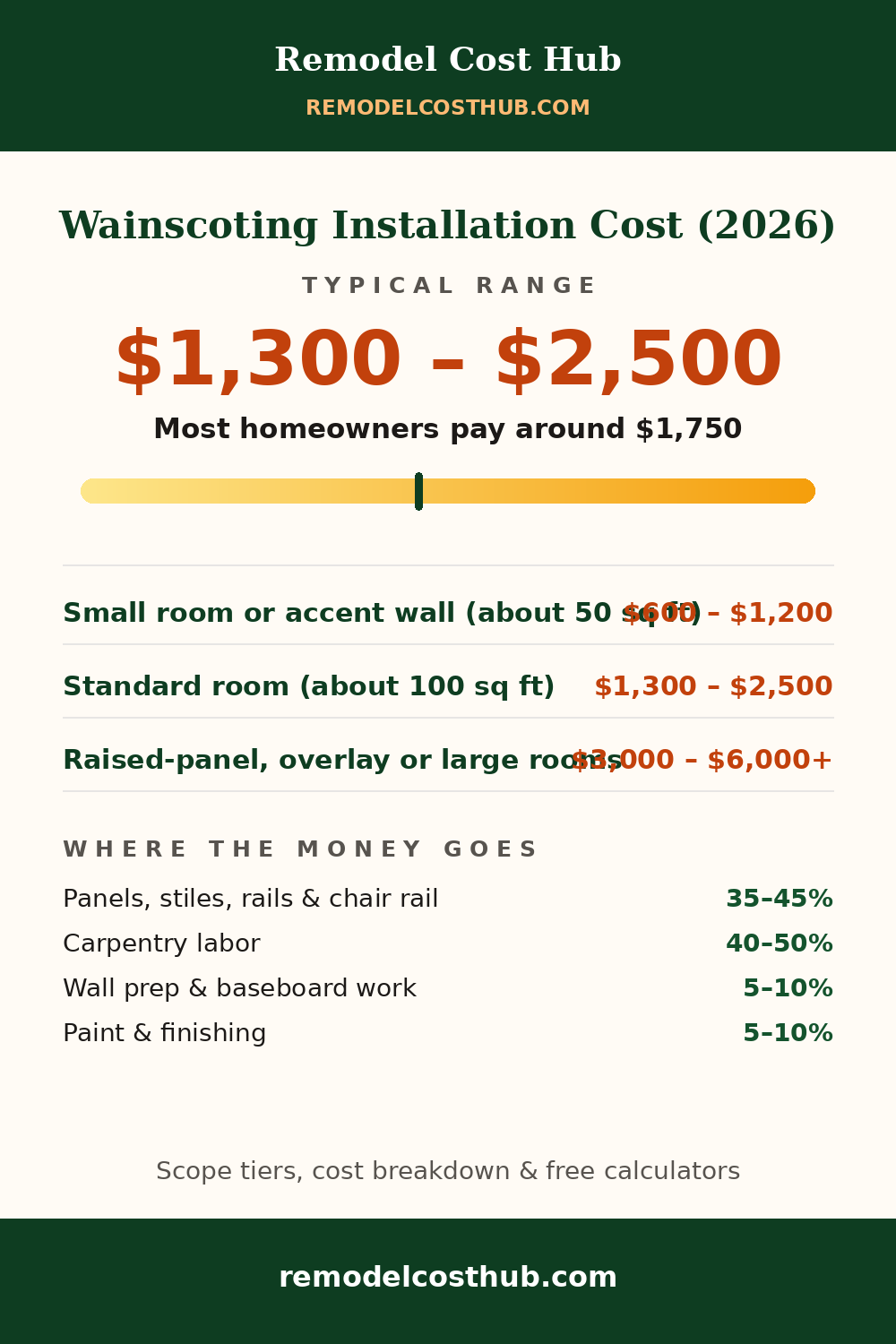
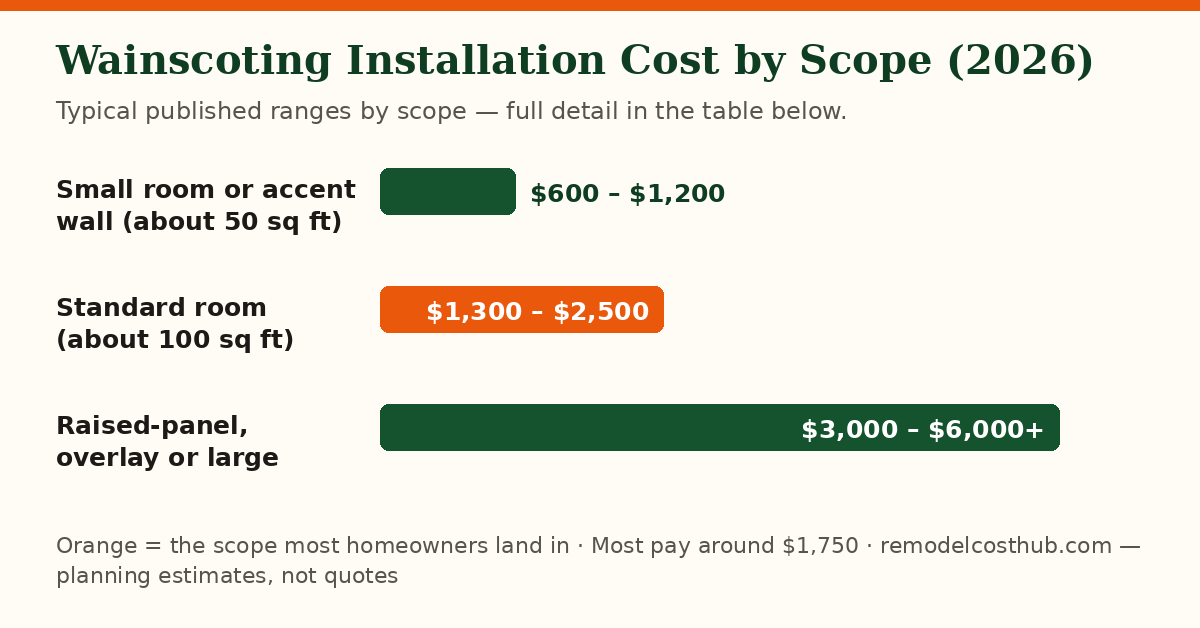
- Typical range: $1,300 – $2,500
- Most homeowners pay: around $1,750
- Prices vary most by: Carpentry labor (40–50% of the budget)
Cross-checked against three published sources for this project. Sources used for this page: Angi's wainscoting installation cost guide, HomeGuide's wainscoting cost guide and Fixr's wainscoting installation cost guide. Sources last checked: October 2026 — HomeGuide, Fixr, Angi. Last updated October 2026 · How we calculate these costs
Cost by scope
| Scope | Typical cost | What it includes |
|---|---|---|
| Small room or accent wall (about 50 sq ft) | $600 – $1,200 | A powder room, entry or single accent wall in beadboard or flat panel. HomeGuide prices 50 square feet at $500–$2,000 across all styles, with beadboard and flat panel at the bottom of its per-foot table at $10–$20 and $10–$15 respectively. |
| Standard room (about 100 sq ft) | $1,300 – $2,500 | The typical project on this page: wainscoting at chair-rail height around a dining or living room, panels fitted, chair rail and baseboard run, everything caulked and painted. Fixr prices 100 square feet installed at $1,500–$2,000, Angi's project band is $1,050–$2,400 with a $1,325 average, and HomeGuide prices the same area at $1,000–$4,000 across styles. |
| Raised-panel, overlay or large rooms | $3,000 – $6,000+ | Traditional raised panels, layered overlay designs or several rooms at once. Fixr prices 200–300 square feet at $3,000–$6,000, with raised panel at $12–$33 and overlay at $12–$43 per square foot; HomeGuide's overlay band tops its table at $15–$40. |
Where the money goes
| Part of the job | Share | Note |
|---|---|---|
| Panels, stiles, rails & chair rail | 35–45% | The material package: panel stock, the stiles and rails that frame it, and the chair rail that caps the run — Fixr's type table runs from flat panel at $9–$12 per square foot installed to overlay at $12–$43, with the material the smaller share on simple styles and the larger share on hardwoods |
| Carpentry labor | 40–50% | Measuring, cutting and fitting panels so the layout lands symmetrically on every wall: Fixr allows roughly 12 hours of professional time for a 10x10-foot room, and precision fitting — not hanging speed — is what the hours buy |
| Wall prep & baseboard work | 5–10% | Getting the wall ready to receive panels: Angi budgets for wall prep, baseboard removal, hole filling and primer so the panels sit flat, and the baseboard is then re-run or replaced against the new panel face |
| Paint & finishing | 5–10% | Caulking every seam, filling nail holes and painting the finished run — wainscoting is almost always painted after fitting, not before, so the finish coat is part of the installation job, not an extra |
What moves the price most
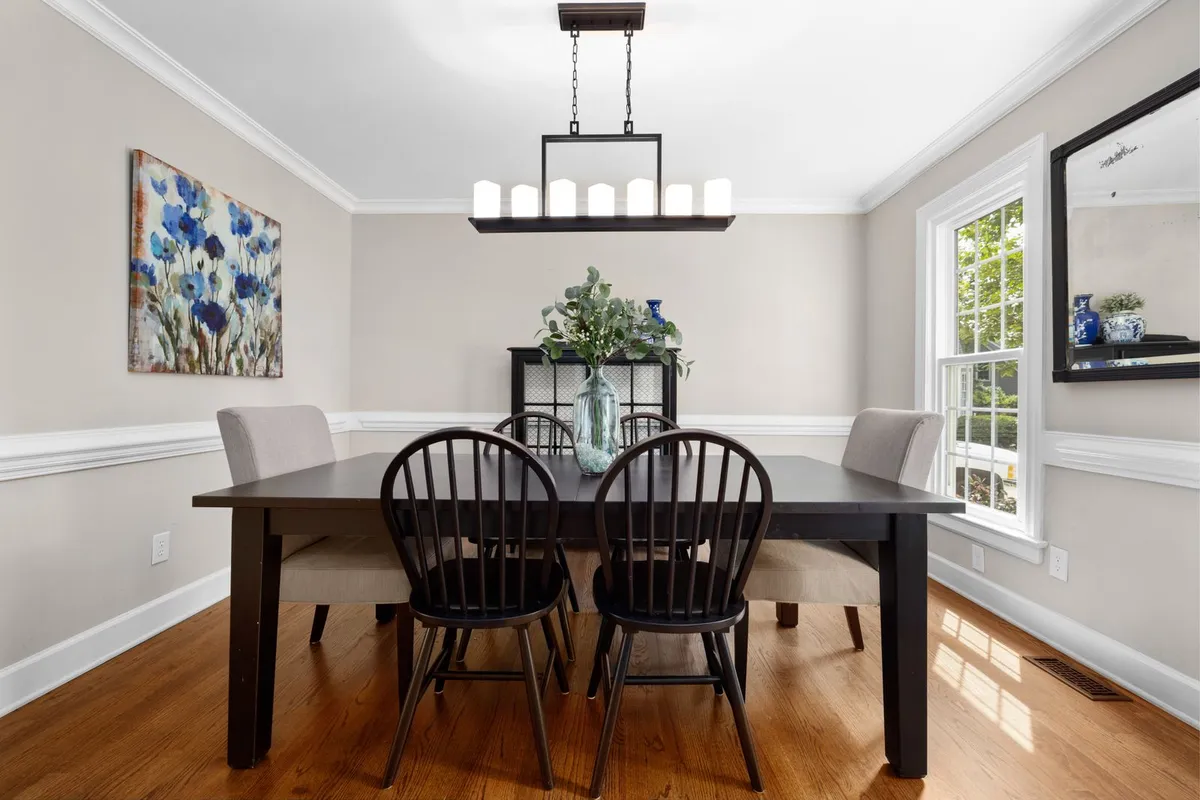
Panel style is the price. Per square foot installed, Fixr prices flat panel at $9–$12, beadboard, board-and-batten and shiplap at $9–$23, raised panel at $12–$33 and overlay at $12–$43; HomeGuide's table agrees on the order (flat $10–$15, beadboard $10–$20, raised $12–$30, overlay $15–$40). Area is measured on the wall, not the floor: wainscoting is priced by the square foot of covered wall, so a 12x14-foot dining room at 3.5 feet high on three and a half walls is roughly 160 square feet of panel — HomeGuide's standard height is about one-third of the wall, 3 to 3.5 feet in most homes. Material is the third lever: MDF and pine panels sit at the bottom of every table, while Angi notes solid hardwoods such as mahogany take a large room to the top of its $1,050–$2,400 project band on material alone. Finally, wall condition: panels telegraph every bump behind them, so wavy or damaged walls add the prep Angi itemizes — skimming, filling and priming before a single panel is cut.
Worked example: how a typical wainscoting installation budget breaks down
A typical job: about 100 square feet of flat-panel wainscoting at chair-rail height in a dining room — panels, stiles and chair rail fitted, baseboard re-run, seams caulked and the whole run painted. The budget below totals $1,750 — the "most homeowners pay around" figure from the top of this page — split using this page's own cost breakdown. It shows how a real quote at that level is usually composed; every line is built from the ranges on this page, and it is an illustration, not a quote for your project.
| Line item | Example budget |
|---|---|
| Panels, stiles, rails and chair rail | $700 |
| Carpentry labor (fitting and layout) | $770 |
| Wall prep and baseboard work | $140 |
| Caulk, fill and paint | $140 |
| Total | $1,750 |
What most people get wrong
- Setting the height by copying a photo — HomeGuide's standard is about one-third of the wall height; panels that stop at an arbitrary line look wrong in the room even when the carpentry is perfect, and moving them means re-doing the run.
- Pricing a raised-panel design at flat-panel rates — Fixr puts flat panel at $9–$12 per square foot installed and raised panel at $12–$33, so the style decision roughly doubles or halves the same room.
- Skipping the wall prep — panels telegraph every bump behind them, and Angi budgets prep, baseboard removal, filling and primer into the job for exactly that reason; finding the wall is wavy after the panels are cut is the costly sequence.
- Laying out panels wall by wall without a room plan — panel widths should be adjusted so every wall lands symmetrically around doors and windows; equal panels on one wall and a sliver panel on the next is the layout mistake that cannot be caulked away.
Costs in your city
Wainscoting pricing is finish-carpentry pricing: Fixr allows roughly 12 hours of professional time for a single 10x10-foot room, and hourly carpentry rates are the most local number on this page — the same room prices near the bottom of the band in a low-rate market and well above it in a metro. Housing stock matters too: older homes with plaster or settled walls need more of the prep Angi itemizes, while straight new-build drywall fits faster. Panel material is priced nationally at retail, so quotes in the same city differ mainly on labor and prep, not on the boards. Ask each bidder for the panel layout drawing, the height they are assuming, and whether baseboard re-running and painting are inside the number.
Frequently asked questions
How much does wainscoting cost per square foot?
Across the guides, standard styles run about $10–$20 per square foot installed: Fixr's average is $15–$20 with flat panel from $9–$12, HomeGuide publishes $10–$40 by style, and Angi's full span is $5–$40 — the bottom of every range is beadboard or flat panel in MDF, the top is raised-panel or overlay work in solid wood.
How much does it cost to wainscot a dining room?
A typical dining room needs about 100–160 square feet of panel at chair-rail height. At the standard-style rates that is roughly $1,300–$2,500 for most rooms: Fixr prices 100 square feet at $1,500–$2,000, and Angi's average wainscoting project is $1,325. Raised-panel designs in the same room run $3,000 and up in both Fixr and HomeGuide.
How high should wainscoting be?
HomeGuide's standard is about one-third of the wall height — roughly 3 to 3.5 feet in rooms with 8- to 11-foot ceilings. Going higher is a design choice some dining rooms make deliberately, but every extra foot of height adds a foot of panel to every linear foot of wall, so height changes move the total almost linearly.
Is beadboard cheaper than raised-panel wainscoting?
Yes, clearly. Fixr prices beadboard at $9–$23 per square foot installed against raised panel at $12–$33, and HomeGuide puts beadboard at $10–$20 against raised panel at $12–$30. Beadboard comes in sheets that cut and fit quickly; a raised panel is built up piece by piece, and the labor difference is most of the gap.
Can wainscoting be installed over damaged or uneven walls?
Flat-panel and beadboard sheet styles are often used exactly that way — Fixr notes flat panel covers unfinished or damaged walls — but the wall still has to be flat enough for the panels to sit tight. Angi budgets prep, baseboard removal, hole filling and primer into the job; deep waviness needs skimming first, which is carpentry-plus-plaster money, not panel money.