Recessed Lighting Installation cost at a glance
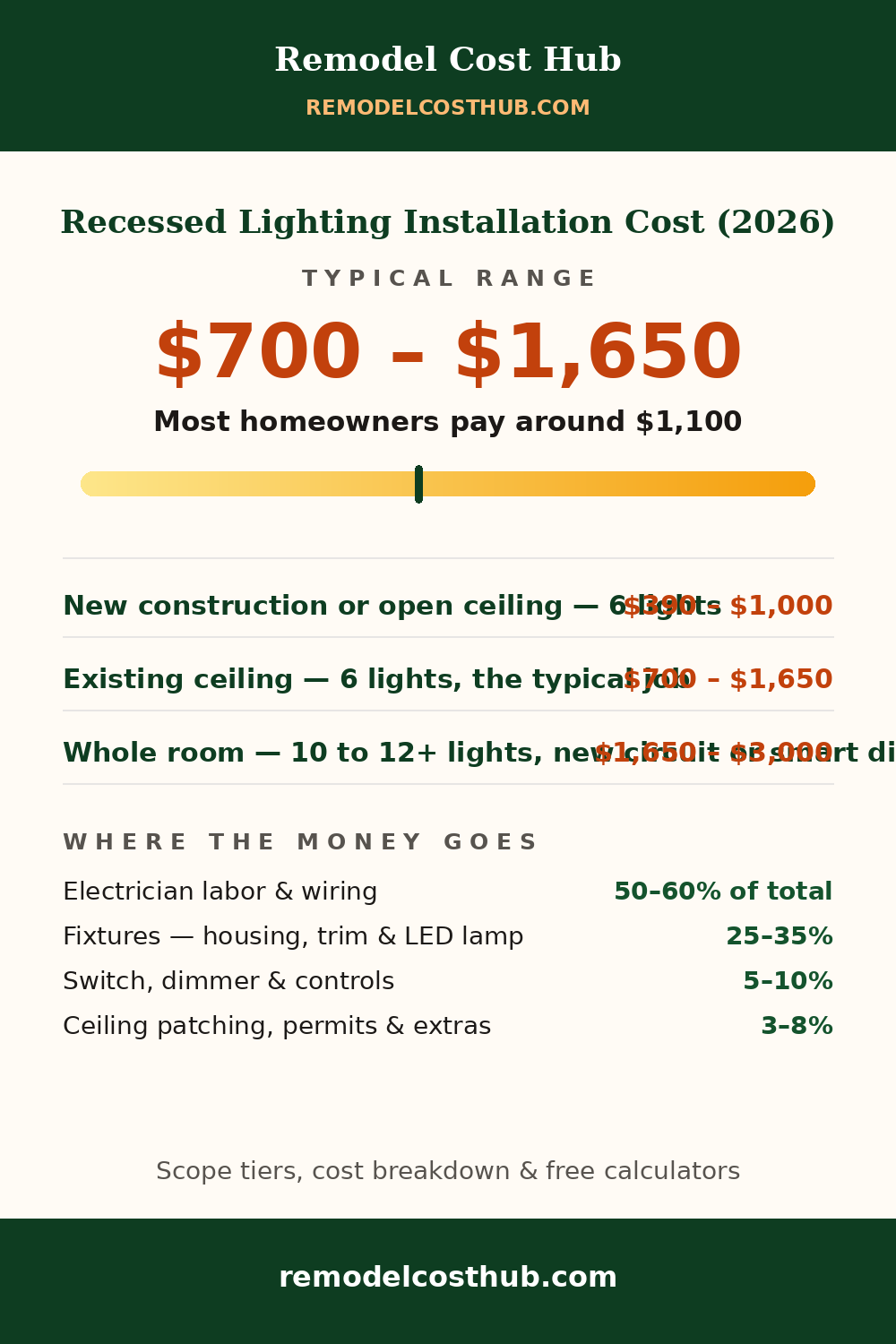
- Typical range: $700 – $1,650
- Most homeowners pay: around $1,100
- Prices vary most by: Electrician labor & wiring (50–60% of the budget)
Cross-checked against three published sources for this project. Sources used for this page: HomeGuide's recessed lighting cost guide, Angi's recessed lighting installation cost guide and HomeAdvisor's recessed lighting installation cost data. Sources last checked: October 2026 — HomeAdvisor, HomeGuide, Angi. Last updated October 2026 · How we calculate these costs
Cost by scope
| Scope | Typical cost | What it includes |
|---|---|---|
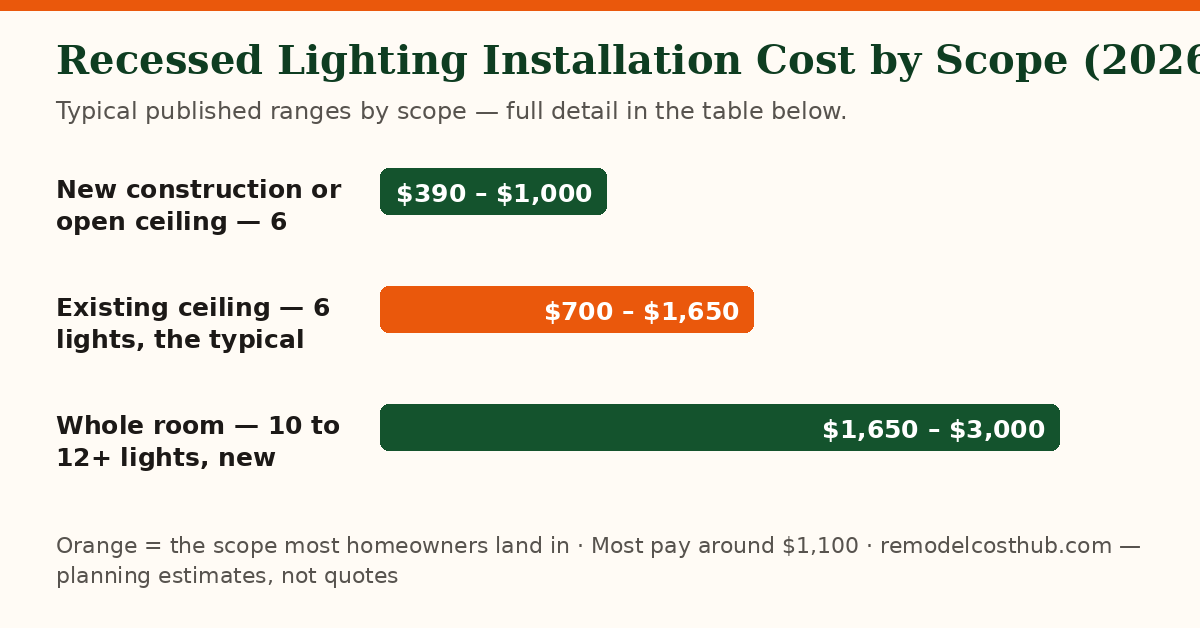
| New construction or open ceiling — 6 lights | $390 – $1,000 | The simple end: HomeGuide prices 6 lights in new construction at $390–$1,000 against $700–$1,650 in a finished ceiling — with the joists exposed, each light is a fitting job rather than a fishing job |
| Existing ceiling — 6 lights, the typical job | $700 – $1,650 | The typical band on this page: HomeGuide’s figure for 6 can lights in a kitchen, with Angi’s project table at $700–$1,400 for 4–6 lights and $1,200–$2,500 for 6–10, and a $1,800 national average project across all sizes |
| Whole room — 10 to 12+ lights, new circuit or smart dimmers | $1,650 – $3,000 | HomeGuide prices 10 lights at $900–$2,700 and 12 at $1,020–$3,000, and Angi runs 10–16 lights at $2,000–$4,000 — a new circuit, dimmers and patching across a finished ceiling are the spend at this tier |
Where the money goes
| Part of the job | Share | Note |
|---|---|---|
| Electrician labor & wiring | 50–60% of total | The labor is the job: HomeGuide prices labor at $75–$200 per light with electricians at $40–$100 per hour, and Angi prices electricians at $50–$120 per hour or $60–$150 billed per fixture — marking out, cutting, wiring and connecting each light is most of the day |
| Fixtures — housing, trim & LED lamp | 25–35% | HomeGuide prices the fixture at $50–$100 per light; canless LED wafers fold housing and lamp into one unit, while retrofit kits that convert existing cans run just $5–$40 — which is why a conversion prices so far below a fresh install |
| Switch, dimmer & controls | 5–10% | A dimmer runs $55–$150 in HomeGuide and a smart dimmer $85–$200; a new switch leg where none exists is the difference between this line staying small and it joining the labor line |
| Ceiling patching, permits & extras | 3–8% | Drywall repair where access holes were cut, permit fees of $50–$250 in Angi, and the insulation-contact (IC) rated housings older ceilings sometimes need before a light can sit safely against insulation |
What moves the price most
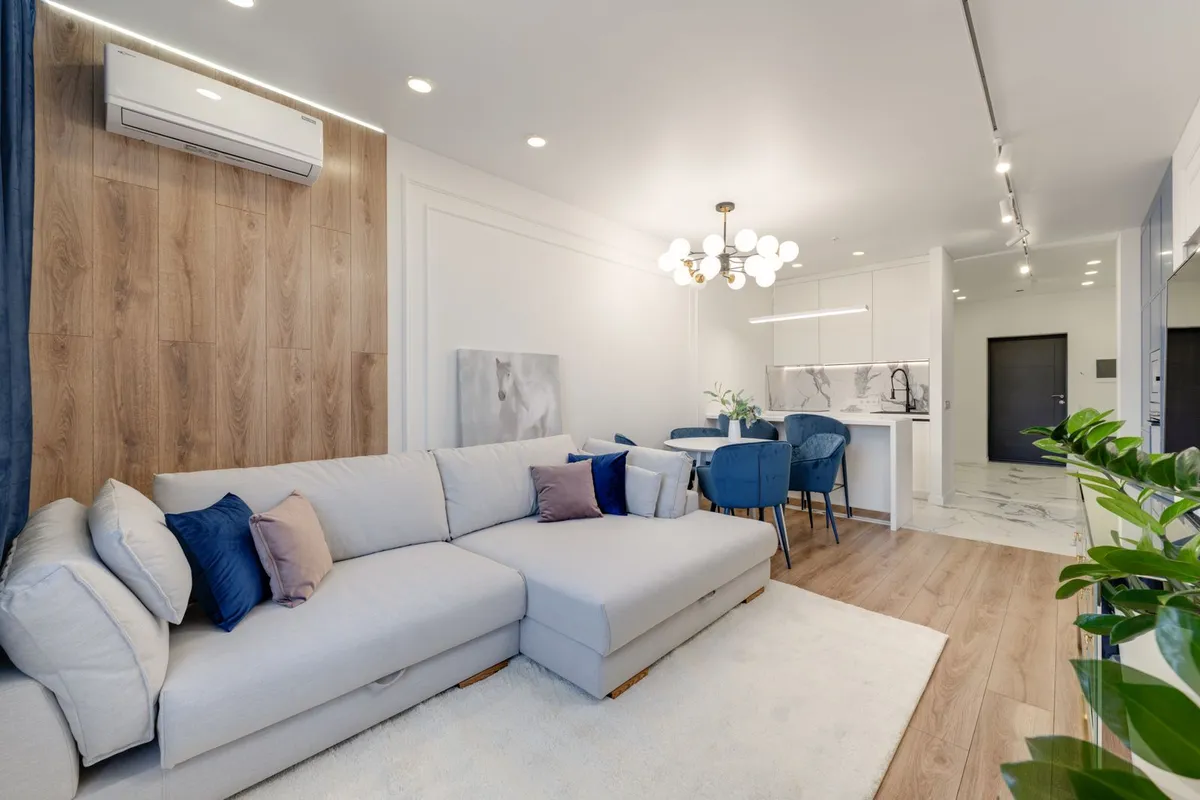
Finished ceiling versus open ceiling is the recessed lighting budget. HomeGuide prices one light at $125–$300 in an existing ceiling against $65–$175 in new construction — the fitting is the same, but in a finished home the electrician is cutting, fishing wire and making good, and that is the difference. Count is the second lever, and it follows a rule: HomeGuide spaces lights 4–6 feet apart at roughly one light per 25 sq ft, so a 200 sq ft kitchen prices at eight lights whether the quote says so or not — compare bids at the same count. Access is the third: an attic above makes every run shorter, while a ceiling under a second floor, a plaster ceiling or a vaulted slope adds time per light at the $40–$120 hourly rates the guides publish. Finally, the circuit decides the surprise line: a run that can join an existing switched circuit stays in band, while a new circuit, a new switch leg or a panel with no spare capacity moves the job toward the top tier, and permits add $50–$250 in Angi where they apply.
Worked example: how a typical recessed lighting installation budget breaks down
A typical job: six LED recessed lights fitted into a finished kitchen ceiling on an existing circuit — layout marked out, holes cut, lights wired in a run, a dimmer fitted and the ceiling made good. The budget below totals $1,100 — the "most homeowners pay around" figure from the top of this page — split using this page's own cost breakdown. It shows how a real quote at that level is usually composed; every line is built from the ranges on this page, and it is an illustration, not a quote for your project.
| Line item | Example budget |
|---|---|
| Fixtures — 6 LED lights with trims | $330 |
| Electrician labor and wiring | $605 |
| Dimmer and switch work | $110 |
| Patching, permit share and extras | $55 |
| Total | $1,100 |
What most people get wrong
- Spacing by eye — lights placed where they look right from the ladder pool light in circles and leave the worktops dark; the 4–6 foot grid in HomeGuide exists because kitchens expose bad spacing daily.
- Fitting non-IC housings against insulation — a light that touches insulation without an insulation-contact rating is a heat problem the ceiling hides until it matters.
- Pairing a cheap dimmer with LED lights — incompatible dimmers flicker and buzz, and the fix is a second electrician visit to swap a $55–$150 part that was specced wrong.
- Comparing per-light quotes without the circuit question — a quote that assumes an existing switched circuit and one that includes a new circuit are pricing different jobs.
Costs in your city
Recessed lighting pricing follows electrician rates — $40–$100 per hour in HomeGuide and $50–$120 in Angi — so the same six-light kitchen prices highest in high-rate metros and wherever a small job carries a full call-out fee. Housing stock travels with the region: plaster ceilings and older wiring in pre-war housing add time and sometimes panel work, while attic access in single-story Sun Belt builds makes runs shorter and cheaper. Permits run $50–$250 in Angi where they apply, and some cities require them for any new circuit. Ask each bidder for the per-light rate at your light count, whether the circuit is assumed or included, and who patches the ceiling.
Frequently asked questions
How much does it cost to install recessed lighting?
About $700–$1,650 is the typical band on this page for 6 lights in an existing ceiling, with most projects landing around $1,100. HomeGuide prices one light at $125–$300 installed in an existing ceiling with a $180 national average per light, and HomeAdvisor’s data agrees at $100–$300 per fixture around the same $180 average.
How much does an electrician charge per recessed light?
Labor runs $75–$200 per light in HomeGuide and $60–$150 per fixture in Angi, with electricians at $40–$100 per hour in HomeGuide and $50–$120 in Angi. Per-light pricing is the norm for a standard run; hourly pricing appears when the ceiling or wiring is unknown.
How many recessed lights does a room need?
By HomeGuide’s spacing rule: lights 4–6 feet apart, at roughly one light per 25 sq ft of floor — six lights for a 150 sq ft room, eight for 200 sq ft. More, smaller lights spaced evenly beat fewer bright ones, which is why quotes for the same room can differ by two lights and both be honest.
Are canless LED lights cheaper to install than can lights?
Usually, yes: a canless wafer is one unit instead of a housing, trim and lamp, and HomeGuide prices a complete new LED light at $135–$310 installed. Where cans already exist, an LED retrofit kit at $5–$40 per light in HomeGuide is the cheapest upgrade on this page by a wide margin.
Can I install recessed lighting myself?
Swapping trims and fitting retrofit kits is ordinary DIY. Cutting new holes and running new wiring is electrician work in every guide’s framing — the lights must be IC-rated where they touch insulation, the circuit must carry the run, and permits ($50–$250 in Angi) apply in many areas. The labor line you would save is $75–$200 per light.