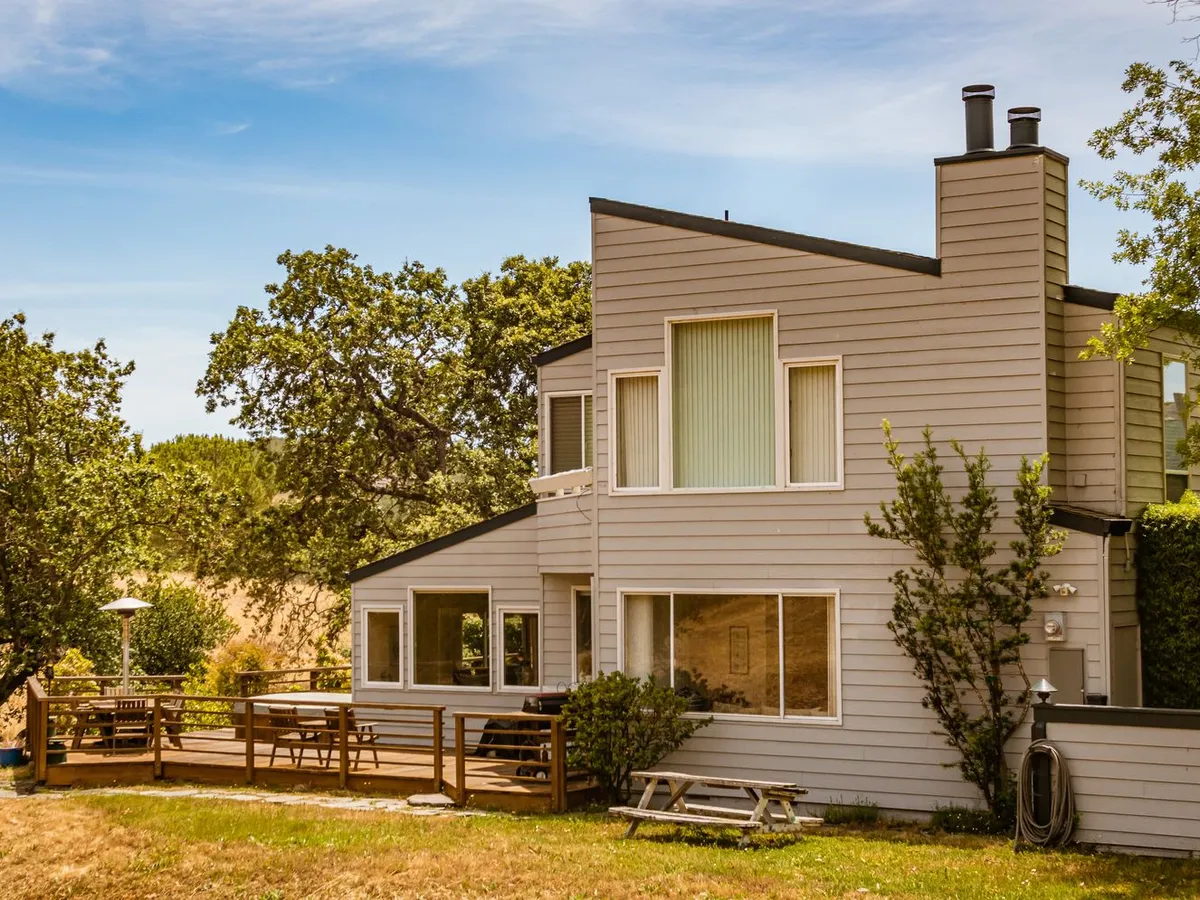
Deck Building cost at a glance
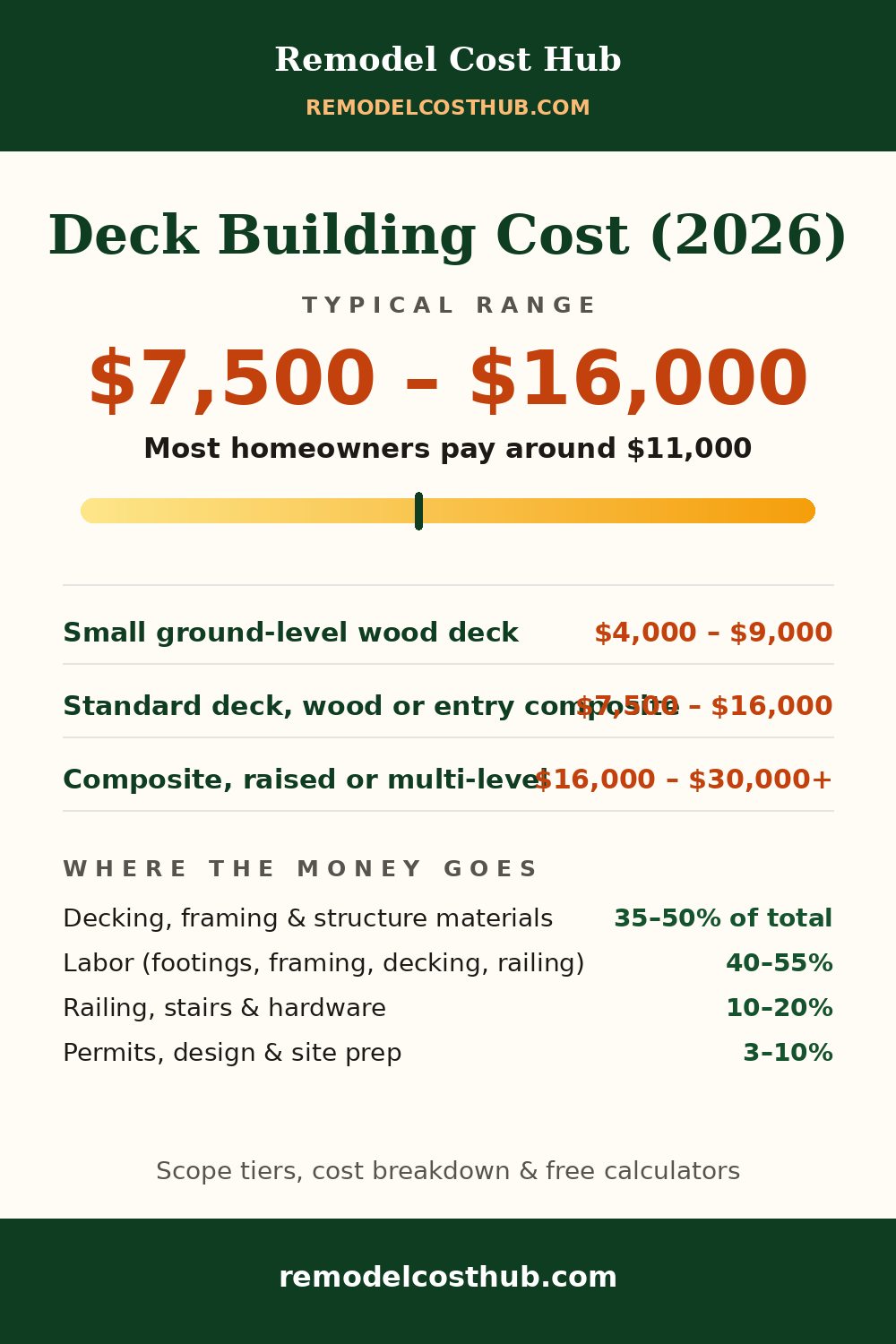
- Typical range: $7,500 – $16,000
- Most homeowners pay: around $11,000
- Per square foot: $25 – $50 per sq ft
- Prices vary most by: Labor (footings, framing, decking, railing) (40–55% of the budget)
Cross-checked against three published sources for this project. Sources used for this page: the Angi deck building cost guide, HomeGuide's cost to build a deck guide and Fixr's deck addition cost data. Last updated October 2026 · How we calculate these costs
Cost by scope
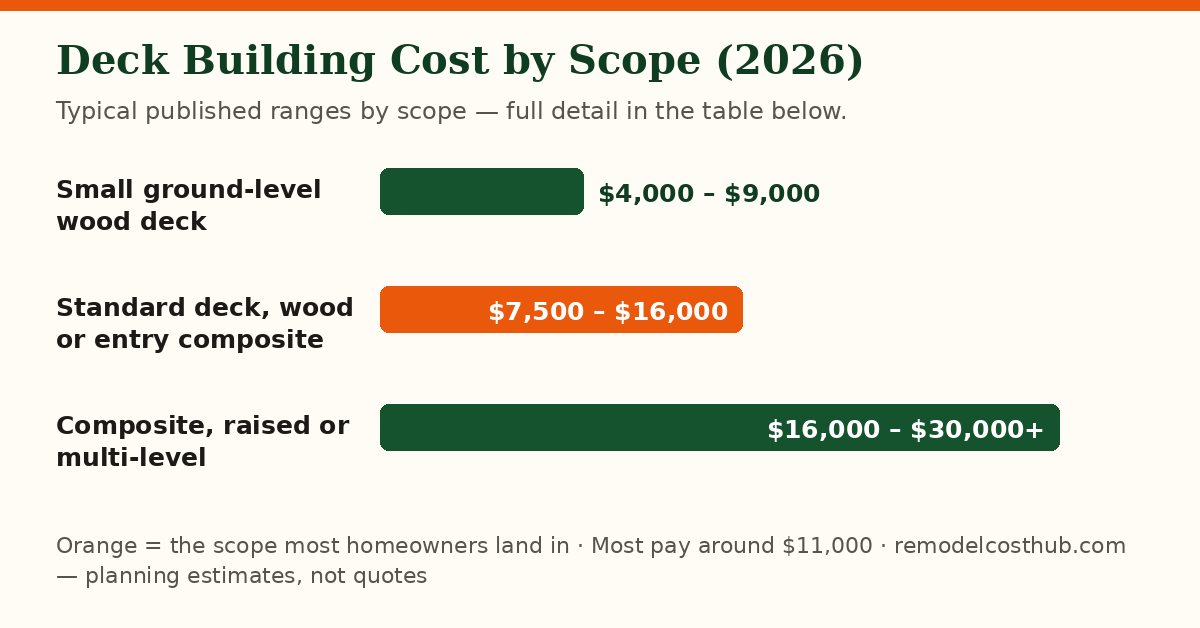
| Scope | Typical cost | What it includes |
|---|---|---|
| Small ground-level wood deck | $4,000 – $9,000 | About 200 sq ft in pressure-treated lumber, low to the ground, simple railing and a short stair — the cheapest professionally built format |
| Standard deck, wood or entry composite | $7,500 – $16,000 | About 300 sq ft, pressure-treated or entry-level composite decking, code railing and stairs — where most deck projects land |
| Composite, raised or multi-level | $16,000 – $30,000+ | Premium composite or hardwood decking, a raised or second-story structure, multi-level layouts, long stairs and built-in features |
Where the money goes
| Part of the job | Share | Note |
|---|---|---|
| Decking, framing & structure materials | 35–50% of total | Posts, beams, joists, footings and the deck boards themselves — the material class (treated wood vs composite vs hardwood) is the widest spread here |
| Labor (footings, framing, decking, railing) | 40–55% | Decks are labor-heavy: digging and pouring footings, framing, laying and fastening boards, then railing and stairs |
| Railing, stairs & hardware | 10–20% | Code-required railing on raised decks, stair stringers and treads, structural connectors and fasteners — hidden fasteners and metal railing raise this line |
| Permits, design & site prep | 3–10% | Most attached or raised decks need a permit and inspections; grading, clearing and old-deck removal add where they apply |
What moves the price most
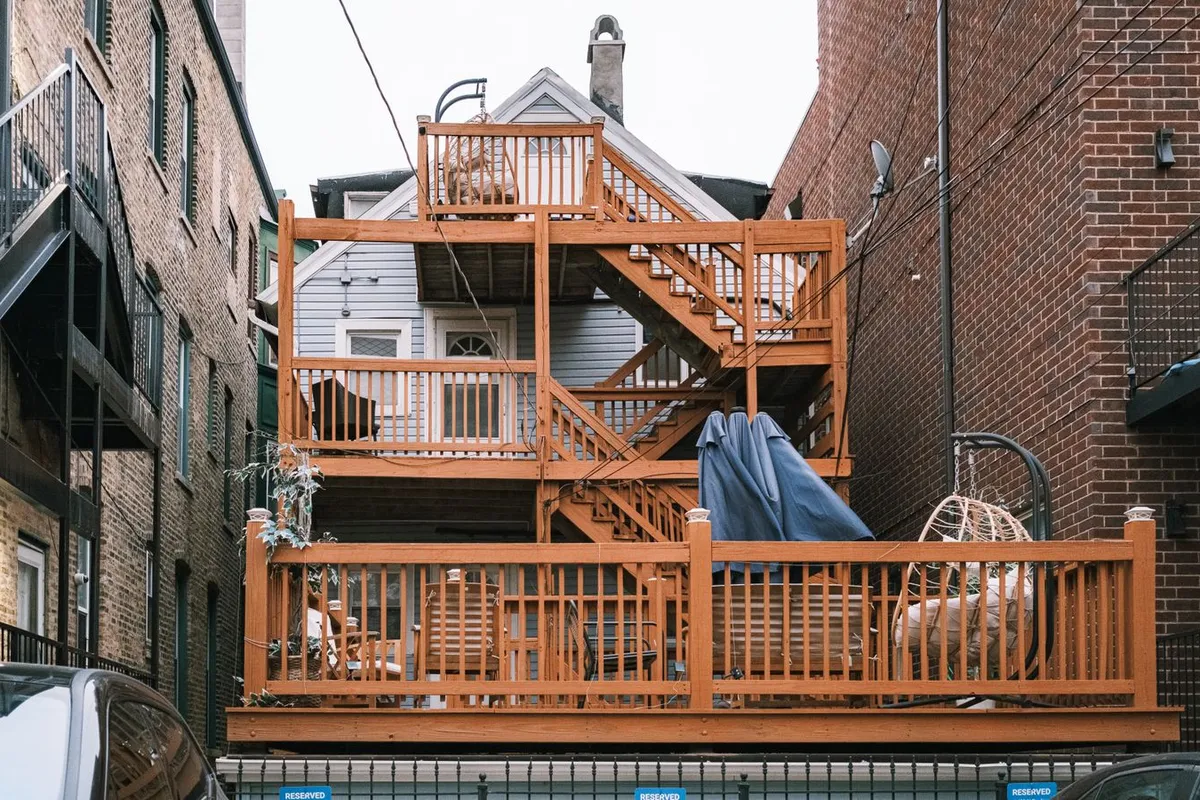
Size is the first driver, priced per square foot. Published guides converge on roughly $25–$60 per square foot installed depending on material and height, so the footprint decision is the budget decision — measure for the furniture and traffic you actually need, not the whole yard. Material class is the second cliff: pressure-treated wood is the entry price, composite costs more up front and removes most staining and sealing maintenance, and hardwoods sit at the top with the longest finishing labor. Height is the quiet multiplier — a ground-level platform needs short posts and maybe no railing, while a raised or second-story deck needs deeper footings, taller posts, full code railing and a real staircase, which is why the same footprint can cost half again as much. Finally, stairs, levels and built-ins (benches, pergolas, lighting) are each priced as their own sub-project inside the quote; get them itemized before you compare bids.
Costs in your city
Local labor moves a remodel price more than almost anything else, so we are publishing city-adjusted ranges metro by metro — each with its own local cost index, permit notes and climate factors, not a find-and-replace of this page. Wave 1 cities: Houston, Dallas–Fort Worth, Phoenix, Atlanta, Miami–South Florida, Orlando, Tampa, Charlotte, Austin and San Antonio. Until your city's page is live, use the national range here and weight it: Sun Belt labor often prices near or below the national middle; coastal California and the Northeast metros often price well above it.
Frequently asked questions
How much does a deck cost per square foot?
Professionally built, published guides put most decks at about $25–$60 per square foot installed: pressure-treated ground-level decks toward the bottom, composite and raised decks toward the top. At those rates a 300 sq ft deck lands roughly in the $7,500–$16,000 typical band on this page.
How much does a 16×20 deck cost?
A 16×20 deck is 320 sq ft. In pressure-treated wood, published size tables put it roughly in the $10,000–$16,000 zone installed with railing and stairs; in composite the same footprint commonly prices higher, and a raised version with a long staircase higher again.
How long does it take to build a deck?
A standard single-level deck commonly takes about 1–2 weeks of work once permits are in hand and materials are on site. Raised, multi-level or composite projects with inspections between stages often run 2–4 weeks — and permit review before the start is frequently the longest single wait.
Do I need a permit to build a deck?
In most jurisdictions, yes for an attached deck or any deck above a modest height or size — and the permit brings footing and ledger inspections that protect the structure. Ground-level floating decks below the local threshold are the common exception. Confirm with your building department before design, not after.
Is a wood or composite deck better value?
Wood costs less up front and needs washing and staining or sealing every couple of years. Composite costs more per square foot and mostly removes that maintenance cycle, with a longer expected service life. Over a long ownership, the gap narrows considerably; over a short one, wood is usually the cheaper honest choice.
Does a deck add resale value?
Deck additions are consistently among the stronger-returning exterior projects in the Remodeling Magazine Cost vs. Value data, recouping a majority of cost at resale in recent reporting — with wood and composite both scoring well. Condition matters: a sound, well-kept deck reads as living space; a neglected one reads as a liability.